
Introduction
Renters near Tampa, Florida, often have to balance lease obligations with the realities of coastal living: humidity, tracked-in sand, and frequent rain. A practical, landlord-friendly tile cleaning checklist helps you protect your security deposit and keep your home healthy and fresh. Use this renter-focused plan to handle kitchens, baths, entryways, balconies, and lanais efficiently. If you want to compare your checklist with a more advanced approach, review trusted guidance on tile cleaning and adapt what works within your lease terms.
Because rentals vary widely in materials and finish, always read your lease for restrictions on chemicals, steam tools, or machine use. Test products in discreet corners and document your routine with photos if you want a record of care during your tenancy.
Renter-Friendly Essentials
- Soft broom or microfiber dust mop to capture sand without scratching.
- Vacuum with a hard-floor setting to remove debris along edges.
- Two buckets (wash and rinse) to avoid residue.
- pH-neutral cleaner for ceramic and porcelain; stone-safe cleaner if your unit includes natural stone.
- Microfiber pads and a non-scratch scrub sponge.
- Grout brush for targeted line cleaning.
- White towels for drying and buffing.
- Squeegee for showers and glass tile.
The Weekly Checklist
- Dry Sweep or Vacuum: Remove grit, especially near exterior doors and patios.
- Spot Treat Spills: Use a spray bottle with diluted cleaner and wipe immediately.
- Wet Clean Floors: Mop in small sections with proper dilution; rinse often.
- Detail Grout: Brush discolored lines gently and rinse thoroughly.
- Dry Surfaces: Towel dry to prevent water spots and streaks.
- Ventilate: Run fans after shower cleaning and open windows when weather allows.
Kitchen Focus
- Backsplash: Wipe weekly to remove grease film.
- Toe-Kicks and Corners: Use a small brush where crumbs gather.
- Under Appliances: Pull forward slightly if permitted and safe; clean edges and return gently.
- Rinse and Dry: Keep floors free from residue that can look dull or feel sticky.
Bathroom and Shower Focus
- Squeegee after each use to minimize soap scum and mineral spotting.
- Use a stone-safe cleaner for marble or travertine; avoid acids.
- Brush grout along wet walls weekly; rinse and dry.
- Improve airflow with exhaust fans to curb mildew growth in humid months.
Entryways, Balconies, and Lanais
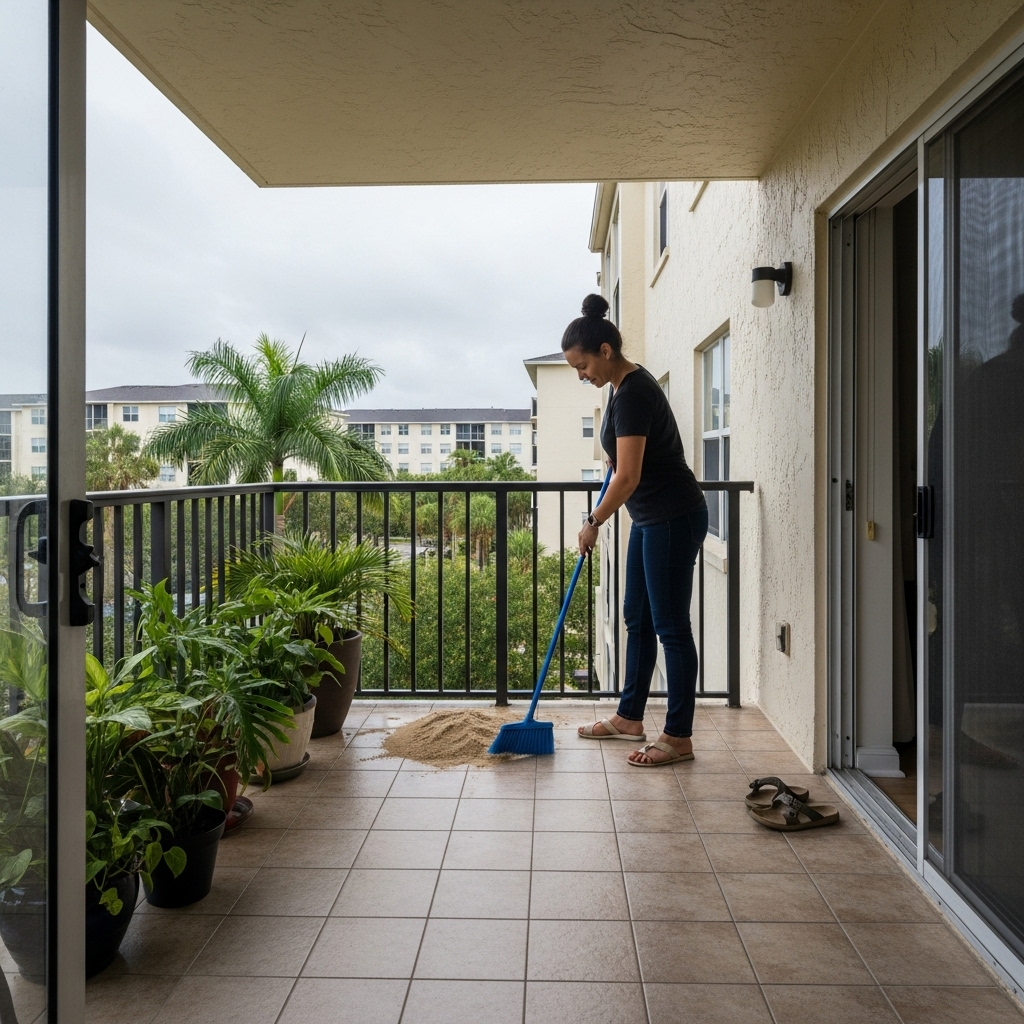
Entry tiles capture sand and moisture. Use walk-off mats inside the door if permitted. Clean these areas more frequently than interior rooms and dry floors to reduce slip risk. For balconies and lanais, sweep debris regularly, rinse with low pressure, and use an exterior-rated tile cleaner. Confirm that your lease allows outdoor rinsing and that water will drain without affecting neighbors.
Monthly Deep Clean
- Pre-Soak: Apply cleaner to high-traffic lanes and allow dwell time.
- Agitate: Use a non-scratch pad or a soft brush, moving slowly.
- Grout Pass: Apply a grout cleaner where discoloration remains.
- Rinse Cycles: Perform a clear-water rinse until water runs clean.
- Towel Dry: Buff to a uniform sheen and inspect for missed spots.
If heavy build-up persists, compare your strategy with professional tile cleaning methods to decide whether your unit would benefit from a periodic refresh performed by specialists, if permitted by your lease.
Security Deposit Protection Tips
- Document: Take before-and-after photos of kitchens, baths, and entries.
- Communicate: Ask your landlord about approved products or tools before using them.
- Prevent: Use mats, fix small drips promptly, and squeegee showers.
- Protect: Add felt pads beneath furniture to prevent scratches on tile.
- Repair: Report cracked or loose tiles early to prevent moisture intrusion and bigger issues.
What to Do About Stains
- Grease: Pre-treat with a neutral degreaser, dwell briefly, and wipe.
- Soap Scum: Use a non-acidic product, agitate with a soft pad, then rinse.
- Mildew: Increase ventilation and use a grout-safe cleaner with a firm brush.
- Mineral Spots: Choose a product rated for your tile type; test discreetly on stone.
Lease-Safe Sealing
Many rentals benefit from grout sealing, especially in kitchens and baths. Confirm with your landlord before applying any sealer. If approved, select a penetrating sealer designed for the surface, apply thinly, wipe excess, and allow proper cure time. Sealing helps reduce staining and eases weekly upkeep.
Efficiency for Busy Renters
Keep a small cleaning caddy ready with diluted cleaner, a microfiber cloth, and a grout brush. Address spills on the spot, sweep daily near doors, and dry floors after wet cleaning. Short, frequent tasks beat occasional heavy scrubbing and help you maintain a move-out-ready appearance.
Frequently Asked Questions
Q: Can I use vinegar to clean everything? A: Avoid vinegar on natural stone or cement tiles; it can etch and dull surfaces. Use pH-neutral or stone-safe cleaners instead.
Q: How often should I clean grout? A: Spot clean weekly and deep clean monthly. If approved, seal grout to slow staining and make maintenance easier.
Q: Is steam cleaning allowed in rentals? A: Check your lease first. If permitted, use steam cautiously on ceramic and porcelain, and avoid excessive heat on sensitive stone.
Q: How do I prevent mildew in humid months? A: Run exhaust fans, squeegee after showers, and keep surfaces dry. Improve ventilation wherever possible.
Q: What should I do before moving out? A: Perform a thorough deep clean, focus on grout, address edges and corners, and document results with photos.
Keep Your Rental Sparkling
Following this checklist—dry sweeping, targeted cleaning, thorough rinsing, and consistent drying—will keep your tile and grout fresh, protect finishes, and satisfy typical lease expectations in the Tampa area. For a mid-lease reset or pre-move-out shine, align your plan with tile cleaning best practices. When you are ready for a polished finish that reflects well on your tenancy, schedule time with trusted tile cleaning experts who can support your efforts and help ensure a smooth move.