
Introduction
Businesses in Tampa, Florida—whether hospitality, healthcare, retail, or office environments—rely on clean tile surfaces to protect brand image, hygiene, and safety. A clear, repeatable cleaning process preserves finishes, keeps grout sanitary, and reduces slip risks, especially with the humidity and sandy grit common to the Gulf Coast. This guide explains how to standardize tile care at scale, from lobbies and restrooms to kitchens and back-of-house corridors. When you need a benchmark for your in-house program, consult reliable information on tile cleaning and calibrate your SOPs accordingly.
In commercial spaces, consistency and documentation matter as much as technique. Training, checklists, and measurable outcomes elevate results and simplify audits. The process below is designed to help facilities managers, operations leaders, and cleaning teams deliver predictable, high-quality results.
Surface Identification and Risk Assessment
Catalog the types of tile in your facility: porcelain in lobbies, ceramic in restrooms, quarry tile in kitchens, glass mosaics in showers, and stone in executive areas. Identify grout types and any existing sealers. Conduct a risk assessment where moisture, grease, or soil loads are high. Note areas with frequent sand intrusion (entryways, loading docks) and prioritize more frequent dry maintenance there.
Standardized Tools and Inventory
- Auto-scrubber or low-speed floor machine with appropriate brushes/pads.
- Microfiber mops for daily maintenance; color-code for zones.
- Two-bucket systems for manual work (wash and rinse).
- pH-neutral cleaners for general areas; stone-safe cleaners for natural stone.
- Degreasers formulated for kitchen tile where oils accumulate.
- Grout brushes and detail tools for edges, corners, and drains.
- Wet/dry vacuum or auto-scrubber recovery for efficient rinsing.
- Personal protective equipment: gloves, eye protection, and ventilation aids.
Daily Process: Dry and Wet Maintenance
- Dry soil removal: Sweep or vacuum entryways, lobbies, and corridors to remove sand and grit. This prevents abrasion and reduces slip risk.
- Inspection: Identify spills, gum, or tracked soils, and address immediately.
- Wet cleaning: Apply the appropriate cleaner in zones. Use auto-scrubbers where feasible for even coverage and efficient recovery.
- Detailing: Brush grout in high-visibility areas and along edges where auto equipment cannot reach.
- Rinse and recovery: Ensure all residues are removed with clear water; recover with auto-scrubber or wet/dry vacuum.
- Drying: Promote rapid drying with airflow to minimize slip hazards and spots.
Weekly and Monthly Enhancements
- Edge work: Move fixtures or floor mats to clean underneath and around bases.
- Grout focus: Apply targeted grout cleaners and use firm nylon brushes.
- Sealer inspection: Check if grout and stone need resealing and schedule as required.
- Appearance audit: Document gloss levels, uniformity, and hotspots for recurring issues.
Kitchen and Food Service Areas
Grease, sugars, and proteins demand a tailored approach. Use a commercial degreaser at recommended dilution, allow proper dwell time, and agitate with a non-scratch pad or deck brush. Rinse thoroughly and recover water to avoid slip hazards. Inspect grout for oil absorption; consider color-sealing if staining persists even after deep cleaning.
Restrooms and Locker Rooms
Moisture management is essential. Ventilation, frequent squeegeeing of walls, and consistent cleaning cycles reduce mildew and odor. Choose cleaners that address soap film and mineral deposits without damaging tile or grout. Focus on touchpoints and drain perimeters, and ensure complete rinse and dry steps.
Front-of-House Aesthetics
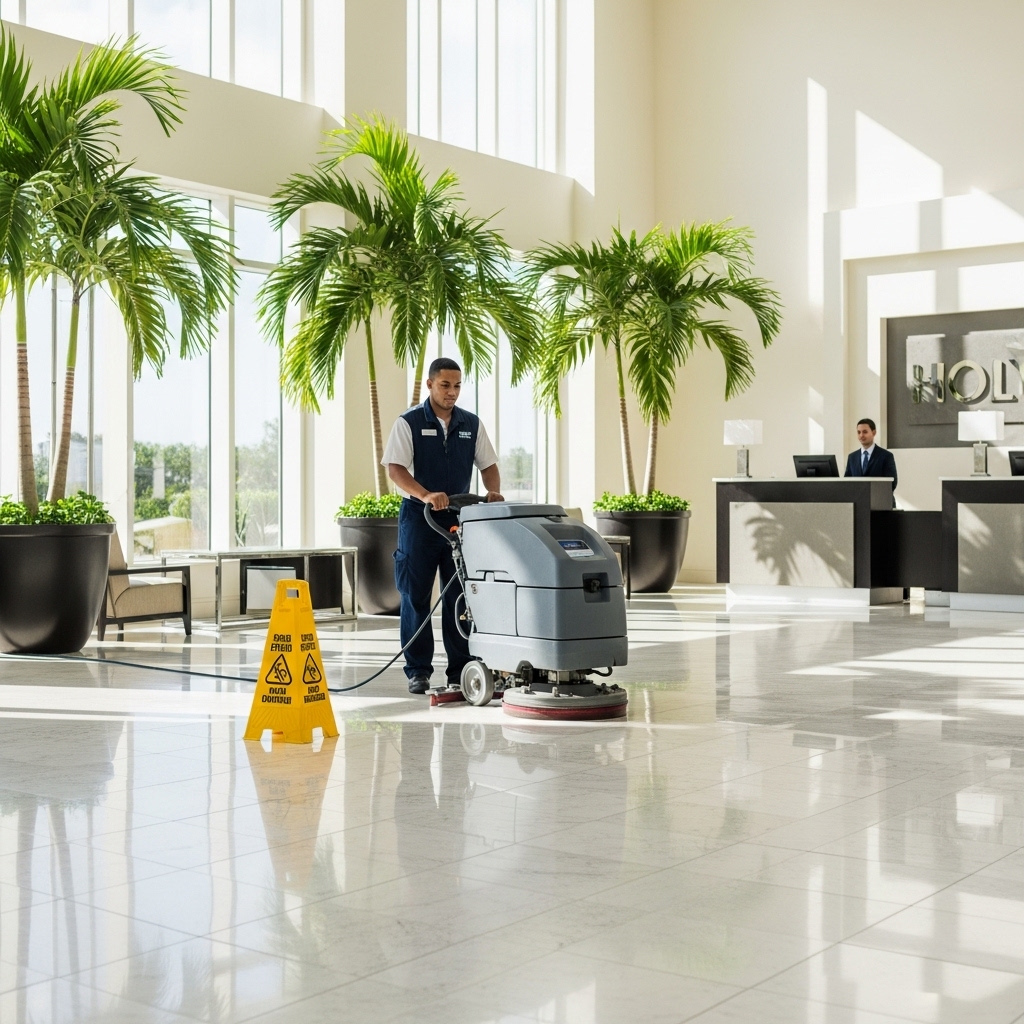
Lobbies and corridors are brand-forward spaces. Control sand at entrances with walk-off mats and frequent dry passes. Use a pH-neutral cleaner and microfiber pads to maintain a consistent sheen. Towel buffing of focal areas—like near reception—can elevate the finish between deeper cycles.
Deep Cleaning Protocol
- Pre-wet and dwell: Apply cleaner uniformly and allow dwell time without letting the surface dry.
- Agitate: Use a low-speed machine or auto-scrubber with a soft brush. Move systematically to avoid missed sections.
- Grout detailing: Apply a grout cleaner for stubborn staining and scrub with firm brushes.
- Rinse/recover: Perform multiple clear-water rinses and recover thoroughly.
- Inspection and touch-up: Towel dry, then spot treat remaining soils.
Calibrate your deep-clean cadence to traffic: monthly for kitchens and restrooms, quarterly for lobbies, and as needed for seasonal spikes or special events. For benchmarking, compare your SOP to professional tile cleaning workflows and adjust training accordingly.
Sealing Strategy for Commercial Settings
Seal grout in high-traffic areas to enhance stain resistance and simplify daily work. For natural stone or cement tiles, use a penetrating sealer rated for commercial wear. Document product types, application dates, and cure times. Post-clean signage to restrict access while sealers cure to prevent tracking and ensure a uniform finish.
Quality Control and Documentation
- Checklists: Standardize tasks by zone and shift.
- Training logs: Record staff competency in chemical handling and equipment use.
- Audits: Inspect appearance, slip metrics, and guest feedback trends.
- Incident logs: Document spills, responses, and corrective actions.
Health, Safety, and Compliance
Align products and procedures with safety data sheets. Provide PPE and train teams to avoid chemical mixing. Maintain ventilation, especially when using degreasers. In healthcare or food service, ensure products meet relevant sanitation requirements and that rinse steps are thorough.
Outdoor and Transitional Areas
Exterior walkways, covered entries, and pool-adjacent zones bring in sand and moisture. Increase dry sweeping frequency, schedule wet cleaning during low-traffic windows, and ensure proper drainage. Select exterior-rated products and avoid creating slippery conditions by removing all residues.
Efficiency and Sustainability
Microfiber systems reduce chemical use and water consumption. Auto-scrubbers with smart dosing help standardize coverage and recovery. Set dilution stations to remove guesswork and train staff to recognize when pads or brushes need replacement for optimal performance.
Frequently Asked Questions
Q: How often should commercial tile be deep cleaned? A: High-load areas such as kitchens and restrooms benefit from monthly deep cleaning; front-of-house spaces often follow a quarterly cycle, with spot work as needed.
Q: What products are safe for stone in executive areas? A: Use stone-safe cleaners and penetrating sealers designed for the specific stone type. Avoid acids that can etch the surface.
Q: How can we reduce slip risk after mopping? A: Recover rinse water with auto-scrubbers or wet/dry vacuums, promote airflow, and towel buff focal paths during business hours.
Q: Should grout be color-sealed? A: In areas with persistent staining, color-sealing provides uniform appearance and resistance, reducing daily effort.
Q: How do we handle unexpected spills? A: Respond immediately with the appropriate cleaner, rinse thoroughly, and post wet-floor signage until dry.
Raise the Standard Across Your Facility
By documenting surfaces, standardizing tools, and following a clear daily-to-deep cycle, you can maintain exceptional tile and grout in Tampa’s demanding climate. When seasonal spikes or special events call for extra support, align your SOP with proven tile cleaning processes and coordinate with trusted tile cleaning experts for a finish that reflects your brand’s commitment to cleanliness and safety.