
A Complete Tampa Guide to Pet Stain and Odor Care
Pets bring happiness, comfort, and plenty of personality to a home, but they can also challenge the cleanliness of your carpets. In Tampa’s warm, humid climate, accidents and lingering smells can intensify if not addressed promptly and correctly. This guide explains how to identify the source of odors, what to do the moment an accident happens, and how professionals tailor their approach for fiber types and climate considerations. If you are seeking an effective plan that protects both your pets and your floors, trusted carpet cleaning specialists in Tampa focus on safe, thorough methods that resolve problems at their roots rather than temporarily covering them up.
Success with pet issues requires a combination of rapid response, the right chemistry, and smart drying strategies. Treating only the visible spot while ignoring what has penetrated the backing or pad often leads to recurring odors and discoloration. The following sections will walk you through immediate actions, professional processes, and long-term routines that keep your home fresh even during humid months.
Why Pet Odors Linger in Tampa’s Climate
Humidity plays a major role in how smells persist. When the air is saturated, evaporation slows, and any moisture trapped in backing or padding can continue to off-gas unwanted odors. Heat compounds the problem by accelerating bacterial activity. If the source of the odor remains in the sublayers, everyday cleaning may temporarily reduce the smell on the surface while deeper problems continue to linger. This is why a thorough approach goes beyond topical treatments to address the underlying materials and the pathways liquids take when they penetrate the pile.
Another factor is wicking—the tendency for stains or odors to reappear after drying. As moisture evaporates from the surface, residue from deeper levels can travel upward, re-depositing at the tips of the fibers. Professional techniques are designed to control moisture, flush contaminants effectively, and manage airflow to reduce the chance of wicking.
Immediate Steps After an Accident
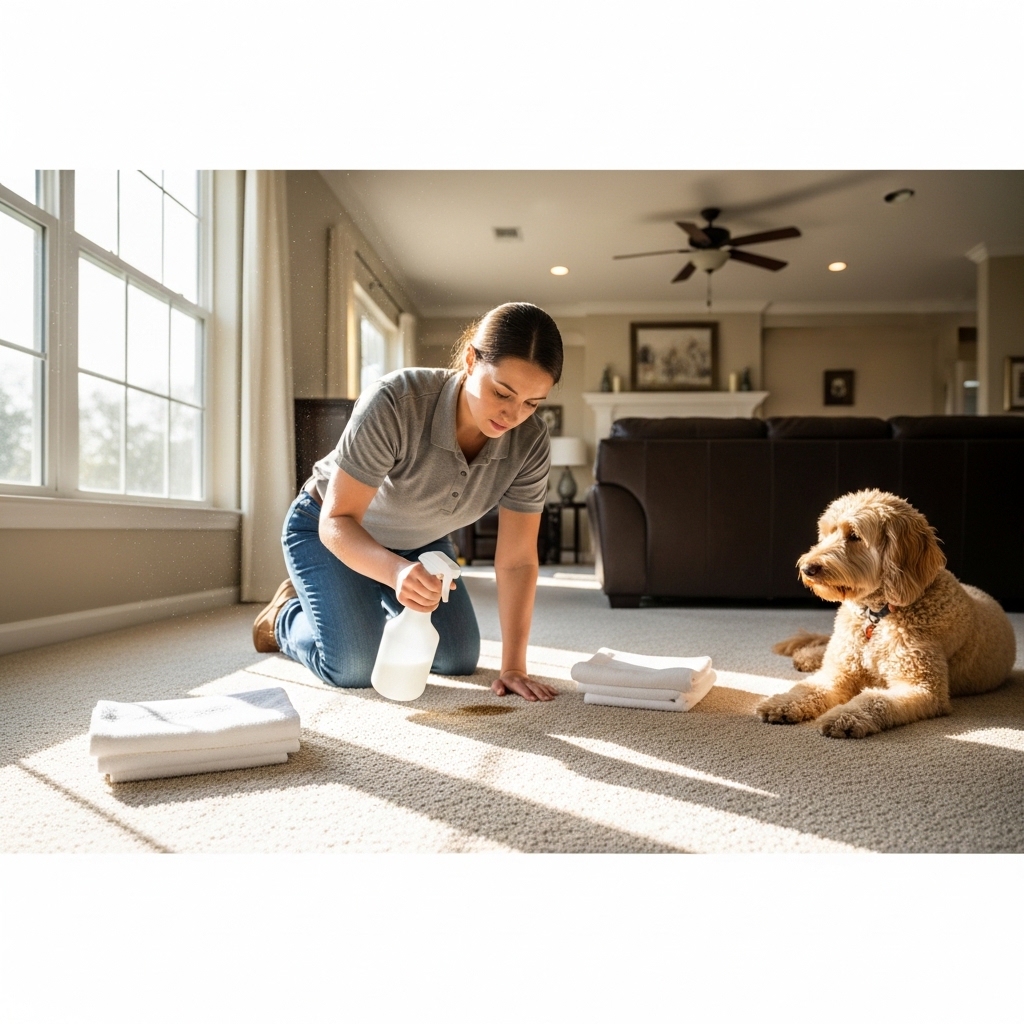
Speed matters. Blot the area immediately with clean, white towels. Apply firm downward pressure to absorb as much as possible without scrubbing. If you have a small spot extractor, use it with plain, cool water to rinse and extract lightly. Avoid harsh chemicals; some can set dyes or leave residues that attract more soil. Continue blotting until towels come up mostly dry. If odor remains, ventilate the room and consider a fan to encourage evaporation. Mark the spot so you can show your technician later, as the area may appear faint after initial cleanup.
Resist the urge to pour heavy amounts of liquid onto the stain. Over-saturating can push contaminants deeper into the backing and pad. When in doubt, less is more: blot, extract lightly, and allow airflow to assist. The goal is to remove material without forcing it deeper.
How Professionals Tackle Pet Issues
Professional pet treatments generally follow a structured process: pre-inspection and UV detection to map contamination, targeted pre-treatment, agitation to work solutions into the pile, and thorough extraction. Enzyme-based products are often used to digest organic residues rather than mask odors. When contamination reaches the backing or pad, deeper flushing with controlled moisture may be necessary, combined with air movers to accelerate drying. Technicians adapt water temperature, pH, and dwell time to protect your carpet’s fibers while ensuring effective results.
Experienced teams also prepare you for realistic outcomes. Certain discolorations from pet urine can alter the dye structure in the fibers, leaving a permanent tint even after odor sources are neutralized. In such cases, odor can be eliminated while some visual evidence remains. Honest communication before cleaning helps align your expectations with what is achievable.
Special Considerations for Different Fibers
Wool and natural blends require gentle handling. Professionals select solutions that respect natural fiber scales and avoid high alkalinity. Synthetic fibers like nylon, polyester, and olefin tolerate a wider range of products but still benefit from thoughtful application and thorough rinsing. The technician may perform fiber identification tests if the carpet type is unknown, ensuring the correct approach from the beginning.
Pile density and construction also affect treatment. Plush, high-pile styles may trap more pet hair and dander, requiring extra agitation and grooming. Berber and looped carpets can hide contamination along the loops, so technicians adjust agitation and extraction to prevent fiber distortion while delivering an effective flush.
Odor Control Strategies That Work
Effective odor control addresses three components: the source, the pathways, and the surrounding environment. Source control uses enzyme or oxidizing systems that break down odor-causing compounds. Pathway control means flushing and extracting residues from fibers and backing. Environmental control focuses on ventilation and dehumidification, which are especially important in Tampa’s climate. Combining all three yields the best chance of quick, lasting relief.
For severe cases, multiple visits or layered treatments may be part of a realistic plan. Cleaners may recommend a maintenance schedule that keeps pet-heavy areas fresh so that smaller issues do not build into bigger problems over time.
Preventing Future Stains and Odors
Prevention is a mix of habit and preparation. Keep a stack of clean, white towels handy for prompt blotting. Use doormats and encourage a paw-wipe routine after outdoor time. Brush and bathe pets regularly to reduce dander and shedding. Place washable area rugs in zones where pets rest or play the most. Consider protectant treatments for carpets, which can make accidental spills easier to manage quickly. Most importantly, maintain airflow in your home—air conditioning, ceiling fans, and open interior doors promote faster drying when small accidents happen.
Training and routine also play a role. Feeding schedules, frequent outdoor breaks, and strategically placed litter or training pads help reduce surprise incidents. If your pet is recovering from illness or transitioning to a new space, expect a temporary increase in accidents and prepare accordingly.
Cleaning Tools and Products to Keep at Home
Maintain a simple kit: clean white towels, a neutral pH spotter recommended by your provider, a small spot extractor if you have one, and disposable gloves. Avoid colored towels that might bleed. Skip harsh chemicals or anything that promises instant miracles; quick fixes can cause long-term problems by setting stains or leaving sticky residues. Consider a vacuum with strong suction and a brush roll designed for pet hair, and keep filters clean to maintain performance.
When using any product for the first time, test in an inconspicuous area. Follow label directions and use light application. Always blot—do not scrub—and apply fans to speed evaporation.
Aligning Professional Visits with Tampa Weather
Plan appointments when you can support drying with AC and fans. Morning slots offer more daylight hours for evaporation. If a heavy rainstorm is expected, keep entryways protected to reduce tracked-in moisture. Share your home’s history—where pet accidents tend to occur, which rooms see the most activity—so the technician can prioritize zones effectively. Coordinating method and timing makes carpet cleaning more efficient and keeps your home comfortable during and after the visit.
What to Expect After Treatment
After professional care, the area should smell neutral rather than perfumed. Temporary, light fragrances may be present immediately after cleaning but should dissipate quickly. As carpets dry, check previously affected areas for reappearance of marks (wicking). If you notice anything returning, contact your provider promptly; a quick follow-up can resolve many issues especially while the spot is still fresh.
Resume normal vacuuming once the carpet is dry. A careful pass will lift the pile and remove any remaining particles brought to the surface during cleaning. Keep pets off damp carpet when possible to prevent re-soiling and imprinting of footprints in plush styles.
Frequently Asked Questions
Q: Are pet stains always removable? A: Many are, but some cause permanent dye changes or fiber damage. Even when discoloration remains, odor sources can usually be neutralized.
Q: Is enzyme treatment safe for pets and kids? A: Enzyme-based products used correctly are designed for household safety. Technicians apply them in controlled amounts and focus on thorough extraction and ventilation.
Q: How long does it take to remove pet odors? A: Timing depends on contamination depth and environmental conditions. Some cases resolve in a single visit; more severe issues may require layered treatments.
Q: Can I fix pet odors with fragrance alone? A: Fragrances can mask smells briefly but do not address the source. Source removal and environmental control are key.
Q: What about older, set-in stains? A: Older issues are more challenging because residues may have crystallized in backing or padding. Professional flushing and targeted chemistry provide the best chance of success.
Q: Will repeated cleaning harm my carpet? A: Properly performed professional cleaning protects fibers by removing abrasive soil and contaminants. The key is balanced moisture, thorough extraction, and fiber-appropriate chemistry.
Bring Back a Fresh, Pet-Friendly Home
Your home can be both pet-loving and fresh with the right plan: prompt at-home care, smart product choices, and climate-aware professional support. When you are ready to eliminate lingering odors and restore comfort, schedule professional carpet cleaning with a team that understands Tampa’s weather and your pets’ routines, and enjoy cleaner, happier rooms year-round.