
Introduction
When Tampa’s humidity, sand, and storm season collide with busy households, carpets need more than a quick pass with a rental machine. An advanced process brings science, sequencing, and climate-aware drying together to deliver consistent, high-level results. This guide details an end-to-end workflow—from fiber identification and chemistry selection to multi-stage agitation, extraction, and post-clean protection—so you can plan a professional-grade approach at home or be an informed client when you schedule expert carpet cleaning. Every step emphasizes Tampa realities: moisture control, rapid drying, and prevention of odor or wicking.
Use these stages as a blueprint. You can scale the process depending on soil load, fiber type, and whether you are maintaining, restoring, or preparing for a special event.
Stage 1: Pre-Inspection and Testing
Identify fiber types—nylon, polyester, olefin, wool—by label or burn test if you are trained and it is safe to do so. Examine backing condition, seams, transitions, and previous repairs. Note filtration lines along baseboards, recurring spots, and pet contamination zones. Perform dye stability tests with a white towel and mild solution in inconspicuous areas.
Stage 2: Dry Soil Removal
Dry soil removal is the highest ROI step. Use a vacuum with excellent airflow and a motorized brush, making slow, overlapping passes. Address edges with a crevice tool, and brush agitation on matted lanes can loosen impacted soils before vacuuming again.
Stage 3: Spot and Specialty Treatments
Separate spots by category: protein/enzymatic (food, pet), tannin/dye (coffee, wine), petroleum-based (oils, tar), and particulate (mud, clay). Choose targeted spotters, observe dwell times, and neutralize after treatment. Avoid mixing chemistries that can produce residues or discoloration. For rust, use a rust remover labeled safe for carpets and neutralize per instructions.
Stage 4: Preconditioning and Agitation
Apply a fiber-appropriate preconditioner to traffic lanes and overall areas as needed. Tamp or brush in, or use a counter-rotating brush machine for uniform distribution. Proper agitation reduces the amount of solution required and boosts soil suspension, which is vital in Tampa where additional water extends dry time.
Stage 5: Selection of Cleaning Modality
- Low-Moisture Encapsulation: Excellent for maintenance and quick turnaround. Polymer encapsulates soil, which is removed by later vacuuming. Minimal moisture is advantageous in humid climates.
- Hot Water Extraction (HWE): Gold standard for deep soil removal. Use measured heat and controlled flow. Add defoamer where previous consumer shampoos may have left residues.
- Dual Process: Encapsulation agitation followed by HWE extraction for heavily soiled lanes, combining soil suspension with thorough rinse.
Stage 6: Rinse Management and pH Control
Residual alkalinity can cause crunchy feel and rapid re-soiling. Employ an acidic rinse or clear water passes to restore a neutral finish. Check that your wand strokes overlap evenly and finish with extra dry passes.
Stage 7: Odor and Contamination Protocols
For pet-affected areas, treat the full depth: carpet face, pad, and, when necessary, subfloor. Use enzymes for organic odor sources and oxidizers judiciously for staining, always testing first. In severe cases, pad replacement and sealing of the subfloor with an odor barrier primer may be required.
Stage 8: Drying Strategy for Tampa
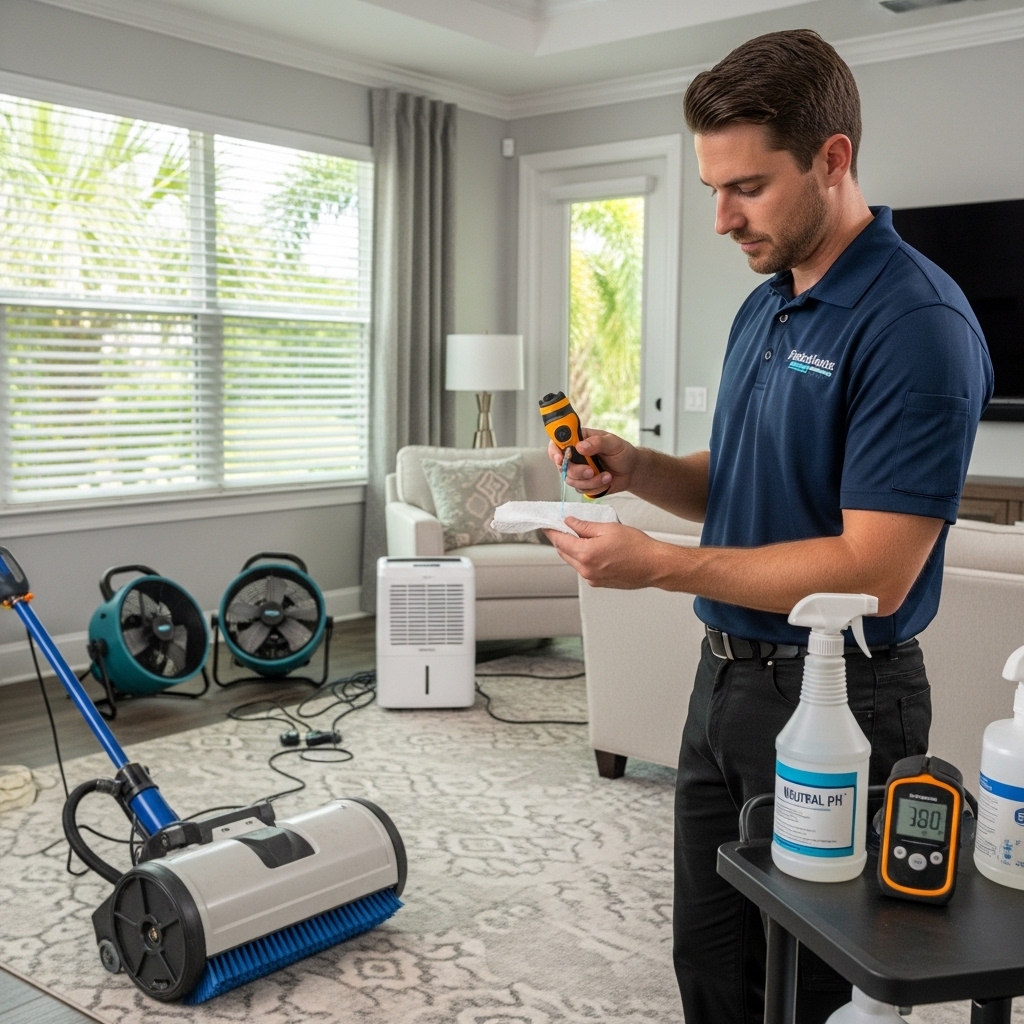
Humidity magnifies risk of musty odor and wicking. Stage multiple air movers to create crossflow, run air conditioning, and deploy a dehumidifier. Keep interior doors open for circulation. Schedule cleaning in the morning so carpets dry fully before nighttime humidity increases.
Stage 9: Grooming and Pile Reset
Groom fibers with a carpet rake to align the pile, reduce wand marks, and promote even drying. Grooming also enhances the uniform look that makes a clean appear finished.
Stage 10: Protector Application (Optional)
Apply a fiber protector after the carpet is completely dry to improve resistance to future staining. Follow manufacturer coverage rates, ventilate the area, and avoid traffic until cured.
Stage 11: Post-Clean Inspection
Walk the space under good lighting, checking edges, transitions, and previously noted spots. Address any wicking or residues promptly with light re-cleaning, additional dry passes, and targeted spotting as necessary.
Advanced Tips for Tough Situations
- Filtration Lines: Use a specialized cleaner with agitation along baseboards; follow with careful rinse and towel blotting.
- Traffic Lane Grey: Combine agitation with dual-process cleaning to lift oxidized soils and oils.
- Residue from Consumer Shampoos: Expect foam; use defoamer and plan extra rinse passes.
- Delicate Fibers: Lower heat, gentler agitation, and neutral chemistry protect wool and blends.
Maintenance Between Major Cleans
Adopt a rhythm: frequent vacuuming, monthly low-moisture touch-ups in traffic lanes, and quarterly or semiannual whole-room deep cleans depending on use. Replace vacuum filters on schedule, and maintain entry mats to intercept sand before it gets into the pile.
When to Call in Reinforcements
If severe odors, visible mold after a leak, or persistent stains remain after careful application of this process, escalate to professionals with specialty tools like sub-surface extractors and advanced odor control. This partnership model—DIY maintenance paired with periodic professional carpet cleaning—delivers the most consistent long-term results in Tampa’s climate.
Documentation and Quality Control
Keep a simple log: dates of vacuum filter changes, spot treatments performed, areas with recurring issues, and deep-clean sessions. Documentation helps you adapt chemistry, dwell times, and drying setups for improved outcomes over time.
FAQ: Advanced Process
Q: How do I prevent wicking after HWE? A: Limit solution volume, finish with extra dry passes, groom the pile, and use fans plus dehumidification. Weighted towel blotting on problem spots during drying also helps.
Q: What heat level is safe? A: For synthetics, moderate heat improves cleaning, but avoid extreme temperatures on delicate fibers like wool. Always verify fiber type and test first.
Q: Can I mix oxidizers and enzymes? A: Apply them separately with rinse and neutralization in between. Mixing can reduce effectiveness and risk fiber damage.
Q: How often should I perform dual-process cleaning? A: Reserve it for heavily soiled lanes or before special events. For maintenance, low-moisture plus periodic HWE is usually sufficient.
Q: What if I see foam in the waste tank? A: Use defoamer. Foam indicates residue from prior shampoos or detergents and can reduce extraction efficiency.
Q: Does protector really help? A: Yes, it slows absorption of spills and makes future cleaning easier, especially in busy living areas and homes with kids or pets.
Elevate Your Tampa Carpet Care
Executing an advanced process brings professional discipline to your home routine. When projects are complex or time is short, schedule a team that specializes in thorough, fast-drying carpet cleaning so your Tampa floors look exceptional in every season.