
Introduction: A Complete Guide for Tampa Homeowners
Chimneys in Tampa face a distinct blend of heat, humidity, salt air, and intense summer weather. Even if your fireplace is used sparingly, airborne grit, rain-laden winds, and long off-seasons can create conditions for soot buildup, corrosion, and musty odors. This comprehensive guide walks you through how a complete chimney cleaning should unfold, what you can monitor between professional visits, and why local conditions make proactive care so important. If you prefer leaving the climb, brushing, and inspection to trusted technicians, consider booking expert chimney cleaning and keep your system in top form before the next cool evening arrives.
Clean chimneys do more than look tidy. They draft reliably, burn fuel more cleanly, and help protect your home from smoke backup and residue-related risks. Tampa’s damp climate makes moisture control a central theme, because water plus soot can speed up deterioration. Keeping a clear, documented process helps you catch patterns and act early, saving time and preventing bigger problems.
Know Your System: Fuel, Venting, and Build
Start with the basics. Wood-burning fireplaces, inserts, stoves, and gas log systems all vent through a chimney, but the type of fuel and appliance influences how residues form. Wood creates soot and creosote in varying textures; gas produces less soot but still demands vent integrity. Liner materials differ, too—clay tile, stainless steel, and specialized liners each age differently in humid conditions. In coastal-adjacent neighborhoods, salt can hasten corrosion, especially on caps and chase covers, making regular checks essential.
Understanding your flue’s size and path matters as well. Offsets, lengths, and termination heights affect draft. Documenting these details in a simple home log gives you a reference when scheduling service or troubleshooting symptoms like smoky startups or whistling winds at the cap after storms.
Preparation and Safety
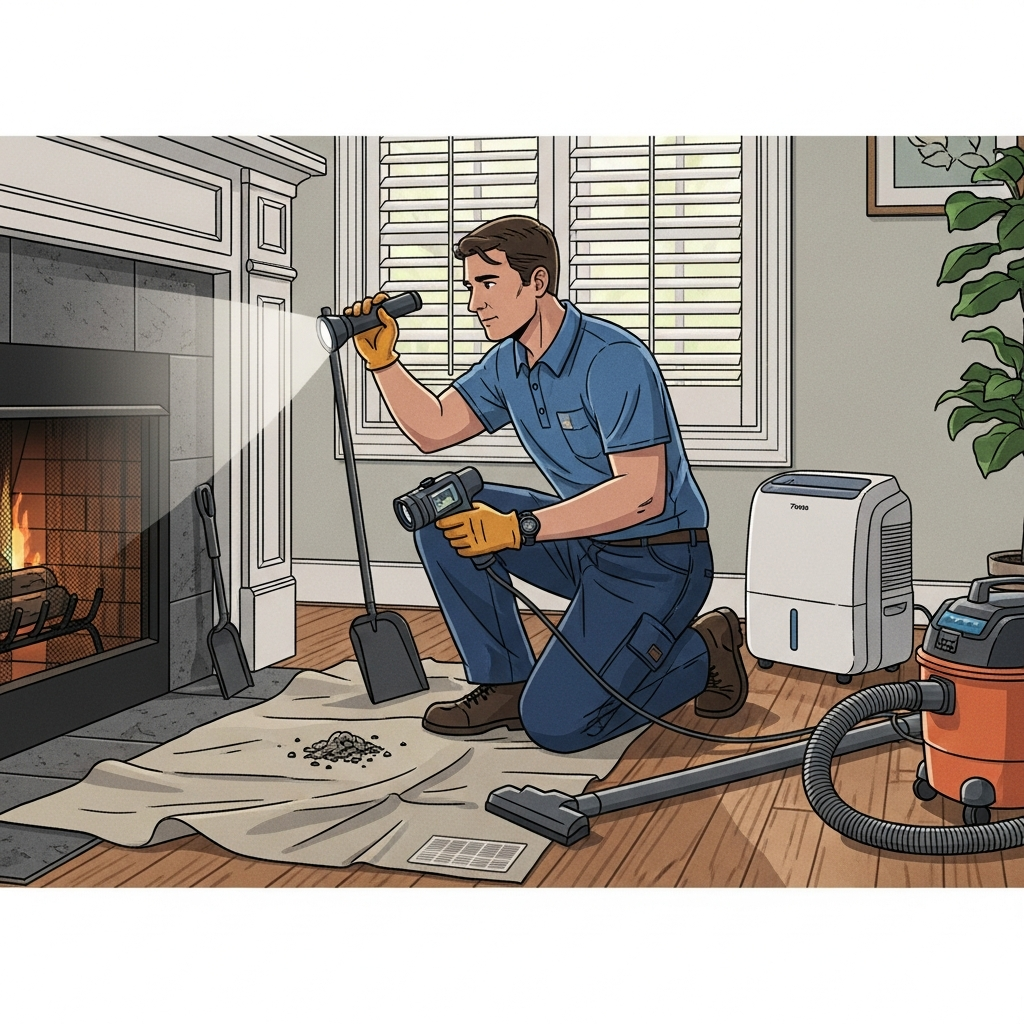
Turn off gas to any gas logs and let the system cool fully before working. Protect floors and nearby furniture with washable coverings, then close off the fireplace opening with a removable barrier if you plan to brush from the top. Use eye protection, a respirator, gloves, and sturdy clothing. Tampa’s frequent showers make roof work risky; pick calm, dry windows and never climb on a slick surface. Keep a stable ladder and a helper if you must go up.
Plan for containment. Soot is fine and travels easily on indoor air currents. Running your HVAC during cleaning can circulate particles, so turn it off temporarily. Have a shop vacuum with a fine-particle filter ready. Finally, take a quick exterior walk-around to check for signs of moisture staining or cap damage from recent storms before you even open the damper.
What a Complete Cleaning Includes
A thorough cleaning involves more than a few brush strokes. Expect careful examination of the firebox and damper, cleaning of the smoke chamber and smoke shelf, full-length flue brushing appropriate to the liner, and inspection of the crown, cap, and flashing. In Tampa, attention to moisture entry points is especially important, so the crown and cap receive extra scrutiny, along with any chase covers on prefabricated systems. The technician or informed homeowner should also verify draft after cleaning to ensure residues and potential obstructions are eliminated.
Documentation is part of completeness. Photographs, notes on creosote type, observations about rust or corrosion, and any mention of animal activity build a history for your system. This record becomes invaluable when deciding whether small cracks need repair now or can be monitored, or when comparing how different wood choices or burn habits affect residue.
Inside the Firebox: Getting the Basics Right
Begin by removing all cooled ash and vacuuming loose deposits. Inspect refractory panels for cracks, confirm that mortar joints are solid, and check that the damper opens and closes smoothly. Rust on damper plates or frames can appear faster in Tampa’s humidity; record light rust for monitoring and flag heavier pitting for professional attention. If gas logs are present, lightly clean burners and confirm that ports are clear without altering settings beyond your expertise.
Odors often originate right at the firebox. If you notice a damp, smoky smell on muggy afternoons, it may trace back to a cap issue, a poor throat seal, or a damper not closing tightly during the off-season. Capturing these notes now makes your later troubleshooting straightforward.
The Smoke Chamber and Shelf: Hidden Collection Points
Soot, creosote, and debris gather rapidly where the firebox transitions to the flue. Brushing this area thoroughly with appropriate hand tools and vacuuming dislodged material are essential. This is also where windblown debris often lodges during Tampa’s blustery summer storms. A smooth smoke chamber interior helps reduce turbulence and improves draft, so note any missing or deteriorated parging that may need attention.
Flue Brushing: Technique and Patience
Select a brush matched to your flue size and material. Connect extension rods and feed the brush steadily, working in measured strokes. Add rods to reach the top, then withdraw with the same deliberate pace to ensure all sides are contacted. If you encounter resistance, back off slightly and rotate to find a better angle rather than forcing it. Creosote can vary from light dust to stubborn, shiny glaze. The latter calls for professional-grade techniques and should be flagged for a certified sweep.
Check your progress mid-job with a flashlight. You should see a more even surface and reduced buildup. Tampa’s humidity can make residues sticky; if brushing smears rather than clears, scheduling a professional evaluation is wise, since different strategies may be needed.
Exterior Components: Crown, Cap, and Flashing
On the roof, examine the crown for cracking and the cap for secure attachment and intact screening. Corrosion can advance quickly here, particularly in neighborhoods closer to the bay. Confirm that flashing is seated and sealed where the chimney meets the roof. During rainy seasons, even small gaps can admit water that later appears as interior stains or odors. If you have a chase cover over a prefabricated chimney, check for pooling water or rust streaks and note anything that suggests replacement or resealing.
Trim nearby foliage that brushes against the chimney. Leaves and branches trap moisture and can rub against caps during gusty storms, loosening them over time. An open, well-ventilated top helps keep your system drier and cleaner between full services.
Draft Verification and Post-Clean Inspection
Open the damper and test draft with a small piece of lit kindling or rolled newspaper. Smoke should be pulled toward the flue rapidly. If it hesitates, you may have residual debris, negative pressure issues from kitchen or bath fans, or a flue that is still cool and damp after a rain. Make a note and retest later; persistent draft issues merit a professional assessment to ensure safe operation.
Complete your documentation with photos where possible and clear notes on any repairs to consider. Tampa homeowners benefit from scheduling follow-ups ahead of the busy season, when cooler nights prompt widespread fireplace use.
Cleaning Frequency for Tampa Homes
Even occasional users should aim for an annual inspection. If you burn frequently during cool periods, plan for more frequent cleaning. Gas systems, while cleaner, still deserve yearly checks to catch corrosion or venting problems that humid air can accelerate. Remember that long off-seasons allow moisture to linger, and storms can introduce debris—both of which warrant attention.
Choosing Professional Help
A qualified technician brings the right tools, safety equipment, and local experience. They can evaluate unusual conditions, like repeated moisture staining after specific wind directions, wildlife evidence, or glazing creosote. They may also suggest upgrades like top-sealing dampers or better caps tailored to Tampa’s climate. If you want a reliable, turnkey approach, schedule periodic chimney cleaning and keep your notes handy so the visit addresses everything you have observed.
Troubleshooting Common Symptoms
Smoky startups may indicate a cold, damp flue or a blockage. Pre-warming the flue by briefly holding a lit roll of newspaper near the opening can help. Musty odors during summer often trace back to minor moisture entry or a damper issue. Rust on caps or chase covers suggests a need for faster intervention in salty or humid zones. Persistent debris accumulation could be a wildlife problem, which should be handled by professionals mindful of local regulations.
Seasonal Considerations in Tampa
Plan cleanings and inspections before the first cool front of fall. After severe storms, do a quick perimeter check for obvious damage to the cap or masonry. During the long, hot summer, keep the damper properly closed when the fireplace is not in use to limit humid air intrusion. Periodic short checks through the off-season keep you ahead of surprises when you are ready to use the fireplace again.
Frequently Asked Questions
Do gas fireplaces need cleaning? Yes, they still require vent checks, component cleaning, and inspection for corrosion. While they produce less soot, moisture and debris can still compromise performance.
What causes shiny, glazed creosote? Cool, restricted flues and smoldering fires often lead to condensed, hardened residues. This type calls for professional removal techniques.
Why does my chimney smell after rain? Water interacting with soot produces strong odors. Leaks at the cap, crown, or flashing may be culprits and should be addressed promptly.
How do I know if animals have nested in my flue? You may find twigs, feathers, or hear chirping. Do not attempt removal on your own; some species are protected. A screened cap and professional help are essential.
Is once a year enough for cleaning? It depends on use, fuel, and draft. Annual inspections are a baseline, but frequent wood burning or prior issues can justify more frequent service.
Can I seal small cracks myself? Minor cosmetic issues may be manageable with appropriate products, but anything in the flue, crown, or structural areas should be evaluated by a pro.
Does humid air reduce draft? Yes. Damp, cool flue walls resist rising smoke. Pre-warming the flue and ensuring proper cap design can help.
Book Service with Confidence
For an efficient, tidy, and climate-aware approach to care, schedule professional chimney cleaning before the next cool front arrives. With a documented process, a focus on moisture control, and local expertise, you will enjoy safer, cleaner fires and a system that stands up better to Tampa’s demanding weather year-round.