Commercial properties in Tampa contend with humid weather, sandy soils from nearby beaches, and year-round foot traffic that grinds debris into carpet fibers. Offices, retail spaces, medical suites, hospitality venues, and educational facilities all face unique demands. Establishing best practices for commercial carpet care protects brand image, supports indoor air quality, and extends the life of a major asset. A strategic plan blends routine maintenance, interim cleaning, and periodic deep restoration while coordinating with operations to minimize disruption.
Successful programs start with a detailed site assessment. A professional will map traffic patterns, identify fiber types and installation methods, note transitions and trip points, and evaluate ventilation. They’ll mark high-impact zones—lobbies, elevators, corridors, break rooms, restrooms entrances, and copy areas—where soils, oils, and spills concentrate. From here, they recommend a schedule and mix of cleaning methods that fit occupancy hours, building logistics, and your facility’s image standards.
For Tampa businesses, humidity management is essential. Carpets act as reservoirs for moisture and pollutants, so processes must focus on rapid drying. Pairing mechanical agitation, efficient soil removal, and strong airflow keeps spaces open to employees and visitors quickly after service. When you build your plan, look for a provider who communicates clearly, documents procedures, and adjusts to seasonal changes in foot traffic and weather.
In the opening phase of a service contract, it is useful to set expectations about performance goals: cleaner appearance, reduced allergens, odor control, or compliance with sanitation policies. A collaborative kickoff ensures the right metrics are tracked, from spot recurrence rates to occupant satisfaction. Early wins—like eliminating long-standing traffic lane grayness or addressing persistent coffee spots—build confidence and momentum.
Within your maintenance framework, professional carpet cleaning occupies a central role. But it works best when supported by daily vacuuming, entrance matting, and spill response protocols. Your janitorial team and your specialty cleaning vendor should coordinate regularly so that spotting chemicals don’t interfere with extraction chemistry and so that schedules minimize disruption to operations.
Core Components of a Commercial Program
A well-rounded strategy includes vacuuming, interim encapsulation, periodic hot water extraction, and targeted spot and odor control. Vacuuming is foundational; high-filtration units with proper agitation collect dry soils before they bind to fibers. Frequency may vary: daily for main corridors and lobbies, multiple times per week for cubicle rows, and as-needed for conference rooms.
Interim cleaning using encapsulation is a cost-effective way to maintain appearance in between deep extractions. Polymer-based solutions surround soils, crystallize, and are removed by routine vacuuming. This method uses minimal moisture, making it ideal for Tampa’s humid climate and for occupied spaces needing quick turnaround. An encapsulation pass can keep traffic lanes bright and prevent the gradual gray cast that erodes professional image.
Hot water extraction delivers restorative results. It flushes suspended soils and residues, neutralizes cleaning agents, and lifts contaminants from carpet bases. Because commercial installations often use low-pile glue-down carpet, technicians adjust tools and techniques to ensure efficient moisture control and thorough recovery. Scheduling after-hours or on low-traffic days helps manage drying without interrupting business.
Targeted Spot, Spill, and Odor Management
Spots become stains when they spread, wick, or chemically bond to fibers. A practical program trains staff on immediate blotting techniques and provides approved spotters for common issues like coffee, tea, toner, and food oils. Your professional vendor can place discreet spot stations for quick access and educate teams on when to call for help—especially for protein spills or persistent odors.
Odor control is especially relevant for restrooms entrances, break areas, and any zones with food preparation. Technicians can perform localized treatments that reach the backing or open seams where contaminants migrate. They may recommend periodic deodorizations at the same frequency as interim maintenance to keep public areas pleasantly neutral.
Scheduling With Minimal Disruption
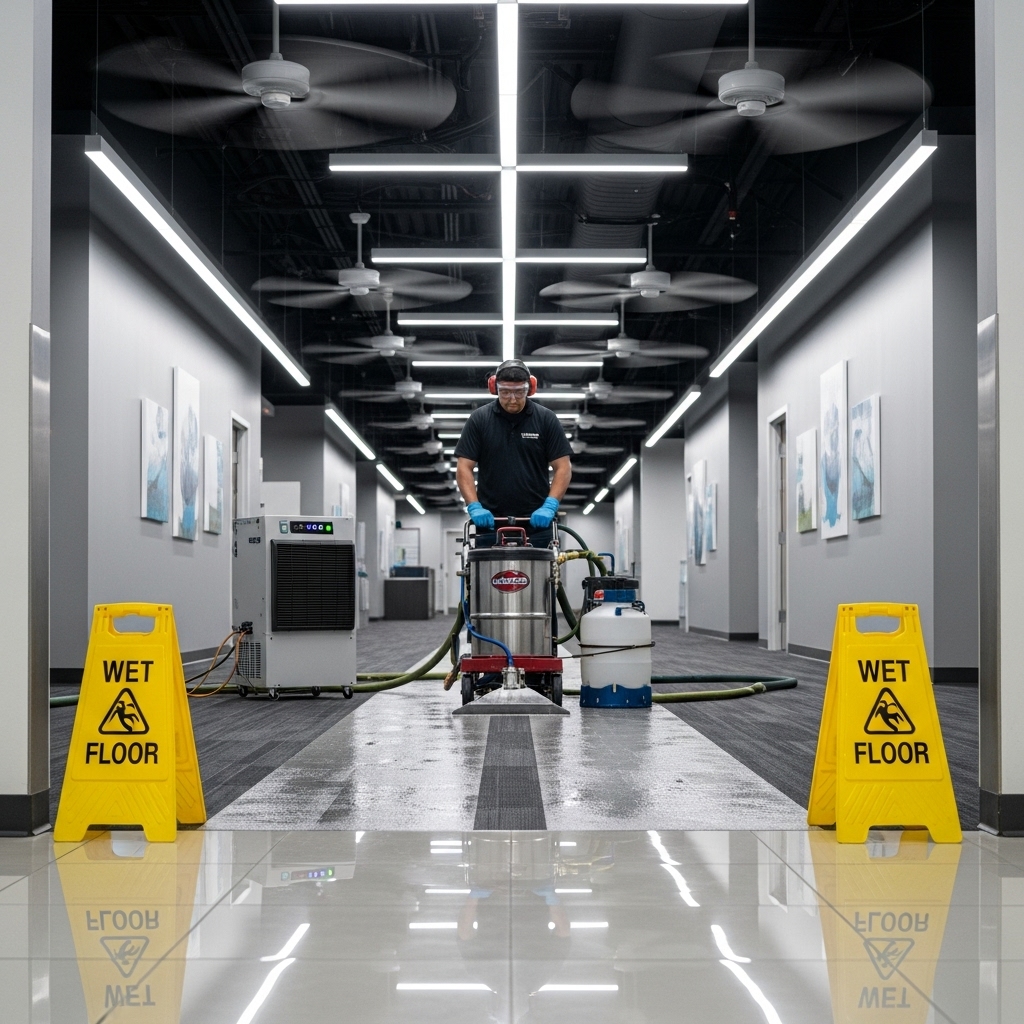
Commercial cleaning plans succeed when they respect operations. Facility managers often prefer after-hours service or weekend appointments, with clear communication to security and tenants. Crews will post signs, manage hoses, and maintain safe walkways. To accelerate drying, technicians may use air movers and suggest running the HVAC in cooling and dehumidification mode. Tampa’s moisture-rich air is controlled best through a mix of indoor airflow and responsible moisture application.
In multi-tenant buildings, standardizing protocols keeps everyone aligned. A simple matrix indicating which floors are due for interim or restorative service each month helps ensure predictable results and budget stability. Tenants appreciate knowing when to clear floors, protect files, or secure electronics to streamline the process.
Fiber Identification and Protective Treatments
Commercial carpets vary widely: solution-dyed nylon, olefin (polypropylene), polyester, and wool blends all appear in the Tampa market. Solution-dyed fibers resist bleaching and are excellent candidates for encapsulation and hot water extraction. Olefin resists staining from many water-based spills but can attract oils; it responds well to solvents and thorough extraction. Wool requires pH-safe chemistry and reduced heat. A trained technician identifies the fiber type and chooses a method that respects color and texture.
After cleaning, applying a protector to high-traffic zones can extend appearance life, allowing soils to release more easily during vacuuming and future service. Protector is not a shield against damage, but it adds valuable time for spill response in busy spaces. Pair protection with robust matting and frequent vacuuming for best results.
Health, Safety, and IAQ Considerations
Clean carpets support indoor air quality by trapping particulates until they are removed, rather than allowing them to resuspend. High-filtration vacuums, thorough extraction, and balanced chemistry reduce dust and allergens. For medical suites or schools, ask for documentation on solutions used, safety data, and any fragrance-free options. Your provider should train staff to place warning signs, secure hoses, and avoid slip hazards during and after service.
Measuring Results and Continuous Improvement
What gets measured gets managed. Track complaint volumes, spot return rates, and the time it takes for traffic lanes to show soiling between services. Review results quarterly and adjust your plan: increase encapsulation frequency in heavy corridors, add more matting during rainy season, or schedule restorative extraction after special events. When facilities and vendors analyze outcomes together, appearance levels stabilize and extend.
Coordination With Janitorial Teams
Janitorial and specialty cleaning overlap in key areas. Align on vacuum specifications, bag change schedules, and spotter choices. Avoid high-residue products that complicate later extraction. Provide simple training on blotting techniques, dilution control, and when to escalate issues. Shared checklists and photo documentation help crews hand off information efficiently, reducing surprise stains and repeated work.
Responding to Tampa’s Climate
Humidity is more than comfort—it changes drying dynamics. In summer months, consider scheduling larger extraction projects in cooler parts of the day and plan for additional air movement. During heavy rain seasons, increase matting coverage and spot checks at building entrances. Sandy soils require extra attention to vacuuming; simply increasing agitation in entryways and elevators can pay large dividends.
Frequently Asked Questions
- How often should a commercial space be cleaned? Frequency depends on traffic and appearance standards. Many properties rotate interim and restorative services on monthly or quarterly cycles.
- Will cleaning interrupt business? With after-hours scheduling and rapid-drying methods, disruption is minimized. Technicians post signs and manage safe walkways.
- What methods work best for offices? A blend of encapsulation for appearance and periodic hot water extraction for deep soil removal is common.
- Can odors be eliminated in food areas? Targeted treatments can decontaminate backing and seams. Consistent maintenance prevents recurrence.
- Is the process safe for sensitive environments? Yes. Providers use documented chemistry, safety data, and low-odor options where needed.
- How do we prevent recurring spots? Proper blotting, approved spotters, and follow-up extraction for persistent stains keep spots from wicking back.
- Does protector help in commercial settings? Yes. It improves soil release and buys time for spill response in busy zones.
- How do we coordinate with janitorial? Align on vacuum specs, spotters, and communication routines. Share photos and notes between teams.
Putting Best Practices Into Action
When your plan blends daily prevention, interim maintenance, and restorative cleaning, carpets stay attractive and last longer. Define service zones, set realistic frequencies, document procedures, and review outcomes regularly. Build a partnership with a provider who communicates clearly and adapts to Tampa’s humid conditions and your site’s unique traffic patterns. In the middle of your program, reinforce the fundamentals—vacuuming, rapid spill response, and scheduled carpet cleaning—so appearance levels remain consistently high.
Keep Your Facility Looking Its Best
Your floors make a powerful first impression. Protect that image and the well-being of occupants with a thoughtful, measured approach to commercial carpet care. If you are ready to optimize your plan, coordinate schedules, and standardize procedures across locations, partner with a local team that understands the Tampa market. Connect today and schedule professional carpet cleaning aligned to your operating hours and performance goals.