
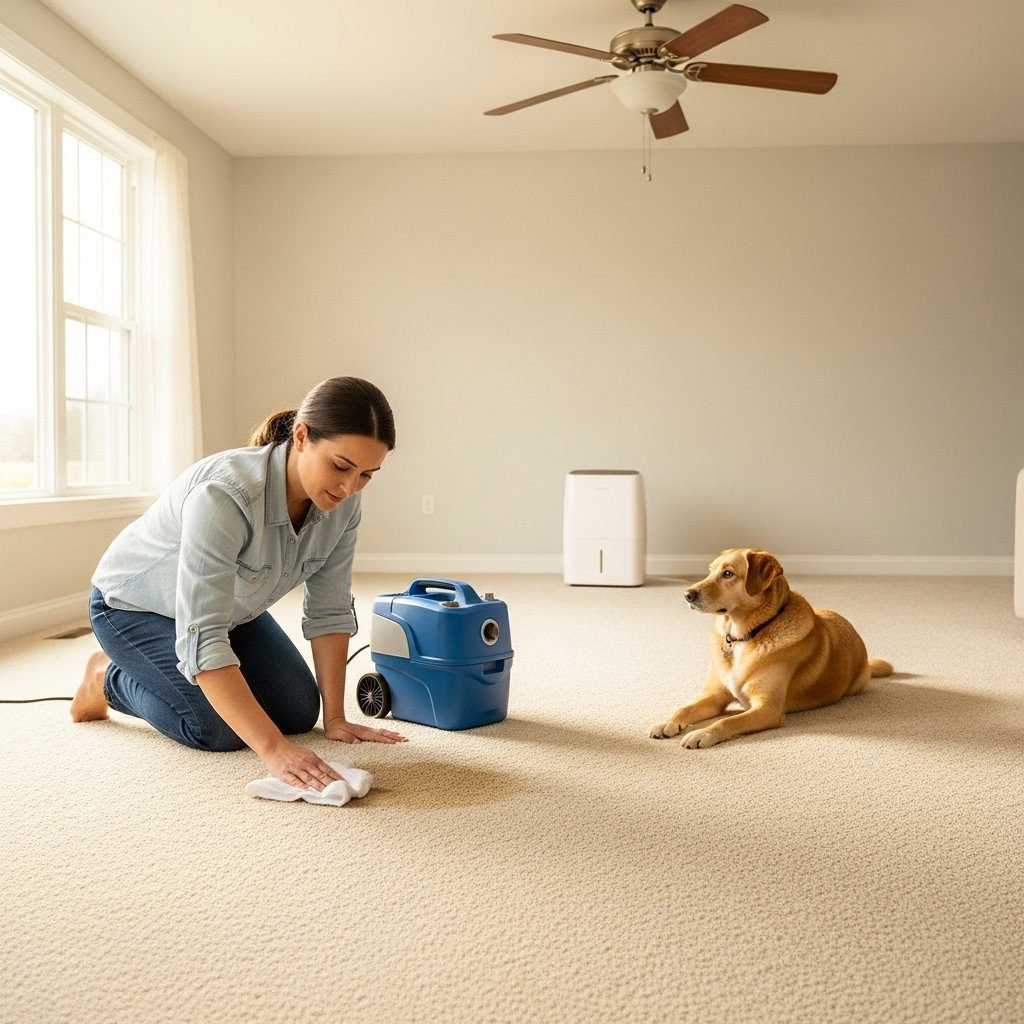
Pets bring joy, routine, and a sense of family. They also bring the occasional accident, muddy paws, and persistent odors that challenge carpets—especially in Tampa’s humid climate. If you share your home with dogs or cats, understanding how pet stains form, how to respond immediately, and how professionals remediate deep contamination will help you maintain a clean, healthy environment. This comprehensive guide covers everything from DIY first aid to technical decontamination and prevention strategies tailored for Florida homes.
Pet-related stains are not all the same. Urine is chemically complex, changing over time as bacteria break down urea into ammonia and other compounds. Feces and vomit contain proteins, dyes, and acids that can permanently alter carpet dyes if not treated correctly. Oils from skin and fur accumulate gradually, coating fibers and attracting soil. When humidity is high, odors intensify and wicking—stains returning from below—becomes more likely.
Professional carpet cleaning addresses pet challenges at multiple levels. Surface spots are treated with targeted chemistry; deeper contamination requires sub-surface flushing and, in serious cases, pad or subfloor decontamination. The goal is to neutralize odors at their source, not just mask them, while preserving fiber color and texture. Combined with smart at-home habits, professional service restores freshness and extends the life of your carpets.
Immediate Response: What To Do When Accidents Happen
Speed matters. The first minutes after an accident shape your ultimate results. Blot, don’t rub. Use a clean white cloth or plain paper towels to avoid dye transfer. Stand on the cloth to pull moisture up from the base of the pile. Replace cloths as they become damp and continue until little moisture remains. For semi-solids, lift gently with a spoon or dull edge before blotting.
Avoid spraying multiple store-bought spotters at once. Mixing chemistry can set stains or damage dyes. If you do use a spotter, start with a small amount and test in an inconspicuous area. Work from the outside of the spot inward to prevent spreading. For vomit or bile, neutralize acidity by blotting with a mild solution recommended by your professional or with plain water until service is available.
Understanding Urine: Why Odors Linger
Fresh urine is mildly acidic, but as it dries it becomes alkaline, causing dyes to shift and odors to intensify. In multi-layer carpets, liquids travel into the backing and pad. Heat and humidity revive crystals and residues, releasing odors long after the visible stain is gone. Surface-only cleaning may look good briefly but can lead to recurring smells as humidity rises.
Professionals use detection tools such as UV light and moisture meters to find hidden contamination. They may disengage a corner to inspect the backing and pad. Treatment options escalate based on severity, from topical deodorizers and enzyme application to sub-surface extraction using specialized tools that pull solutions from the pad. In severe cases, pad replacement and sealing of the subfloor may be recommended.
Professional Process for Pet Stains
The appointment begins with inspection and mapping of affected areas. Technicians identify fiber type, test colorfastness, and discuss your home’s ventilation. Dry soil removal comes first, since hair and dander trap odors and interfere with chemistry. Targeted pre-treatments follow: enzymes for proteins, oxidizers where color-safe, and solvent gels for oily residues. For urine, a neutralizing solution breaks down crystals before flushing.
Sub-surface extraction tools create a seal over the contaminated spot, allowing controlled injection and powerful vacuum recovery from the pad. This pulls dissolved residues upward, reducing the need for invasive repairs. Where fibers have experienced dye loss, color correction may be limited; a professional will set expectations clearly. Finally, rinsing neutralizes any remaining chemistry and grooming opens the pile to speed drying.
DIY Mistakes to Avoid
Over-wetting is the most common error. Home machines often lack the vacuum strength to recover moisture effectively, leaving residues and promoting musty smells. Another mistake is scrubbing aggressively, which distorts fibers and spreads contamination. Avoid using colored cloths or powders that can embed in the pile. Be wary of heavy perfumes; masking odors rarely solves the underlying issue and can cause sensitivity in household members.
Odor Control in Tampa’s Climate
Humidity amplifies odor. Use your air conditioning to dehumidify, run ceiling fans, and increase airflow during and after cleaning. Entry mats and regular vacuuming reduce the organic load in fibers, making odors less likely to build. If your pet has a favorite resting spot, wash blankets frequently and consider rotating area rugs to allow ventilation. For persistent issues, professionals can schedule periodic deodorization and targeted flushes.
Health Considerations
Pet accidents can contribute to bacteria, mold spores in wet environments, and allergens that circulate indoors. Professional processes emphasize removal and neutralization rather than simply covering smells. If anyone in your home has asthma or sensitivities, let your technician know—fragrance-free options and carefully selected solutions are available. Clean carpets contribute to a healthier home by capturing particulates that are removed during vacuuming and service.
Prevention: Training, Mats, and Routine
Prevention starts with consistent routines. Regular walks, accessible litter boxes, and positive reinforcement reduce accidents. Place absorbent mats near doors to catch paw moisture and sand before it reaches living areas. Vacuum at least weekly with a machine that has good agitation and filtration. Grooming pets reduces hair and dander accumulation. Keep a basic spill kit—white cloths, a spoon, and an approved neutral spotter—where you can reach it quickly.
Stain Types and Treatment Approaches
Protein-based stains (urine, feces, vomit) respond to enzyme-based solutions that break down organic matter. Tannin stains (coffee or tea mixed into pet accidents) may require tannin removers and gentle oxidizers. Oil-based soils from skin and fur need solvent-friendly spotters followed by rinsing. Dye transfer from toys or blankets calls for delicate handling to avoid spreading. Technicians select chemistry in a sequence to avoid conflicts and to minimize dye risk.
Some stains cause permanent color loss. For example, urine left to dry on natural fibers can strip or shift dye. In these cases, the goal is odor remediation and overall appearance improvement. Where feasible, color repair or strategic fiber replacement may be discussed for highly visible areas.
Working With Professionals: What to Share
During booking, mention the number of pets, usual accident locations, and any recent cleaning products you have used. At the appointment, point out suspect spots even if they are not currently visible—UV inspection can confirm contamination. Discuss allergies or fragrance sensitivities. A shared plan makes your service more effective, saving time and preventing surprises.
Drying Strategy for Pet Treatments
Because pet remediation sometimes involves deeper flushing, drying efficiency is critical. Technicians may place air movers and recommend running the HVAC in cooling mode to reduce humidity. Keep pets off treated areas until dry to prevent recontamination and to allow protector applications to cure if applied. Groomed fibers will look uniform; footprints are normal until the pile sets fully.
Frequently Asked Questions
- Can every pet stain be removed? Some stains cause permanent dye damage. Professionals will explain probable outcomes before they begin.
- Why do odors return after I clean them myself? Odors can persist in the pad or backing. Without sub-surface extraction, humidity can reactivate them.
- Is professional service safe for my pets? Yes. Solutions are selected for residential environments and thoroughly rinsed. Keep pets off damp areas until dry.
- How often should I schedule service with pets? Many households benefit from one to two full services per year plus targeted treatments during high-accident periods.
- Will protector help with pet accidents? Protector gives you more time to blot spills before they set. It does not make fibers stain-proof.
- Can you fix color loss? Some color corrections are possible, but results vary. The priority is neutralizing odor and improving appearance.
- What about area rugs? Rugs require fiber-specific care; some should be cleaned off-site. Professionals will advise based on construction and dyes.
- How do I avoid wicking? Blot thoroughly, avoid over-wetting, and use professional sub-surface extraction for deep contamination.
Building a Maintenance Plan
Combine daily habits with periodic professional service. Schedule routine visits that include inspection and targeted odor control. Rotate furniture periodically to distribute wear and uncover hidden issues. If your pet is elderly or in training, consider more frequent spot-focused appointments. The goal is a stable level of cleanliness that supports comfort and health.
When to Consider Restoration
If accidents are frequent in one area, more extensive steps may be needed. A professional can disengage carpet, treat or replace pad, seal the subfloor, and reinstall. While this is more involved, it permanently removes embedded contaminants that routine surface cleaning cannot reach. The decision is based on severity, frequency, and the value of the carpeted space.
Putting It All Together
Respond quickly, use gentle techniques, and partner with a skilled provider who understands Tampa’s humidity and how it influences drying and odor control. Midway through your care plan, revisit the basics—consistent routines, good airflow, and scheduled carpet cleaning—to keep on track. With the right approach, your home can feel fresh and welcoming even with active pets.
Ready for a Fresher Home
If pet stains and odors have you worried about guests or comfort, help is available. Choose a local team experienced in urine decontamination, fiber-safe chemistry, and efficient drying. Schedule today and enjoy professional carpet cleaning that restores confidence in your living spaces.