
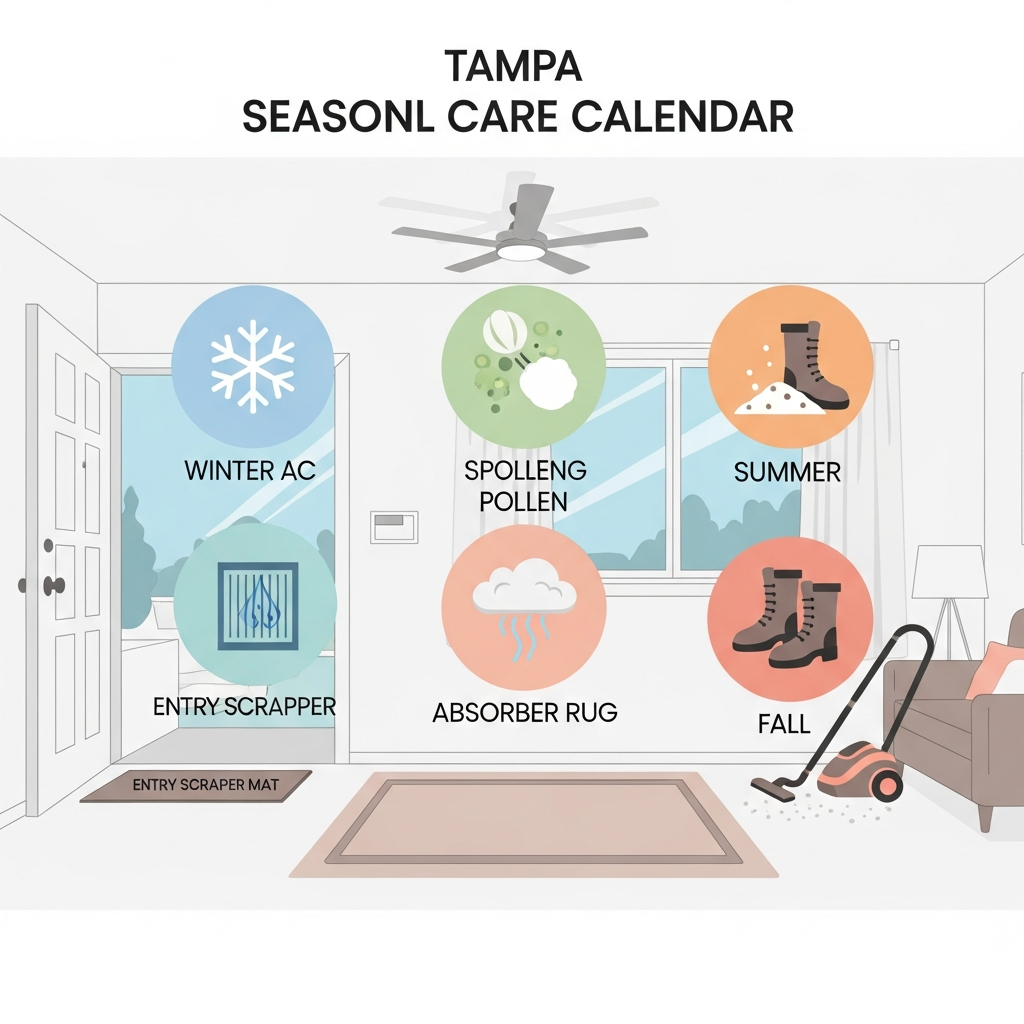
Season-by-Season Carpet Care for Tampa Homes
Tampa’s rhythms—sunny winters, spring pollen, summer storms, and sandy fall beach days—create unique demands on carpet care. When humidity rises, fibers hold onto moisture; when storms roll through, grit and organic debris track inside; and when holidays arrive, traffic spikes. Building a seasonal plan keeps your floors resilient and fresh all year. Start strong with an overview of the climate’s impact and how professional carpet cleaning fits into a maintenance calendar that prevents problems before they start.
Carpet is a filtration system for your home. It grabs dust, dander, pollen, and beach sand so your air does not have to. That is a good thing—so long as you remove what the carpet collects. Seasonal routines coordinate vacuuming, spot care, and periodic deep cleaning with Tampa’s weather, so you get a lasting, comfortable surface that looks great and supports better indoor air quality.
Winter: Cool, Dry, and Perfect for Deep Cleaning
Compared to summer, Tampa’s winter is the least humid season. That makes it ideal for deep cleaning, because drying happens quickly and evenly. Consider winter the reset point for your carpets. A whole-home hot water extraction removes the prior year’s embedded soils—holiday spills, summer sand, and autumn debris—so you begin spring with a clean slate. Continue vacuuming two to three times weekly and address any holiday stains promptly before they set in the Florida sun.
- Run HVAC for consistent airflow and balanced humidity during and after cleaning.
- Rotate mats and refresh entry rugs to prepare for spring pollen and rain.
- Inspect for wear in high-traffic lanes and rearrange furniture to distribute use.
Spring: Pollen, Showers, and Prevention
Spring brings blooms—and pollen that loves to cling to fibers. Windows open, breezes move, and particles ride right into living areas. Prevent buildup with frequent vacuuming using a HEPA-filtered unit, and swap or launder entry mats more often. With increased rainfall, plan for shoe removal at the door and keep a small kit ready for tracking incidents: white towels, a spray bottle of plain water, and a gentle spotter for non-protein spills.
- Vacuum entryways and halls every other day during peak pollen weeks.
- Groom carpets after vacuuming to lift fibers and reduce matting from moisture.
- Schedule targeted touch-up cleaning for traffic lanes if you hosted spring events.
Summer: Humidity, Storms, and Fast Drying Strategies
Summer is all about moisture management. Afternoon storms, beach outings, and high humidity increase the risk of musty odors and wicking. If you plan a deep cleaning in summer, coordinate with strong extraction and aggressive airflow. Keep the AC on and use ceiling fans to accelerate drying. Place extra mats at doors and consider washable runners for frequently used paths from patios or pools.
- Institute a “wipe feet and paws” rule to intercept sand and grass.
- Use dehumidification to keep indoor air in a comfortable range.
- Spot clean immediately after spills—heat sets stains faster in summer.
Fall: Sand, Festivals, and Back-to-School Traffic
With festivals, sports, and perfect beach days, fall tracks in plenty of grit. Sand behaves like abrasive micro-particles that can dull fibers if not removed regularly. Increase vacuum frequency and consider an interim maintenance cleaning before the holiday season. Grooming after vacuuming helps fibers recover from heavy summer use and prepares the home for guests.
- Swap mats again and inspect rubber backings to prevent floor discoloration.
- Plan furniture placement for gatherings, using area rugs in high-traffic zones.
- Schedule a hallway and stairs refresh to address the most used routes.
Why a Seasonal Plan Works in Tampa
Weather patterns drive soil types: spring pollen, summer moisture, fall sand, and winter festivities. By aligning cleaning and prevention with the calendar, you reduce the total soil load and keep fibers from reaching the “gray and flat” stage that requires more intensive intervention. A steady rhythm also curbs odors because fewer organic residues linger in the backing where humidity can reactivate them.
Building Your Annual Carpet Calendar
- Choose a Primary Deep Clean: Many Tampa homes pick winter for fast dry times and a fresh start.
- Plan Two Interim Touch-Ups: Target traffic lanes and pet zones in late spring and early fall.
- Weekly Routines: Vacuum consistently, especially near entries, kitchens, and living rooms.
- Spot Response: Blot immediately, use plain water first, and escalate only when needed.
- Humidity Control: Keep HVAC running during muggy spells and use fans after cleaning.
Tools and Techniques That Help Year-Round
- HEPA Vacuum: Traps fine particles and allergens common to coastal regions.
- Carpet Rake or Groomer: Lifts crushed fibers and distributes protective treatments evenly.
- Entry Mat System: Exterior scraper mat plus interior absorbent mat to capture sand and moisture.
- Neutral Spotter: Fiber-safe solution for common spills; always test in an inconspicuous area.
Hot Water Extraction’s Role in a Seasonal Strategy
Hot water extraction, often called steam cleaning, is the backbone of deep maintenance because it flushes out embedded soils and residues. Balanced chemistry and thorough rinsing leave fibers soft and less likely to re-attract dirt. In Tampa, the technique’s effectiveness grows when paired with a robust drying plan: strong extraction, HVAC assistance, and strategic use of air movers. Done seasonally, this approach protects your investment and keeps rooms feeling crisp and clean.
Midyear Reset: The Power of an Interim Clean
About six months after your primary deep clean, an interim service focused on traffic lanes, stairs, and favorite pet spots brings back the “just cleaned” feel quickly. The lighter process minimizes disruption while restoring texture and brightness where you notice wear the most. For homes with kids, pets, or frequent guests, pairing this with a professional carpet cleaning plan ensures consistent results.
Managing Odors in Humid Weather
Odors are most persistent when organic residues stay damp. Tackle them at the source with targeted neutralization and rinse thoroughly to remove residues. Improve airflow in corners and under furniture where air can stagnate. If an old pet accident reappears as a yellowish halo or faint smell on a muggy afternoon, consider a focused treatment and enhanced drying to stop the cycle.
Protecting High-Use Areas
- Stairs: Use stair-specific vacuum tools and schedule periodic edge detailing.
- Halls: Rotate small rugs and change traffic patterns by shifting furniture a few inches.
- Family Rooms: Use coasters under furniture legs after cleaning to prevent transfer from wood stains or metals.
Spill and Spot Playbook
- Act Fast: Blot with white towels to prevent wicking and spread.
- Add a Little Water: Re-wet lightly if needed to lift more residue, then blot again.
- Avoid Scrubbing: Scrubbing distorts fibers and can set stains.
- Test Spotters: Try in an inconspicuous area and use the least aggressive solution first.
After-Clean Drying Essentials
Drying is a process: extraction, airflow, and time. Right after a professional clean, follow the technician’s guidance on HVAC settings and fan placement. Keep foot traffic light until carpets are dry to the touch. Groom any flattened lines to help fibers stand tall and look uniform. In Tampa’s climate, these steps are the difference between “clean” and “clean and resilient.”
Frequently Asked Questions
Q: How often should I deep clean carpets in Tampa?
A: Many homes benefit from a full hot water extraction once a year, plus one or two interim services targeting high-use areas.
Q: Does humidity mean I should avoid summer cleaning?
A: Not at all. It means plan for strong extraction and active airflow. With AC and fans, dry times are still measured in hours.
Q: Can I open windows to speed drying?
A: Sometimes, but humid outside air can slow evaporation. In Tampa, HVAC plus fans usually works best.
Q: Will seasonal cleaning wear out my carpet faster?
A: Proper cleaning extends carpet life by removing abrasive grit and sticky residues that accelerate wear.
Q: What about wool or specialty fibers?
A: Pros adapt heat, chemistry, and agitation to protect delicate fibers. Communicate fiber types and any manufacturer guidelines.
Make Every Season Easier on Your Carpets
With a simple calendar and smart drying habits, your Tampa home can feel fresh no matter what the weather brings. When it is time for a reset—before holidays, after summer storms, or as part of your annual plan—book professional carpet cleaning and enjoy soft, clean floors that welcome family and friends all year long.