Introduction: A Complete Tampa Guide to Chimney Cleaning and Inspection
Whether you enjoy an occasional fire on a cool evening or a frequent glow during family gatherings, safe operation starts with a clean, well-inspected venting system. Tampa’s coastal climate, seasonal storms, and long humid summers mean your chimney faces different challenges than those in colder regions. This guide explains how a professional visit unfolds, what a thorough assessment includes, and how to keep your system ready no matter the season. If you are preparing to schedule or simply building a maintenance plan, professional chimney cleaning paired with a detailed inspection offers the best foundation for reliable performance.
Because Florida homes vary widely—from classic masonry fireplaces to modern factory-built units—this guide covers both. You will learn what technicians look for inside the firebox and flue, how exterior components like caps, crowns, and flashing work together to keep water out, and the simple steps you can take to protect your investment between visits. With a clear plan, your fireplace delivers comfort without worry.
Why Cleaning and Inspection Go Hand in Hand
Cleaning removes residues and obstructions that can reduce draft or pose a fire hazard, while inspection verifies the entire system is intact and performing as designed. A professional evaluates the flue liner, smoke chamber, damper, firebox panels, and termination components so any hidden issues are surfaced early. In Tampa, inspection is especially important because wind-driven rain, salt, and sun can prematurely age exterior parts even when the fireplace is seldom used.
Pairing these services provides a complete view. The system is cleared, then examined. Photos document L-shaped offsets, transitions, and any tight spots where soot tends to gather. You finish with practical recommendations and a realistic schedule for follow-up visits.
Tampa-Specific Concerns: Moisture, Wind, and Wildlife
Humidity can linger inside unused flues, mixing with residues to form acidic moisture that is tough on both metal and masonry. Afternoon thunderstorms test caps, crowns, and flashing, while coastal winds carry fine salt that can encourage surface corrosion. Tampa neighborhoods with mature trees may also see more leaf debris and animal activity around rooflines.
Technicians address these realities by emphasizing water management at the top of the chimney. They check the fit and screening of caps, the condition of crowns and chase covers, and the quality of flashing seals. Properly maintained, these components prevent most moisture issues and extend the life of the entire system.
Inside the Home: Firebox, Damper, and Draft
A visit often begins with a walkthrough of the hearth area. The technician notes the condition of firebox panels or masonry bricks, the operation of the damper, and any staining near the opening. They verify that smoke detectors and carbon monoxide alarms are nearby and that room airflow will support a steady draft. Any unusual odors or visible soot deposits are documented for follow-up.
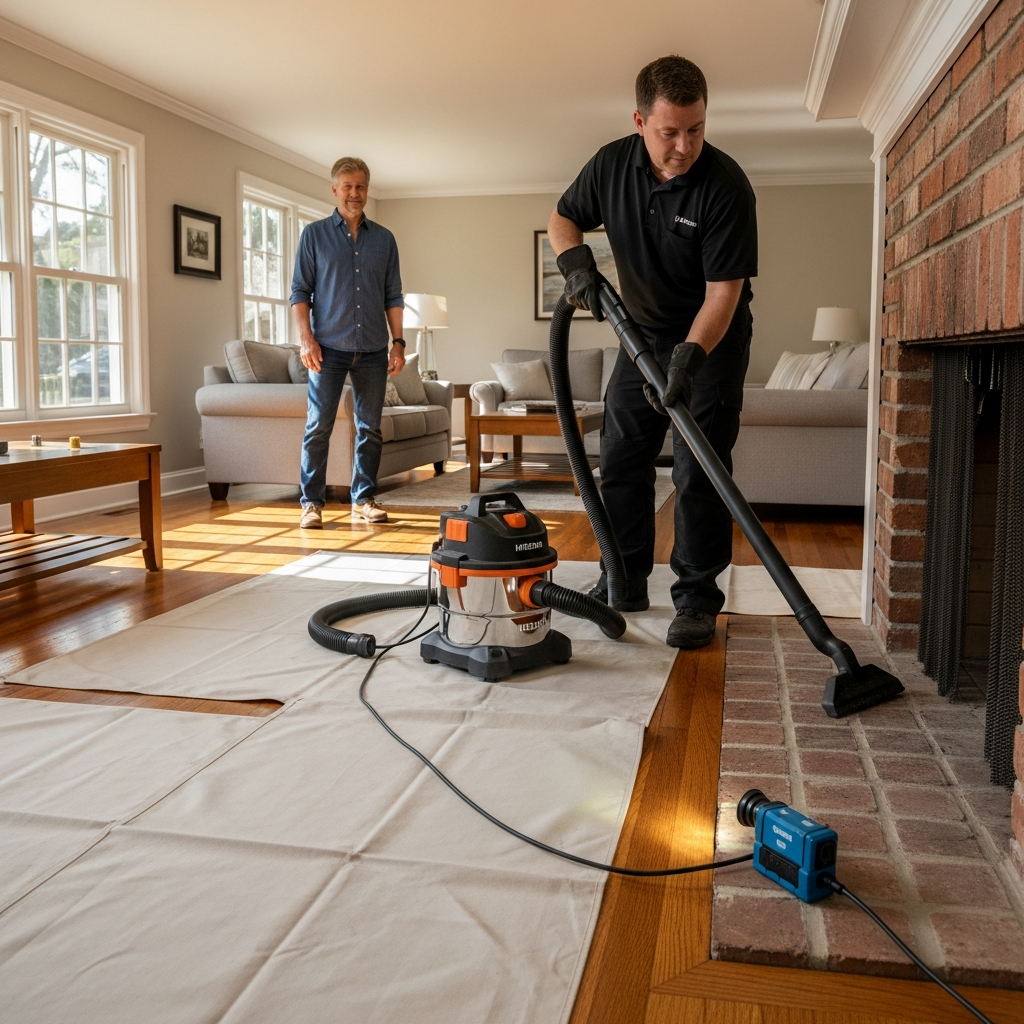
Next, specialized brushes and high-filtration vacuums are used to remove buildup along the flue. In some homes, a rotary system loosens stubborn deposits. Throughout, the technician evaluates the surfaces they expose, verifying that liners remain continuous and free of visible damage.
On the Roof: Caps, Crowns, and Flashing
Once the interior is addressed, attention shifts to rooftop components. The cap should sit securely and provide an even, protective overhang. Screening prevents animals and debris from entering while still allowing smoke to vent freely. The crown—concrete at the top of a masonry chimney—or a metal chase cover on factory-built systems keeps water from reaching the flue tile or chase interior. Flashing must lie flat and be properly sealed to the roof, especially in areas exposed to strong sun and heavy rain.
Tampa’s storm cycles make these elements vital. A minor crack today can become a pathway for water during the next squall, and a misaligned cap can funnel rain or debris back into the flue. Regular roof-level checks catch these problems early.
What “Thorough” Looks Like During a Visit
A thorough appointment includes both functional cleaning and systematic inspection. Expect a combination of protective floor coverings, careful tool selection, and step-by-step documentation. Photographs show what the technician observes, including the state of tile joints, transitions, or factory seams, and the decisions that follow are explained in plain language. You will understand what is working well and what needs attention.
When something requires follow-up, the technician prioritizes by safety and performance. Items that affect draft or water management typically come first. Less urgent cosmetic issues are discussed openly, with options based on your home, use patterns, and future plans.
Seasonal Scheduling Strategies
In Tampa, late summer and early fall are popular times to schedule, giving you a comfortable window before the first cool evenings. Many homeowners also target a post-storm check in late spring or early summer to confirm exterior components are secure. If you skip a season of burning, it is still wise to keep the appointment so moisture and animal activity do not go unchecked.
Flexibility is helpful, as roof work is weather dependent. Morning roof inspections are common to avoid afternoon thunderstorms and slippery surfaces. Clear access around the home and attic hatches keeps things efficient.
How Homeowners Can Prepare
Before the visit, cool the fireplace for a day if you have burned recently. Move nearby décor and ensure a few feet of open space around the hearth. If your home requires roof access through the interior, clear a pathway and note any unique conditions such as steep driveways or tall fences that may affect ladder placement.
Write down anything unusual you have noticed, such as smoke spillage, a persistent odor after rain, or sounds from the flue. These clues lead technicians directly to potential trouble spots and make the most of their time.
Communication and Photographic Documentation
Expect regular check-ins during the visit. After the initial interior work, technicians often share photos that reveal the state of the liner, smoke chamber, and cap screen. This visual record gives you confidence and becomes a helpful baseline for future appointments. If something seems unfamiliar, ask to see it from another angle or with a bright light; a good pro will gladly accommodate.
At the end of the visit, written notes summarize findings and provide a practical maintenance plan. Even if everything looks great, having a dated record demonstrates responsible care and helps with home sales or insurance documentation later.
Benefits of Consistent Maintenance
The benefits accumulate year after year. Cleaner burns produce less odor, and a well-drafting fireplace is easier to light and maintain. A sound cap and crown keep water out, reducing the likelihood of staining on nearby walls or ceilings. Most importantly, routine attention lowers the risk of hidden conditions that could compromise safety.
Another benefit is predictability. When you follow a schedule, each appointment is straightforward. The technician knows your system, monitors a few key areas, and provides steady, professional guidance. Over time, this relationship translates into a fireplace that is dependable and enjoyable whenever you want it.
Mid-Guide Reminder: Keep the Focus on Tampa’s Realities
Because our region’s heat and humidity affect materials differently than in colder zones, it is smart to adapt your home maintenance plan accordingly. Proactive attention to top-side water management, regular interior cleaning, and checks for corrosion keep your system resilient. For many households, a recurring appointment for professional chimney cleaning and inspection becomes a simple, reliable rhythm that preserves both comfort and safety.
DIY Considerations vs. Professional Expertise
Some tasks are appropriate for homeowners, like keeping the firebox tidy and monitoring the cap from ground level for obvious damage. However, working on roofs and inside flues involves safety risks and specialized equipment. Professionals use ladders, tie-offs, and vacuums designed for fine particles, along with cameras and lighting that reveal details you cannot see from the hearth.
A pro’s training also helps them identify subtle clues—such as draft behavior, liner discoloration, or hairline crown fissures—that signal developing issues. This expertise is difficult to replicate without regular exposure to many different systems.
Gas vs. Wood-Burning Systems
Gas fireplaces are popular in Tampa for their convenience, yet they still rely on proper venting and sealed components to operate safely. Wood-burning systems demand more frequent attention to residue. Both benefit from periodic checks of gaskets, dampers, and termination parts exposed to the elements.
If you transition between gas logs and wood burning, notify the technician so they can verify compatibility and safe operation. Each configuration has specific requirements, and a small adjustment can make a big difference in performance.
Frequently Asked Questions
Q: How often should I schedule an appointment? A: An annual visit is a dependable baseline for Tampa, with additional checks after major storms or if you notice odors, nesting activity, or visible soot.
Q: Will cleaning eliminate smoke spillage into the room? A: Proper cleaning and inspection address many causes of spillage. Draft can also be influenced by house pressure, competing fans, or a partially closed damper, all of which a technician can evaluate.
Q: What are the signs of moisture issues? A: Musty smells after rain, white efflorescence on exterior masonry, or staining near the firebox can indicate water entry that merits attention.
Q: Do factory-built systems require the same care as masonry? A: Yes, they require care tailored to their construction. Chase covers, listed caps, and factory joints must remain intact for safe, efficient operation.
Q: Is it normal to find animal nests? A: In Tampa’s leafy neighborhoods, nests and debris are common if the cap screen is missing or damaged. Proper screening prevents most incidents.
Q: Can I perform the work myself? A: Light housekeeping is fine, but interior flue work and roof-level checks are best left to trained professionals with proper equipment.
Q: How long does a visit take? A: The duration varies with system type and access. Clear pathways, a cool firebox, and calm weather help keep the appointment efficient.
Q: What should I ask the technician at the end? A: Ask for photos, a summary of findings, and a recommended maintenance schedule tailored to your home’s usage and local conditions.
Make Your Fireplace a Reliable Part of Home Comfort
A little planning goes a long way. With a well-timed appointment and a focus on Tampa’s climate, your fireplace can be a dependable feature you enjoy without worry. If you are ready to plan your next service, connect with a trusted local team for professional chimney cleaning and inspection so your system is prepared for every season.