Introduction: What Tampa Homeowners Can Expect From a Chimney Service Visit
When the cooler months roll in or you simply want the ambiance of a crackling fire on a rainy Florida evening, you want to know your fireplace and flue are clean, safe, and ready. Many Tampa homeowners wonder what the overall experience looks like when scheduling a professional appointment, what steps are involved, and how to prepare. While every home is different, there are clear patterns and best practices that define a reliable service. In the first moments of planning, the most helpful perspective is to focus on safety, clarity, and the value of preventive care. If you are starting research or getting ready to schedule, professional chimney cleaning is a smart way to protect your home, your indoor air, and your peace of mind.
Tampa’s climate adds some unique wrinkles to fireplace maintenance. High humidity, salt-laden breezes near the bay, and powerful summer storms all influence how masonry, metal liners, and caps age. Even if you burn only a few times each year, nests, debris, and moisture can accumulate out of sight. That is why a well-structured appointment is more than a quick sweep; it is an assessment of the entire venting system and attached components, designed to keep your fireplace drawing correctly and your roofline free from staining, odors, and animal activity.
This guide walks you through what to expect during a typical visit in Tampa, the sequence of steps professionals follow, the kinds of conditions they commonly find in local homes, and the decisions you will make along the way. Think of it as a roadmap to a cleaner, safer fireplace experience—without surprises and with a lot more confidence.
Why Chimney Maintenance Matters in Tampa’s Climate
In northern climates, homeowners often associate soot buildup with heavy winter use. Tampa is different. Here, intermittent use combines with humidity, storms, and long periods of inactivity. The result is a venting system that can suffer from moisture intrusion, light corrosion on metal components, and nesting from birds or small wildlife. Because many Tampa homes feature low-slope roofs, wide soffits, and coastal exposure, wind-driven rain may enter through marginal caps, and leaves or palm fronds can collect near the crown.
These conditions affect more than convenience. Moisture plus acidic deposits from combustion can accelerate wear on mortar joints and metal liners. If left unaddressed, these materials can deteriorate, allowing exhaust to leak into unintended areas or diminishing the draft that keeps your fire burning cleanly. Regular attention is the simplest way to keep the entire system functioning as designed, so your seasonal fires stay enjoyable and your home avoids preventable repairs.
How a Professional Appointment Typically Unfolds
From the moment a technician arrives, you can expect a clear process. First, they confirm access points and protect your living area. Drop cloths or floor coverings go down, and furnishings near the hearth are moved or covered. Next, a visual survey identifies obvious issues such as staining, odors, damaged firebox components, or evidence of nesting. This early look guides the rest of the visit and helps flag any specialized tools that may be needed.
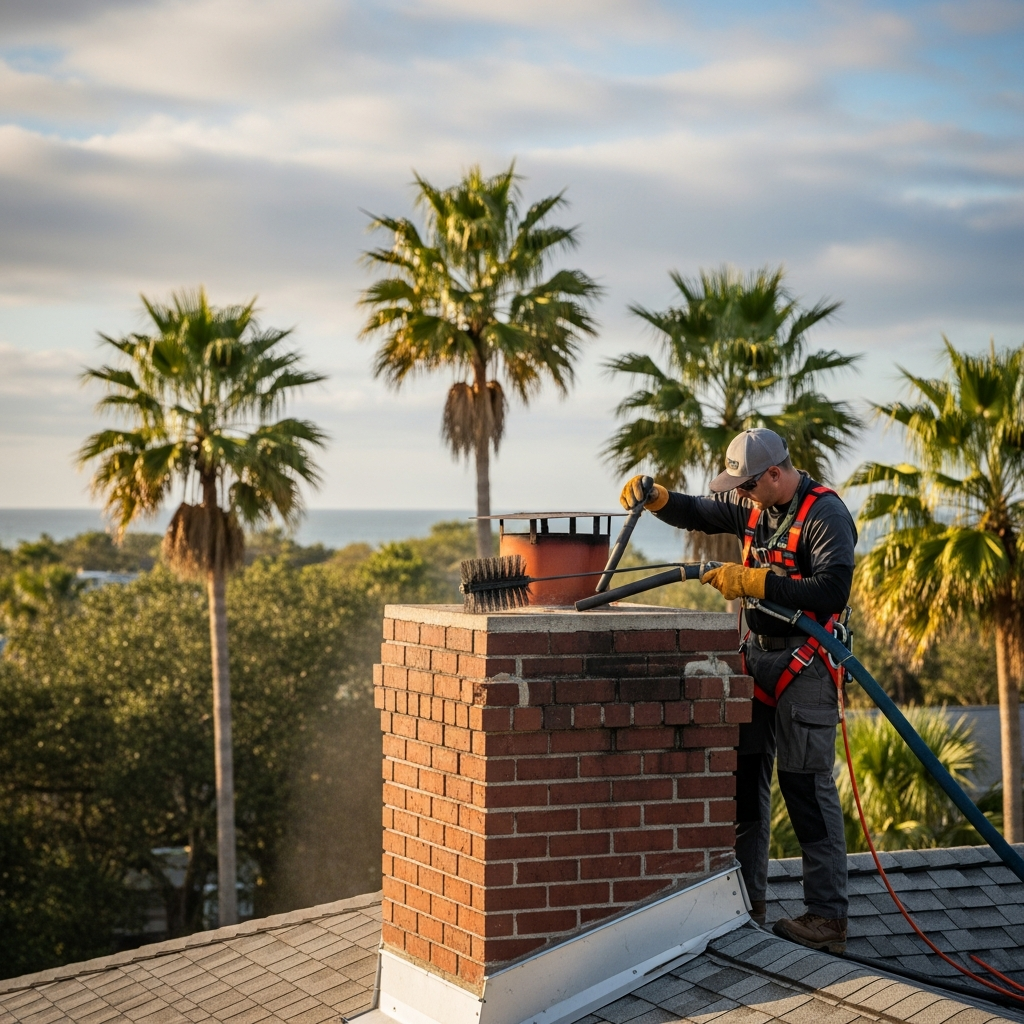
The main cleaning typically uses a combination of rods, brushes sized to the flue, and high-filtration vacuums designed to capture fine particulate. The sweep begins at the firebox or, where conditions permit, from the roof. Modern technicians may also use flexible rotary tools to dislodge stubborn deposits, especially in flues with offsets or older masonry where corners can trap soot. The debris is collected, checked, and removed from the home. During the process, the pro observes whether the liner appears smooth and continuous and whether the damper, smoke shelf, and adjacent components operate freely.
After the interior work, attention shifts to the exterior. The cap is inspected for fit, screening, and signs of bending or corrosion. The crown is checked for cracks that could permit water intrusion. The flashing around the base is examined for sealant degradation or lifted edges, particularly important in Tampa where summer heat and UV exposure can harden compounds faster than expected. If anything needs further evaluation, photos are taken and shared with you during the wrap-up.
Common Findings in Tampa Homes
Because many fireplaces here are used occasionally, soot accumulation is often uneven, with heavier deposits in certain transitions or elbows and relatively clean stretches of flue elsewhere. Moisture staining is common on smoke shelves or lower flue areas, sometimes accompanied by a mild musty odor. You might also see signs of previous nesting, such as twigs or seed hulls, trapped behind the damper or near the cap screen.
Masonry chimneys may show hairline crown cracks, spalling on exposed brick faces, or mortar gaps that reflect expansion and contraction cycles. Prefabricated units, common in newer Tampa homes, can show light surface rust on chase covers or caps if the protective coatings have worn thin. Prompt attention to these small issues helps prevent larger problems down the road.
Preparation: How to Get Ready for the Visit
Homeowners can make a visit smoother by clearing the hearth area, removing décor from the mantel, and ensuring a couple of parking spaces are available for equipment. If you burned a fire recently, allow a full day for the system to cool. Note any unusual odors, draft behavior, or animal activity you have observed, as these details help the technician target the right areas quickly.
Pets are best kept in a separate room during the work, and if your roof access is through an attic hatch, clear a direct path. Small steps like these save time and avoid accidental dust on furnishings or obstacles that could slow a thorough inspection.
What “Clean” Really Means for a Chimney
A complete service does more than remove visible soot. The goal is to reduce flammable residue, restore an open and continuous path for exhaust, and confirm that critical components are intact. A careful professional also assesses how air flows through your home, including possible competing vents or exhaust fans that could affect draft. The outcome is a fireplace that lights easily, burns more completely, and vents smoke efficiently out of the structure.
During the visit, the technician looks for the structural integrity of the liner and masonry, clearances to combustibles, and the physical condition of dampers, smoke chambers, and firebox panels. These checks inform recommendations for maintenance intervals and any repairs that should be prioritized.
Timing and Seasonal Considerations in Tampa
Although Florida’s winters are short, many homeowners find early fall is the best time to schedule, well before the first cool front. This timing helps you avoid the rush and ensures the system is ready whenever the mood strikes to enjoy a fire. Summer appointments are also common, especially if a technician needs roof access on a calm, dry day to examine caps, crowns, or flashing after storm season.
Because afternoon thunderstorms are part of life here, professionals plan roof work earlier in the day and may adjust the sequence based on weather radar. Occasional rescheduling for safety is normal and worth the added certainty that everything can be done carefully.
Mid-Visit Expectations, Communication, and Transparency
Good technicians communicate throughout the appointment. After the initial sweep, they often pause to share findings, show photos of the flue interior, and describe any conditions that merit attention. This dialogue gives you control and clarity. You can ask about draft improvement, odor reduction, and the best ways to keep moisture out during the off-season.
Some homeowners in Tampa alternate between occasional wood fires and gas log sets. That makes it even more important to ensure that both the venting and the appliance are compatible and in good operating condition. The middle of the visit is a great moment to discuss maintenance scheduling and the benefits of routine, seasonal attention. In many homes, a predictable rhythm of professional chimney cleaning paired with visual checkups keeps things running smoothly year-round.
Safety, Codes, and Best Practices
A fireplace is a controlled fire in the center of your home, and it deserves respect. Technicians trained in current standards evaluate clearance to combustibles, proper termination height above the roof, and the integrity of the liner or factory-built system. They will also look at smoke detectors and carbon monoxide alarms nearby and may suggest placement improvements if your home has been renovated.
For wood-burning systems, they examine the firebox panels or refractory bricks for cracks and the condition of the damper. For prefabricated and gas units, they check the chase cover, cap, and any necessary gaskets or seals that can affect performance. This careful attention is how small issues are stopped before they become bigger ones.
Signs You Should Schedule an Appointment
Even with light use, certain signs mean it is time to call a professional. Odors after rain, visible soot falling into the firebox, a damper that sticks, smoke spillage into the room, or a draft that reverses on windy days all indicate conditions that merit attention. Animal noises near the top of the chimney or a cap screen clogged with debris are also common triggers for scheduling.
After roof work or a major storm, a checkup is wise. Lightning strikes can damage caps and chase covers, and high winds can lift flashing. Catching these issues early keeps your system performing as intended and avoids messes during your next fire.
What Technicians Document and Share With You
Documentation is a hallmark of a thorough visit. Expect photos of critical areas, notes on the condition of the liner or smoke chamber, and a summary of any recommendations. This record becomes your maintenance history, useful for real estate transactions, insurance purposes, or simply ensuring you keep a regular schedule.
If repairs are recommended, pros explain the why behind each suggestion, the implications of deferring, and the sequence that makes sense for your home. You decide what to address and when, with a clear understanding of priorities.
Maintaining Your Fireplace Between Visits
Homeowners can extend the benefits of a professional service with a few simple habits. Keep the firebox free of excess ash and store firewood off the ground to discourage pests. Use seasoned wood to reduce residue and ensure the damper is fully open before lighting. If you notice persistent odors during damp weather, crack a nearby window slightly to balance indoor air and encourage a steady draft while you arrange a professional check.
Additionally, glance at the cap from ground level occasionally. If it looks tilted, damaged, or heavily discolored, make a note to share with your technician. Small observations go a long way toward keeping the system in top shape.
Frequently Asked Questions
Q: How often should Tampa homeowners schedule a professional visit if they use the fireplace only a few times a year? A: Even with occasional use, an annual appointment is a wise baseline because humidity, wildlife, and storm debris can affect the system regardless of how often you burn.
Q: Do gas fireplaces need the same level of attention as wood-burning systems? A: Gas units burn cleaner, but they still rely on a safe, unobstructed vent and well-sealed components. Annual attention helps confirm proper operation and catch moisture or corrosion concerns early.
Q: What if my home has a factory-built unit rather than a masonry chimney? A: Factory-built systems have specific components such as chase covers and listed caps that must be intact. Professionals familiar with these units know where to look for wear and how to protect them against our climate.
Q: Will my home be dusty after the appointment? A: Technicians use high-filtration vacuums and cover work areas to limit dust. You can help by clearing nearby items and allowing a few minutes for setup before work begins.
Q: Can I burn softwood in Florida? A: You can, but seasoned hardwood generally produces a cleaner, longer-lasting fire with less residue. If you burn softwood, monitor soot accumulation more closely and keep a regular maintenance schedule.
Q: What if I hear animals in the flue? A: Avoid lighting a fire and call a professional. The technician will assess and remove obstructions humanely and recommend cap or screening improvements to prevent a repeat.
Q: Are there signs of moisture issues I should watch for? A: Musty smells after rain, faint discoloration near the firebox, or efflorescence on masonry outside can all hint at water entry that deserves attention.
Q: How long does a typical appointment take? A: Timing varies with system type, roof access, and what the technician finds, but clear access and good weather help keep things efficient.
Take the Next Step for a Safer Fireplace
Your fireplace should be a source of comfort, not concern. With a predictable process, clear communication, and attention to Tampa’s unique conditions, you can enjoy clean-burning fires and a home protected against hidden issues. If you are ready to book, reach out to a trusted local team for professional chimney cleaning and keep your system in excellent shape for the season ahead.