
Keeping your dryer running safely and efficiently starts with a clear, well-maintained vent. In Naperville, Florida—where seasonal humidity, freezing winters, and leafy autumns all influence household systems—lint and debris can accumulate quickly in dryer vents. Routine service reduces fire risk, shortens drying times, and protects your appliance. This guide explains how professional service works in Naperville, what typically influences the overall value of a visit, how to prepare for an appointment, and the most convenient ways to schedule. You will also learn the signals that mean it is time to call a technician, what to expect on the day of service, and how to keep your vent clear in between visits.
Whether you own a newer construction home along the Riverwalk or a historic property near downtown, regular dryer vent cleaning helps ensure safe operation and consistent airflow. Because dryers push warm, moist air through a narrow exit path, any restriction—lint, crushed ducting, bird nests, or roof cap issues—can cause backpressure. The results are longer drying cycles, stale odors, extra heat in the laundry room, and an elevated risk of lint ignition. Professional technicians in Tampa are familiar with local construction styles and common vent layouts, from short runs through a side wall to longer attic routes that terminate on the roof.
Why professional service matters in Naperville
Tampa homes experience a wide range of weather conditions throughout the year. During winter, frozen termination caps can stick, and condensation inside long duct runs can leave behind residue that catches lint. In spring and summer, humidity can add weight to lint, helping it adhere to the duct interior. Fall introduces leaves and outdoor debris that may collect at the exterior hood. Professional service addresses these seasonal challenges by clearing the entire run from the dryer connection to the termination, verifying airflow, and inspecting fittings and transitions.
Beyond safety, the efficiency benefits are noticeable. A clear vent allows your dryer to move air freely, which promotes faster evaporation of moisture from clothes. Many homeowners report shorter drying times after service, which reduces wear on fabrics and helps maintain the machine’s longevity. In a busy Tampa household, that time savings adds up—especially for families with multiple weekly loads or sports uniforms that need frequent drying.
Common signs you need service
- Clothes take longer than one cycle to dry.
- The dryer or laundry room feels unusually hot to the touch after a load.
- You notice a persistent, slightly musty or burnt-lint odor.
- The exterior vent flap does not open fully during operation, or airflow feels weak outside.
- There is visible lint around the outside hood or inside the laundry area.
- Your dryer’s moisture sensor seems inconsistent, requiring extra time repeatedly.
If one or more of these issues sound familiar, an inspection is a smart next step. Addressing airflow restrictions promptly prevents more serious problems, including overheating and thermostat trips.
What happens during a professional visit
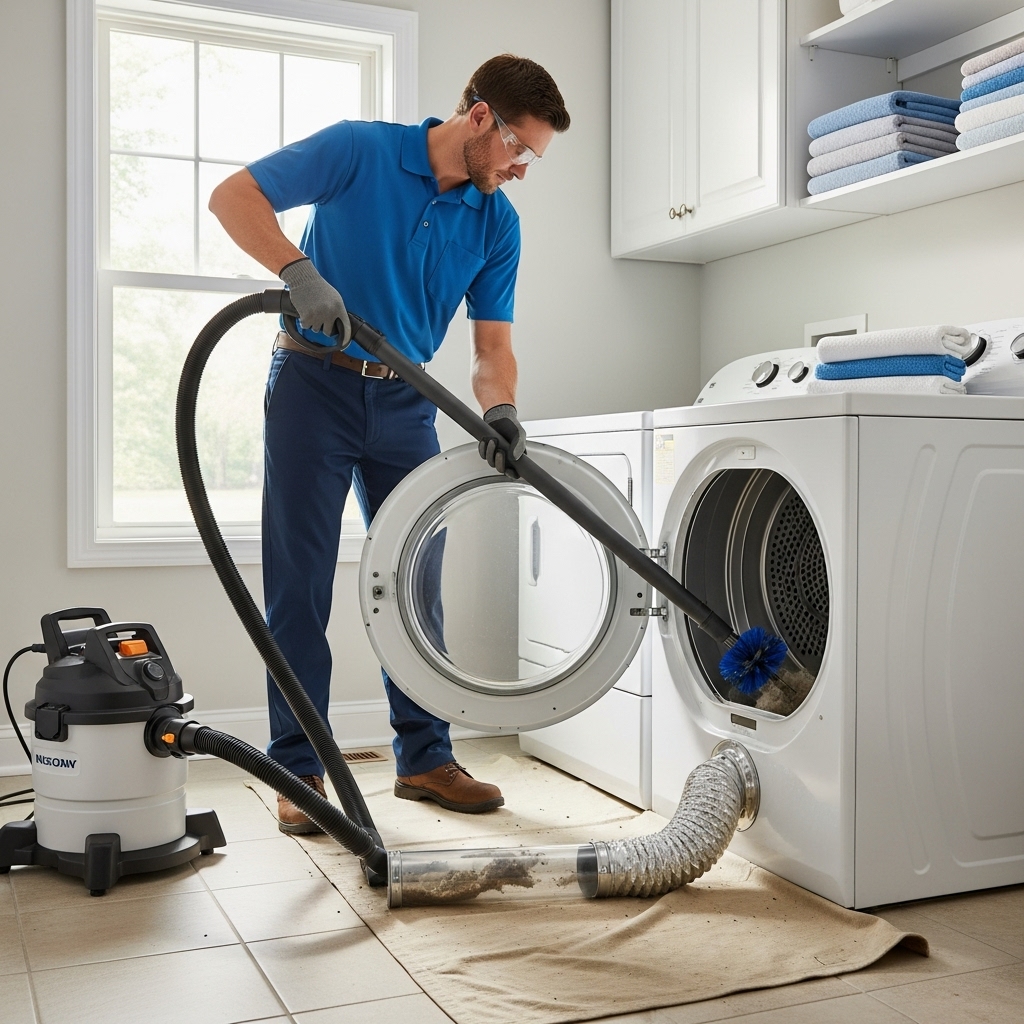
Technicians begin with a brief assessment of your setup: dryer type and location, the vent route length, number of turns, and termination style (wall or roof). They will then disconnect the transition hose, protect surrounding surfaces, and use rotary brushes or air tools to loosen debris. A vacuum collection system captures loosened lint, keeping your laundry area clean. The technician checks fittings for proper sealing, ensures the exterior cap opens freely, and measures airflow before and after service. If they identify damaged sections, crushed ducts, or outdated materials (such as certain slinky-style foil connectors), they will recommend safer alternatives.
In Naperville, it is common to see dryer vents travel up through an interior wall, across an attic, and exit through the roof. Roof terminations require particular attention because birds sometimes nest behind the cap, and winter ice can strain the damper. Wall terminations along the side of the house tend to collect leaves and lawn debris. Experienced local technicians are equipped for both scenarios, including safe roof access when needed.
Factors that influence overall value
Every home is unique, which means the scope of service can vary. Without discussing specific prices, it helps to understand the main drivers of value so you can plan confidently:
- Vent length and complexity: Longer runs and multiple elbows require more time to clean thoroughly.
- Roof access: Terminations at higher elevations or steep pitches may require additional safety steps.
- Material and condition: Crushed, kinked, or outdated connectors take extra care to correct.
- Obstructions: Bird nests, dampers stuck with paint or ice, and heavy lint buildup require meticulous removal.
- Accessibility: Tight laundry closets, stacked units, or cabinetry can affect how the technician reaches connections.
These factors do not just influence the time on site—they also affect the level of risk reduction and performance improvement you get from the visit. An experienced team will explain their findings and outline the most meaningful upgrades for your situation, such as switching from a flexible connector to a smooth-wall transition, or adjusting a too-long run with unnecessary bends.
How to prepare for your appointment
- Clear a path to the laundry area, moving hampers or storage bins to allow the technician space to work.
- Remove items from the top of the dryer so protective covers can be placed easily.
- Secure pets and plan for brief door openings if the technician needs exterior access.
- Note any symptoms you have observed: long dry times, odors, or unusual noises.
- Locate the exterior vent so the technician can check airflow and damper operation from outside.
Preparation takes just a few minutes but helps ensure a smooth, efficient visit. If your home is part of an HOA in Tampa that requires notification for roof access, arrange that in advance.
Booking in Naperville: what to expect
Most service providers offer flexible scheduling windows to accommodate work and school routines. You can typically request a specific day, a morning or afternoon slot, and receive an appointment reminder. On the day of service, expect a brief walkthrough, protective floor coverings, and a focused cleaning process. Many visits conclude within a single appointment window, but complex rooftop terminations or repair recommendations may extend the timeline. Your technician will communicate what they find so you can decide on any additional steps.
For homeowners new to Naperville, it can be helpful to schedule your first visit in late fall or early winter, before heavy cold weather arrives. This timing can resolve any summer lint accumulation and ensure the exterior cap opens smoothly in cold temperatures.
Professional cleaning versus DIY
While you can maintain the lint screen and occasionally vacuum around the dryer, the interior of the duct is best handled by a professional with specialized tools. DIY kits may not navigate multiple elbows, long vertical climbs, or roof exits effectively. Incomplete cleaning can leave behind packed lint layers that are difficult to detect and remove. A professional also brings inspection experience, catching issues like disconnected joints, improper foil ducts, and damaged dampers that a homeowner might miss.
Still, homeowners play an important role between service visits. Clean the lint screen before every load, wipe the moisture sensor bars monthly, and check that the exterior flap moves freely. These small habits help maintain the benefits of a professional cleaning.
Mid-year maintenance and seasonal considerations
Naperville’s weather patterns make seasonal checks worthwhile. In spring, confirm that landscaping around the exterior vent is trimmed so airflow is unobstructed. In summer, listen for any vibrating ducts that might indicate a partially blocked section. In fall, clear leaves away from wall hoods. In winter, verify the flap is not frozen shut and that snow has not piled against the termination. If your vent exits the roof, ask your technician how to spot early signs of a stuck damper from inside.
As part of your annual home care plan, consider a mid-year check if your household is large or if you run the dryer daily. When in doubt, a quick airflow test at the exterior hood can reveal changes since your last service. When airflow wanes, it is time to consider another professional dryer vent cleaning to restore performance and safety.
What to ask your technician
- How long is my vent run, and how many elbows are in the route?
- Is my current transition connector safe and up to modern recommendations?
- Does the termination cap include a backdraft damper and bird guard designed for dryers?
- What airflow improvement did you measure after cleaning?
- Are there any crushed or unsupported sections that should be repaired?
- How often would you recommend service based on my usage and setup?
Clear answers to these questions help you make informed decisions and plan the right maintenance schedule for your home.
Safety and performance upgrades to consider
- Replace foil or vinyl connectors with semi-rigid or smooth-wall metal transitions rated for dryers.
- Simplify the route by removing unnecessary elbows where possible.
- Secure joints with foil tape (not screws that protrude into the airflow path).
- Ensure the exterior hood is designed for dryers, with a freely moving damper.
- Consider an in-line booster only when recommended and installed to code.
Not every home needs upgrades, but even small changes can yield a safer, more efficient system. An experienced Tampa technician will prioritize fixes that make the biggest impact while fitting your home’s design.
Frequently Asked Questions
Q: How often should I schedule service in Naperville? A: Many households plan for annual visits. Larger families or homes with long or complex vent runs may benefit from more frequent attention, especially if you notice longer drying times.
Q: Can I rely on the dryer’s lint screen alone? A: The lint screen catches a lot, but not everything. Fine fibers bypass the screen and accumulate inside the duct over time. Regular professional cleaning removes what the screen misses.
Q: What if my vent exits the roof? A: Roof terminations are common here. Professionals use appropriate tools and safety procedures to access and clean them thoroughly, verifying the damper works correctly afterward.
Q: Will cleaning improve energy efficiency? A: Yes. Unrestricted airflow helps clothes dry faster, which reduces the time the dryer must run and can help lower overall energy use.
Q: Are bird guards necessary? A: A dryer-specific termination with an integrated damper is ideal. Bird guards designed for dryers can help prevent nesting while maintaining airflow. Avoid screens that trap lint.
Q: What if I smell a burning odor? A: Stop the dryer and schedule an inspection. The odor could be lint contacting hot components or restricted airflow causing overheating.
Q: Do I need to be home during service? A: Yes. The technician will need access to both the laundry area and the exterior termination to complete the work and verify airflow.
Q: Will there be a mess? A: Reputable providers use containment and vacuum collection to keep lint from circulating in your home. Your laundry area should be left clean after the visit.
Ready to schedule service in Naperville?
If your laundry is taking longer to dry or you cannot remember the last time your vent was inspected, now is the time to act. A professional visit restores airflow, reduces fire risk, and helps your dryer last longer. For quick scheduling and a knowledgeable local team, book trusted dryer vent cleaning and enjoy safer, faster laundry days in your Tampa home.