
Tile floors are a favorite in Tampa, Florida, for good reason: they are durable, cool underfoot, and stand up to the spills and sandy shoes that come with coastal living. Yet the same climate advantages—humidity, frequent rain, and outdoor lifestyles—can make tile and grout look dull sooner than you expect. This guide shows you how to clean tile floors effectively, from daily habits to deep restorative work, with tips tailored to Tampa conditions. If you want a solid starting point and a sense of what professional results look like, explore local options for tile cleaning to compare methods and decide when it is time for a deeper reset.
Keeping tile beautiful is about combining the right chemistry with smart technique. It starts with understanding your surface, choosing safe products, and committing to a maintenance rhythm that keeps grit and residues from building up. Done well, your floors will not only look better but also stay cleaner longer.
Know Your Tile and Grout
Ceramic and porcelain are common in Tampa homes and are generally forgiving. Textured or wood-look planks, however, trap fine sand in micro-grooves. Natural stones—travertine, marble, limestone, and slate—require more care, with neutral pH products and gentle agitation. Grout can be sanded or unsanded; its porosity means it absorbs liquids readily, especially in humid conditions. Identifying these features guides everything from the brush you choose to whether sealing should follow cleaning.
Tools and Products that Work
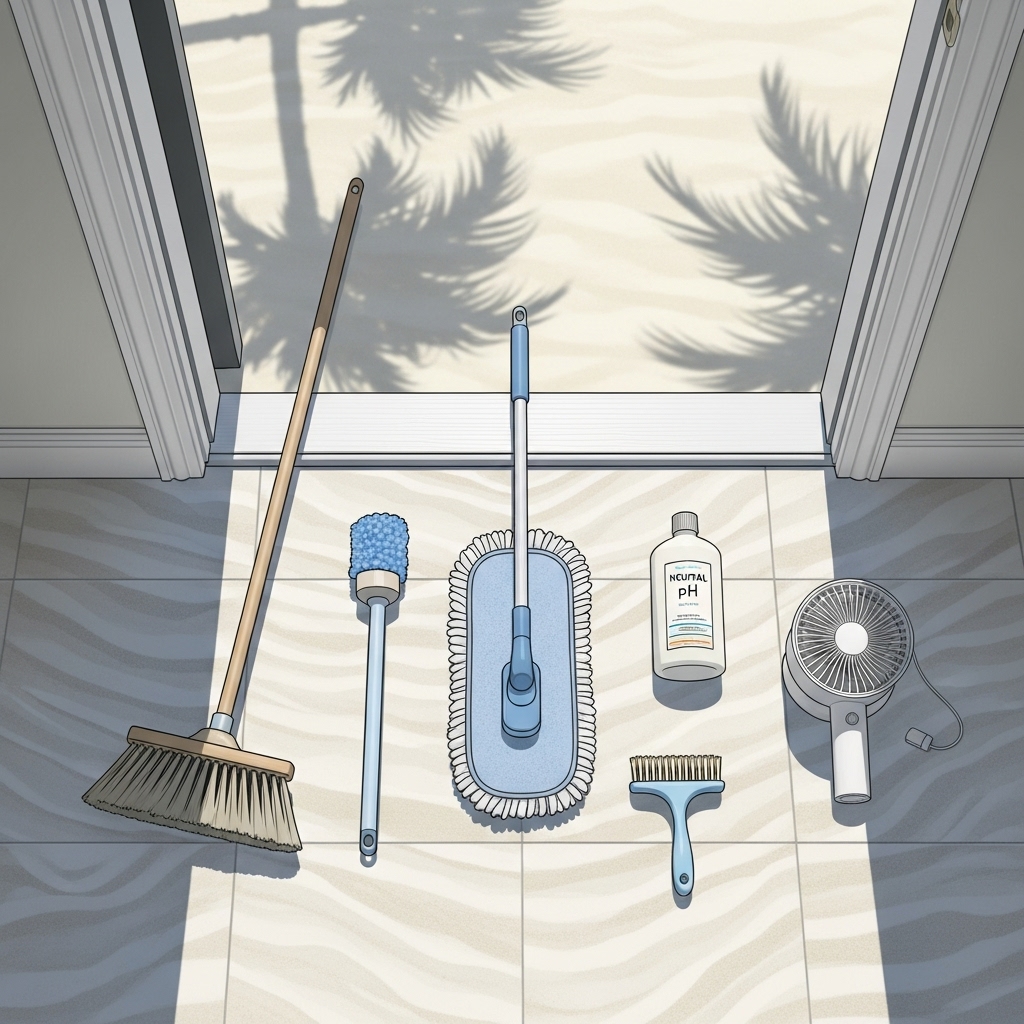
- Vacuum or soft-bristle broom for daily grit removal.
- Microfiber mop with washable pads for even application and pickup.
- Neutral pH cleaner designed for tile and grout.
- Assorted grout brushes for lines, edges, and corners.
- Bucket and clean rinse water to avoid redepositing soils.
- Fans for airflow, especially during humid months.
Avoid harsh acids and overly strong degreasers on most residential floors, as residues can attract dirt and harm finishes. Neutral cleaners paired with mechanical action and thorough rinsing are your safest bet.
Daily, Weekly, and Monthly Rhythm
Consistency is the secret to keeping floors bright in Tampa’s humidity. Adopt this rhythm:
- Daily: Quick sweep or vacuum in entries and kitchens to catch sand and crumbs.
- Weekly: Damp mop with a neutral cleaner, changing rinse water frequently.
- Monthly: Inspect grout lines; spot treat traffic lanes and kitchen areas where film collects.
- Seasonally: Deep clean before and after peak entertaining or beach seasons.
Deep Cleaning Steps
- Dry removal first: Vacuum or sweep thoroughly, including edges.
- Pre-treat: Apply neutral cleaner and allow dwell time to break down film.
- Agitate: Use a soft pad on smooth tile; a slightly stiffer brush on textured tile and grout lines.
- Rinse: Fresh water and clean microfiber pads; replace water often.
- Neutralize: If you used any stronger products, follow with a neutral rinse.
- Dry: Use fans to move air, especially in tight or humid rooms.
- Protect: Consider grout sealing to resist stains and simplify maintenance.
Kitchen and Bathroom Focus
Kitchens collect cooking residues that bind with dust, dulling tile and darkening grout. Use phased cleaning—apply, agitate, rinse, repeat—rather than aggressive scrubbing. Bathrooms face humidity, soap film, and hard water. Improve ventilation, squeegee shower walls, and use color-safe cleaners compatible with your tile and grout. If stains persist, a professional evaluation can determine whether color sealing would restore uniform grout color.
Natural Stone Essentials
Stone is beautiful but sensitive. Skip vinegar and scouring powders. Use neutral pH solutions and soft pads, and blot spills quickly. A breathable sealer helps resist stains without trapping moisture. If you notice etch marks or scratches, a professional service may be needed to hone or polish the surface before resealing.
Common Mistakes to Avoid
- Using too much cleaner and not rinsing fully, leaving sticky residues.
- Scrubbing with overly stiff brushes that scratch tile or damage grout.
- Letting solutions dry on the floor; this sets films and streaks.
- Over-wetting grout lines, which can wick soil and lengthen dry time.
- Mixing chemicals in hopes of tougher cleaning; this often makes stains harder to remove and can be unsafe.
How Professionals Raise the Bar
Professionals use heated solutions, tailored chemistry, controlled agitation, and high-flow extraction to remove embedded soils. They detail edges and corners, neutralize to prevent rapid re-soiling, and use fans to speed drying. Many homeowners find that a periodic deep extraction followed by grout sealing keeps floors looking their best with less effort between visits. When comparing options, many Tampa residents choose professional tile cleaning to achieve a level of clarity and uniformity that is hard to replicate at home.
Protecting Your Results
After a deep clean, help your floors resist Tampa’s daily challenges. Place mats at entries, keep pet bowls on trays, and use felt pads under furniture to reduce abrasion. Stick to neutral cleaners, and avoid high-residue products like oil-based soaps. If you sealed grout, learn a simple water-drop test to monitor beading and schedule touch-ups as needed.
Showers, Backsplashes, and Laundry Rooms
Vertical tile requires its own routine. Use foam cleaners compatible with your surface, allow dwell time, agitate gently, and rinse thoroughly. Encourage drying with ventilation or a quick squeegee. Sealing grout in showers can reduce moisture absorption and make maintenance easier, but ensure compatibility with your grout and any natural stone elements.
Questions to Ask Before Hiring Help
- How will you tailor your process for my tile type and grout?
- Do you include neutralization and fan-assisted drying?
- What is your approach to edge and baseboard detailing?
- Do you recommend grout sealing or color sealing for my home?
- How should I maintain the floor afterward to keep results longer in Tampa’s humidity?
Frequently Asked Questions
Q: How often should I deep clean tile floors? A: Many households benefit from a deep clean once or twice per year, with light maintenance in between. Homes with pets, beach sand, and heavy cooking traffic may choose more frequent care.
Q: Will sealing change the color of my grout? A: Penetrating sealers are designed to protect without changing appearance. Color sealers intentionally recolor grout while adding protection—ideal when staining is uneven or permanent.
Q: Can I use a steam mop? A: Steam can help on certain tiles but may force moisture into grout. Test first and use light, quick passes rather than prolonged heat on one spot.
Q: Why does my floor look dull after mopping? A: Residues from cleaners or hard water film can attract soil and create a haze. Rinse thoroughly and consider a neutralizing rinse to reset the surface.
Q: How long will the floor take to dry? A: With fans and good airflow, many floors are dry to the touch within a few hours, though high humidity may extend this slightly.
Q: Is professional cleaning safe for natural stone? A: Yes, when done with stone-appropriate chemistry and gentle agitation, followed by proper sealing as recommended.
Make Your Floors a Highlight of Your Home
When your tile floors are clean and bright, the entire space feels more open and inviting. With the right routine and occasional deep cleaning, you can stay ahead of Tampa’s humidity and grit. If you are ready to reset stubborn grout lines and revive traffic lanes with a uniform, fresh look, consider scheduling expert tile and grout cleaning so your home stays welcoming and easy to maintain all year.