
Introduction
Area rugs anchor rooms, soften acoustics, and express style, but Tampa’s mix of humidity, sandy grit, and sun exposure means they collect soil and wear faster than many homeowners expect. An intentional plan for cleaning and care protects the beauty and structure of your rugs while keeping indoor air fresher. Whether you own machine-made synthetics, tufted wool, or handwoven treasures, you can choose service options that match your needs and timeline. To complement home maintenance, many residents turn to periodic professional rug cleaning to deep-wash fibers and restore color and softness.
This guide explains the range of cleaning options available in Tampa, how to build a maintenance routine that fits your household, and what to expect from a qualified rug facility. You will learn the differences between on-location surface cleaning and in-plant washing, which textiles benefit from each, and how to decide when repairs or protective treatments make sense. By understanding your choices, you can plan care confidently without guesswork.
Understanding Your Rug’s Construction
Different constructions respond differently to moisture, agitation, and chemistry. Hand-knotted rugs feature individual knots around warp threads, creating a pile anchored to a cotton or wool foundation. Flatweaves have no pile and tend to release dust more readily during dusting. Tufted rugs, common in contemporary decor, use latex to hold yarns to a backing; over time, that latex can oxidize, leaving a chalky dust and an odor. Machine-made rugs may use heat-set polypropylene, nylon, or polyester, each with distinct cleaning tolerances and drying times.
The more you know about your rug, the more precisely you can select a service. For example, viscose and rayon fibers mimic silk’s sheen but are sensitive to moisture and friction, so they demand exceptional caution. Wool, by contrast, is resilient, naturally stain resistant to a degree, and responds well to controlled immersion washing. Blends introduce nuances that an experienced cleaner can navigate with testing and tailored methods.
Tampa’s Climate and Maintenance Rhythms
Humidity encourages soil to cling to fibers, so rugs in Tampa often require more frequent vacuuming and periodic deep cleaning than rugs in drier regions. Afternoon showers, beach trips, and pets contribute moisture and gritty particles that settle into the pile. Sunlight streaming through windows can fade dyes and dry out fibers, especially in the hottest months. Mitigate these pressures by rotating rugs, using window coverings where feasible, and placing breathable pads that allow airflow and cushion footfalls.
Because Tampa homes often mix tile, hardwood, and area rugs, transitions between surfaces concentrate soil at the edges. Pay extra attention to entryways and high-traffic lanes. A sturdy doormat at exterior doors and a shoes-off habit can significantly reduce the burden on your rugs, extending the time between deep cleanings.
Options for Cleaning: On-Location Versus In-Plant
On-location surface cleaning is sometimes offered for convenience, particularly for large, synthetic area rugs that are not heavily soiled. It typically involves a low-moisture process and rapid drying but cannot match the thoroughness of a proper wash. In-plant washing allows for full dusting, complete rinse, and controlled drying—essentials for wool, cotton foundations, and handwoven textiles. If your rug has pet accidents, heavy soils, or fringe that needs attention, in-plant cleaning is the gold standard.
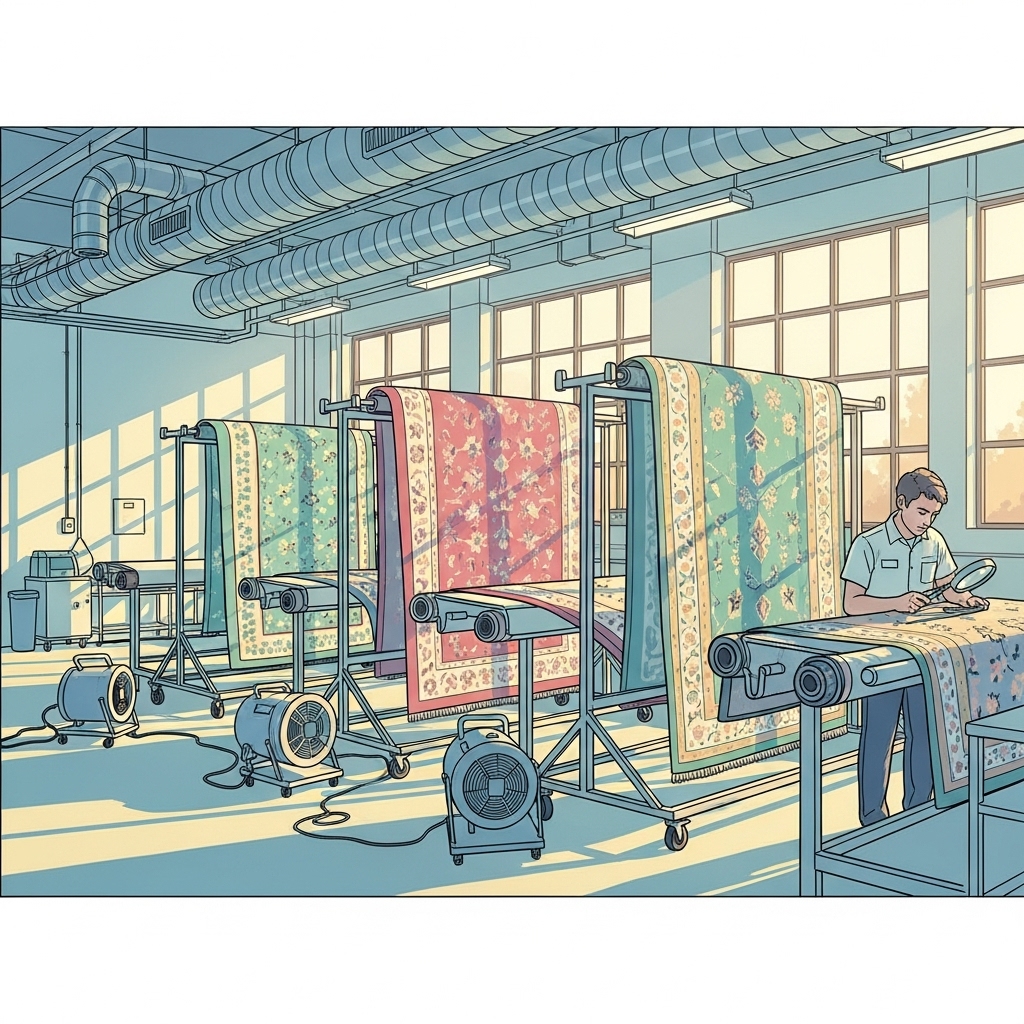
Within a professional facility, the workflow begins with inspection and dye testing. Dry soil removal—dusting—uses vibration, air, or specialized equipment to dislodge grit. Then a tailored cleaning solution preconditions fibers before gentle agitation and thorough rinsing. Fringe is groomed separately and the rug is dried with strong airflow and dehumidification. This level of control is difficult to achieve in a living room, and it is particularly valuable in Tampa’s moist climate where slow drying can cause problems.
How Often to Schedule Service
Frequency depends on traffic, pets, and location. A dining room rug may need attention more often than a guest room piece, and households with children and pets typically benefit from shorter intervals between cleanings. Rather than relying on the calendar alone, use simple indicators: if tapping the back of the rug releases a puff of dust, if colors look dull despite vacuuming, or if odors linger after rain, it is time for a professional wash.
Match your schedule to family events and seasons. Many Tampa residents plan deep cleaning after the most humid months or ahead of holidays when homes host more activity. Aligning care with your life keeps maintenance predictable and less stressful.
Supplemental Services: Pads, Repairs, and Treatments
A quality rug pad improves comfort, reduces slippage on tile or hardwood, and slows wear by absorbing impact. Choose a pad compatible with your flooring’s finish and consider breathable designs to suit Tampa’s climate. Edges and fringe are vulnerable, so periodic inspection matters. If you see side cords pulling away, small holes near the fringe, or uneven edges, seek repair promptly to prevent unraveling.
Protective fiber treatments can help resist spills, though they are not a substitute for immediate blotting and professional cleaning when needed. Discuss with a specialist whether a protector is appropriate for your fiber type and dye stability. For tufted rugs with aging latex, a professional can advise on options if you notice persistent powdery dust or a rubbery odor.
DIY Maintenance That Makes a Difference
Vacuum regularly with suction-only tools or a gentle beater bar set high. Vacuum the back occasionally to vibrate out grit near the foundation. Rotate rugs seasonally to even out wear and light exposure, and use furniture coasters to prevent dents. If a spill occurs, blot—do not rub—using white cloths. Rinse lightly with cool water if appropriate and avoid aggressive household spotters that can harm dyes or finishes.
For pet accidents, act quickly. Blot thoroughly and avoid heat, which can set stains and odors. Because residues can sink into the cotton foundation, on-location treatment may not be enough; a professional decontamination bath is often the lasting solution.
What to Expect from a Professional Facility
Transparency and testing are hallmarks of a good rug cleaner. Expect an intake inspection that notes fiber type, structural issues, color stability, and prior repairs. A reputable facility will explain the dusting method, wash chemistry, rinse strategy, and drying controls. They will also communicate any limitations, such as pre-existing wear that cleaning cannot reverse. If you have multiple rugs, request that they be tagged and tracked individually to preserve provenance and placement notes.
Clear communication continues after cleaning. The provider should review results, point out areas of concern that may call for repair, and offer guidance for maintenance at home. This partnership approach keeps your rugs looking their best year after year. At the midpoint of your maintenance plan, consider mid-cycle support with professional rug cleaning to reset fibers and keep soil from compacting into the foundation.
Common Misconceptions
One misconception is that area rugs can be cleaned the same way as carpet. While some synthetics tolerate similar methods, natural fiber rugs need tailored processes. Another is assuming brighter fringe demands whitening agents; harsh chemistry can weaken cotton and cause long-term damage. Finally, many people believe a rug that looks clean is clean. Fine dust can coat fibers, dulling color and abrading pile long before it is obvious to the eye.
A related myth suggests that frequent washing shortens a rug’s life. The opposite is usually true when cleaning is done correctly: removing abrasive soil reduces wear and preserves the integrity of the foundation and pile.
Building a Maintenance Plan
Think of care as a cycle: daily prevention, weekly vacuuming, seasonal rotation, and periodic professional washing. For busy households, scheduling reminders on your calendar helps. If you own several rugs, stagger service so rooms remain furnished while pieces rotate through cleaning. Keep simple supplies on hand—white cloths, a spoon for lifting solids, and a spray bottle with plain cool water for gentle rinsing.
Document your rugs with photos, measure them accurately, and note any repairs. A care history helps you and your cleaner make informed decisions. Over time, you will see the benefits in lower wear, brighter colors, and fewer emergencies.
FAQ
Q: Should I choose on-location cleaning or in-plant washing? A: For natural fibers, heavy soil, pet accidents, or fringe work, in-plant washing is the safer, more thorough choice. On-location surface cleaning can be suitable for certain synthetic rugs with light soil.
Q: How often should I clean an area rug in Tampa? A: Let use and environment guide you. High-traffic rugs and homes with pets benefit from shorter intervals, while low-traffic rooms can go longer. Indicators include dull color, dust puffs, and persistent odor.
Q: Is vacuuming the back of the rug necessary? A: Yes. Vacuuming the back helps vibrate embedded grit out of the foundation, which regular top vacuuming might miss.
Q: Can sun damage be reversed by cleaning? A: Cleaning restores color clarity by removing soil but cannot undo fading from UV exposure. Rotate rugs and use window coverings to reduce future fade.
Q: Are protective treatments worth it? A: They can add a margin of time to address spills, but they are not a substitute for prompt blotting and proper washing. Suitability depends on fiber type and dye stability.
Q: What should I do after a pet accident? A: Blot immediately, avoid heat, and schedule an immersion wash if odor or discoloration persists. On-location treatment rarely reaches residues in the foundation.
Bring Your Rugs Back to Life
If your area rugs feel dull, gritty, or carry stubborn odors, now is an excellent time to plan a thorough reset. Partner with a specialist who inspects, dusts, washes, and dries with care so you can enjoy comfort and color again. For dependable local support, turn to expert rug cleaning and step onto freshness every day.