
Introduction
The phrase “steam cleaning” is often used as a catchall for hot-water-based methods that refresh soft surfaces. In Tampa, Florida, where humidity is a daily factor and homes blend tile, hardwood, and textiles, deciding when to use steam or hot water extraction on rugs requires nuance. Not all fibers and constructions respond the same way, and the local climate magnifies drying challenges. If you want a clear, practical perspective on when this approach fits and when it does not, this guide explains the pros, cons, and alternatives. For many households, pairing smart DIY care with periodic professional rug cleaning delivers the safest, most consistent results.
Understanding the science behind moisture, heat, and chemistry will help you choose methods that protect color, structure, and texture. We will cover fiber sensitivities, Tampa-specific considerations, and red flags that signal a different approach is best.
What Steam Cleaning Really Means
Most consumer machines marketed as steam cleaners deliver hot water extraction rather than true steam. They apply warm solution, agitate, and vacuum out the moisture. On wall-to-wall carpet made of synthetic fibers, this can be appropriate when properly performed. Rugs, however, are standalone textiles with backing systems or woven foundations that respond differently to moisture and agitation, especially when natural fibers and sensitive dyes are involved.
True Oriental and handwoven rugs are best treated in-plant with controlled washing. Tufted rugs with latex backings can release adhesive and filler during aggressive wet cleaning, while viscose and rayon fibers lose strength when wet and readily distort. Machine-made synthetics can sometimes handle on-location hot water extraction, but even then, care must be taken to avoid overwetting and to manage drying time carefully in Tampa’s humid air.
Pros of Hot Water Extraction for Certain Rugs
When matched to the right textile, hot water extraction can flush out water-soluble soils and light residues effectively. Benefits include an improved feel underfoot, refreshed appearance, and faster service turnaround when compared to transporting a rug to a facility. For synthetic rugs with light to moderate soil, especially those used in playrooms or entry areas, on-location extraction can be a practical interim measure between more thorough in-plant cleanings.
Another advantage is spot rinse capability. If a localized spill is fresh, extraction can dilute and remove it before it sets. With the right tools and controlled passes, technicians can deliver acceptable results on rugs designed to withstand this process. It is important, however, to distinguish between surface refreshment and a true wash that addresses embedded grit and foundation-level residues.
Cons and Risks You Should Consider
Overwetting is the chief risk, particularly in Tampa. High ambient humidity slows evaporation, increasing the chance of color migration, browning, or persistent odor. Natural fibers such as wool swell when wet and can felt or distort with excess agitation. Cotton foundations hold moisture and, if not dried quickly, can develop cellulosic browning—yellowish discoloration that mars appearance. Fringe is especially vulnerable; aggressive chemistry meant for carpet can weaken cotton and cause fraying.
Another limitation is incomplete soil removal. Rugs collect dense, fine particulates that sink to the foundation. Without thorough dry soil removal—dusting—before wet work, extraction can create muddy residues within the pile. This leads to rapid resoiling and a dull look even after the surface appears clean. In-plant washing addresses this by dusting first, then fully rinsing the entire textile, a scope difficult to replicate on location.
Fiber-by-Fiber Guidance
Wool is resilient but still benefits from immersion washing rather than on-location extraction. If extraction is used as a stopgap, keep water cooler, limit passes, and focus on rapid drying. Silk and viscose/rayon are highly sensitive to moisture and agitation; avoid steam and hot water extraction altogether. Cotton flatweaves can distort and shrink; controlled immersion with blocking is safer. Synthetic fibers like polypropylene and nylon tolerate hot water better, but intense heat can warp certain backings, and dyes may still be sensitive. Always test for colorfastness before proceeding.
Tufted rugs deserve special mention. The latex adhesive that holds yarns to a backing breaks down over time, releasing a powdery dust and odor. Overwetting accelerates this process, potentially leading to delamination. For these rugs, low-moisture surface methods or in-plant strategies tailored to their construction are preferable.
Tampa Climate Factors
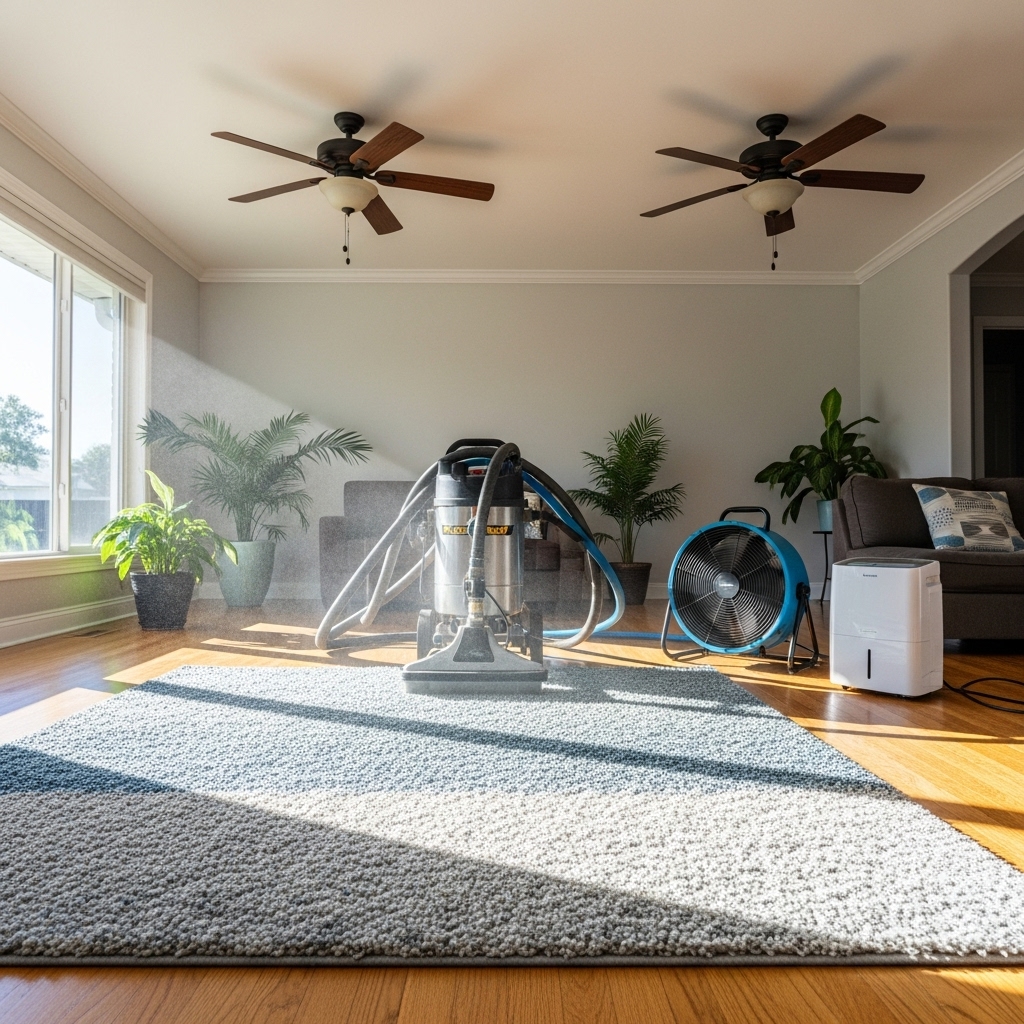
Humidity changes the equation. Even a modest amount of moisture can linger without strong airflow and dehumidification. During summer afternoons, indoor relative humidity can rise quickly if doors and windows are opened frequently. To manage risk, schedule any on-location wet work during times when air conditioning and dehumidifiers can run continuously. Use fans to increase air movement and avoid placing furniture back on the rug until it is fully dry to the touch and at the foundation.
Sand and fine grit tracked in from beaches and yards increase abrasion and dull wool tips. This makes pre-vacuuming and, ideally, thorough dusting more important before any wet process. UV from Tampa sun can also fade dyes; cleaning does not reverse fading but can improve color clarity by removing dust that scatters light.
When Steam or Extraction Makes Sense
On-location hot water extraction can be reasonable for synthetic area rugs used in high-activity spaces where convenience is paramount and soil is mostly water-soluble. It can also function as a quick intervention for fresh spills that have not penetrated deeply. If a synthetic entry rug needs a fast refresh before guests arrive, and weather conditions are favorable for drying, extraction with careful technique may suffice.
It is less appropriate for handmade Oriental rugs, natural fiber pieces, tufted rugs with aging latex, or any rug with uncertain dye stability. In these cases, a professional in-plant wash remains the smarter choice, delivering deeper soil removal, safer chemistry, and controlled drying for reliable results. Between deep washes, a mid-cycle boost with professional rug cleaning ensures embedded grit does not shorten the textile’s life.
How Professionals Reduce Risk
Experienced cleaners begin with inspection and dye testing, then prioritize dry soil removal. On-location, they use calibrated machines, limit solution volume, make additional vacuum-only passes, and position air movers strategically. They protect floors beneath the rug, especially hardwood, from moisture exposure. In a plant, they add full dusting, immersion or controlled wash floors, copious rinsing, squeegee extraction, and climate-controlled drying. Documentation and communication set expectations, especially for rugs with pre-existing wear or unstable dyes.
Technicians also tailor chemistry to fiber and soil. Wool-safe detergents at appropriate pH, cool water temperatures, and neutralizing rinses help preserve dye and fiber health. For odor issues from pet accidents, on-location methods rarely reach foundation residues; immersion decontamination is the preferred approach to truly neutralize and remove sources of smell.
DIY Alternatives and Preventive Care
Vacuum thoroughly with suction-only tools, adjusting height to avoid excessive agitation. Flip the rug and vacuum the back periodically to vibrate out grit near the base. Blot spills immediately with white cloths, lift solids with a spoon, and use a light cool-water rinse if appropriate. Avoid consumer spotters that contain high alkalinity or oxidizers, which can cause bleaching or dye migration. Rotate rugs several times a year to even out wear and UV exposure, and place breathable pads matched to your flooring to reduce slippage and cushion impact.
If you must use a consumer extraction machine on a durable synthetic rug, pre-vacuum carefully, use cool solution, make light, quick passes, and run fans plus air conditioning until the rug is fully dry. Test for colorfastness first in an inconspicuous area. If any dye transfers to a white cloth, stop and seek professional help.
Red Flags That Call for a Different Approach
Watch for signs that extraction is not appropriate: bleeding dyes during a spot test, a musty smell after previous wet cleaning, brittle fringe, curling edges, or delamination in tufted rugs. If the rug puffs dust when tapped on the back, embedded soil is likely heavy and will not be addressed by surface methods. Pet accidents that recur in the same area often leave foundation-level residues; on-location extraction may mask the problem temporarily but will not solve it.
Structural issues such as broken side cords, missing knots, or moth damage must be handled before or in conjunction with washing. Cleaning alone cannot fix construction weaknesses and may exacerbate them if moisture and agitation are applied indiscriminately.
Setting Expectations
It helps to define success before any service. On a durable synthetic rug, hot water extraction should leave fibers cleaner, remove sticky residues, and reduce surface odor. It will not replicate the depth of an in-plant wash or address soil trapped at the foundation. On natural fiber rugs, a conservative approach or complete avoidance of on-location extraction is warranted. Communicate your goals and concerns to the technician, and be open to recommendations that prioritize textile health.
Expectations should also include drying time. In Tampa’s climate, even light moisture can linger without robust airflow and dehumidification. Plan for extra drying time and avoid walking on damp rugs to prevent tracking soils and imprinting the pile.
FAQ
Q: Is steam cleaning safe for wool rugs? A: Generally, no. Wool rugs respond better to in-plant washing with dye testing, gentle agitation, and controlled drying. On-location extraction risks overwetting and color movement.
Q: Can I steam clean a viscose or rayon rug? A: Avoid wet methods; these fibers weaken when wet and distort easily. Seek a professional evaluation for safer alternatives.
Q: How do I know if dyes are stable? A: A simple test with a damp white cloth pressed on a hidden area can indicate dye transfer. Any bleed is a warning to stop and consult a specialist.
Q: What about synthetic rugs? A: Many synthetics tolerate careful hot water extraction, but pre-vacuuming, conservative moisture, and strong drying are essential, especially in humid climates.
Q: Why does odor return after cleaning? A: If residues remain in the foundation, humidity can reactivate them. Immersion decontamination is often required to fully resolve odor.
Q: How long should drying take? A: With strong airflow and dehumidification, light-moisture on-location work can dry within hours, but Tampa humidity can extend that. Do not return furniture until the rug is fully dry.
Make the Right Choice for Your Rugs
Choosing the right method protects color, structure, and comfort underfoot. When in doubt, favor processes that include thorough dusting, complete rinse, and controlled drying, especially for natural fiber rugs and handmade textiles. For dependable help maintaining a healthy home and beautiful floors, schedule expert rug cleaning and step confidently onto freshness.