
Introduction
Homeowners in Tampa, Florida, face a unique mix of conditions that affect tile care: humid summers, sudden rain showers, sandy driveways, and active indoor-outdoor lifestyles. This comprehensive guide lays out practical strategies to clean, protect, and maintain tile and grout so your home feels cool, bright, and hygienic year-round. If you ever need a benchmark to compare your methods with advanced techniques, review reputable resources about tile cleaning and adapt what fits your home.
Whether your floors are glossy porcelain, your shower has marble or travertine, or your screened lanai features textured ceramic, the right routine saves time and keeps finishes intact. The goal here is to help you clean smarter—not harder—by choosing the right tools, using precise dilution, and scheduling each task at a cadence that suits Tampa’s coastal climate.
Understanding Tile Materials
Each tile type has strengths and sensitivities. Porcelain and ceramic are resilient and low-porosity, making them ideal for kitchens and baths. Natural stone offers luxury and cool-to-the-touch comfort but requires stone-specific cleaners and periodic sealing. Glass mosaics sparkle in showers but reveal spots and films quickly. Cement or encaustic tiles boast artful patterns yet are highly sensitive to acids and demand gentle care. Knowing your materials lets you fine-tune cleaning solutions and techniques, ensuring lasting color and texture.
Essential Tools for Homeowners
- Soft broom or microfiber dust mop for daily grit removal.
- Vacuum with hard-floor mode to capture fine sand and pet hair.
- Two-bucket system (wash and rinse) to control residue.
- pH-neutral tile cleaner; stone-safe formulations for natural stone.
- Microfiber pads and non-scratch scrub sponges.
- Grout brush for targeted line cleaning.
- Spray bottles for pre-treating stains.
- White cotton towels for drying and buffing.
- Squeegee for shower glass and tile.
Daily, Weekly, and Seasonal Schedule
- Daily: Sweep or dust mop high-traffic areas, wipe spills immediately, and squeegee shower walls after use.
- Weekly: Wet mop kitchens and baths, detail grout where needed, and rinse thoroughly.
- Monthly: Edge clean along baseboards and under appliances; inspect grout for hairline cracks.
- Seasonal: Deep clean high-traffic zones and reseal grout or stone as required.
Use calendar reminders to keep tasks consistent. Tampa’s humidity can magnify the effects of skipped maintenance, especially in bathrooms and at exterior doorways.
Routine Wet Cleaning Method
- Dry clean first to remove abrasive grit.
- Prepare solution according to label directions; avoid overdosing.
- Apply cleaner to a manageable section; let it dwell briefly.
- Agitate with microfiber or a non-scratch pad, working with the tile’s texture.
- Detail grout with a firm nylon brush where discoloration shows.
- Rinse thoroughly with clean water to remove residues.
- Towel dry to prevent water spots and reveal any streaks.
Small, repeatable steps keep your tile fresh without harsh scrubbing. Drying is a crucial final step in our climate; it improves appearance and reduces slip risk.
Family- and Pet-Friendly Habits
Place walk-off mats at entries. Encourage a shoes-off habit indoors to control sand and grit. Keep a small caddy with a spray bottle of diluted cleaner, a microfiber cloth, and a grout brush in your kitchen and main bath. Quick access encourages quick responses to spills, splashes, and pet accidents, which otherwise stain grout lines quickly.
Kitchen-Specific Tips
- Use a pH-neutral degreaser for food oils; let dwell lightly before wiping.
- Clean along toe-kicks, where crumbs and oils collect.
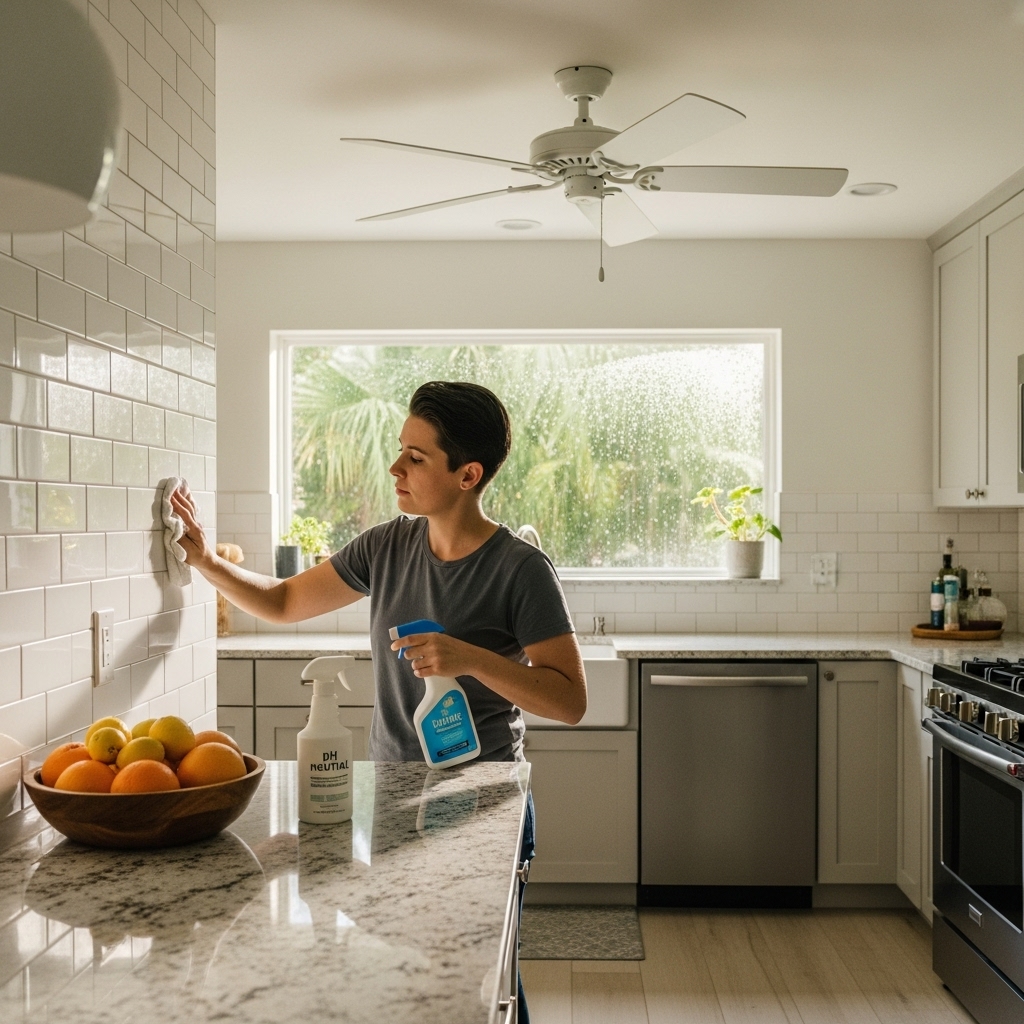
- Wipe backsplash tiles weekly to prevent film buildup that dulls shine.
- Rinse and dry floors after mopping to prevent residues that attract dirt.
Bathroom and Shower Strategy
Run exhaust fans during and after showers. Squeegee tile and glass to reduce soap scum and mineral spotting. For stone showers, avoid acidic cleaners and consider a stone-safe soap-scum remover. Address mildew early by increasing ventilation and cleaning grout with a dedicated product and a firm brush.
Outdoor and Lanai Surfaces
Exterior tiles endure UV, rain, and airborne salt. Sweep often, wash with a hose or low-pressure rinse, and use a tile-safe outdoor cleaner. Maintain drainage to avoid puddling. In outdoor kitchens, degrease periodically and rinse thoroughly.
Deep Cleaning for Homeowners
- Pre-wet the surface with cleaner; allow proper dwell time.
- Agitate using a soft brush or machine with a gentle pad for textured tiles.
- Target grout lines with a dedicated cleaner if needed.
- Rinse thoroughly and recover water with a wet/dry vacuum to speed drying.
- Inspect and repeat light passes on stubborn zones rather than scrubbing aggressively.
When evaluating whether to handle deep cleaning yourself or outsource, compare your plan with the methods used in professional tile cleaning. Understanding tools like low-speed machines, hot-water rinsing, and controlled chemistry helps you set realistic expectations and choose the right path for your home.
Sealing Grout and Stone
Penetrating sealers protect grout from stains and simplify cleanup. Natural stone and cement tiles typically benefit from sealing as well. Always choose a product designed for your specific surface and follow the directions for application, dwell, removal of excess, and cure time. After sealing, avoid exposing the area to water for the recommended period.
Preventing Common Problems
- Residue buildup: Use correct dilution and rinse thoroughly.
- Etching on stone: Avoid acidic cleaners; use stone-safe products only.
- Mildew in showers: Increase ventilation, squeegee after use, and clean regularly.
- Scratches on glossy tiles: Remove grit before wet mopping; use soft pads.
- Uneven grout color: Deep clean first; consider color-sealing for uniformity.
Smart Product Choices
Choose formulations that are pH-neutral for general cleaning and labeled stone-safe where applicable. Avoid mixing chemicals, and never combine bleach with other cleaners. Store products away from children and pets. Keep SDS sheets or product guides accessible if you want a detailed understanding of safety and application.
Energy and Water Efficiency
Use the two-bucket method to reduce water waste. Microfiber pads require less solution and clean efficiently. Towel drying speeds turnaround time and lowers the need for additional passes. These small efficiencies make regular cleaning easier to sustain.
Maintenance Mindset
Adopt small, frequent actions instead of occasional heavy scrubbing. Place tools within reach, maintain a simple schedule, and teach all family members how to handle routine spills. This habit-building approach delivers the best long-term results for Tampa homes, where outdoor living often brings the beach right to the door mat.
Frequently Asked Questions
Q: What cleaner is best for ceramic and porcelain tile? A: Choose a pH-neutral cleaner formulated for hard surfaces, and follow the dilution recommended by the manufacturer.
Q: How do I protect grout from stains? A: Seal grout with a penetrating sealer and clean spills quickly. Regular maintenance reduces absorption over time.
Q: Are homemade cleaners safe? A: Some are, but avoid acidic mixtures on stone and cement tiles. Always test in an inconspicuous spot first.
Q: How often should I deep clean? A: Seasonally for busy areas. Homes with pets, kids, or pool access often benefit from more frequent deep cleaning.
Q: Why does tile feel sticky after mopping? A: Overuse of detergent or skipped rinsing can leave residue. Use proper dilution and a clear-water rinse, then dry.
Q: Should I steam clean tile? A: Steam is typically safe for ceramic and porcelain when used carefully. Avoid excessive heat on sensitive stones and sealed surfaces.
Elevate Cleanliness and Comfort
With the right plan—routine dry soil removal, targeted chemistry, careful grout care, and consistent drying—you can keep tile and grout pristine in Tampa’s humid climate. When you want added support or a seasonal reset, align your routine with services that specialize in tile cleaning for homeowners. For a fresh, long-lasting result that complements coastal living, schedule time with trusted tile cleaning experts and enjoy brighter rooms, safer floors, and easier upkeep.