
Introduction: The Tampa Homeowner’s Roadmap to Cleaner, Healthier Upholstery
Between beach days, pets, and vibrant social gatherings, Tampa living is full of activity—and your sofas, sectionals, and accent chairs feel it. Upholstery fibers quietly trap body oils, sunscreen residue, pollen, and coastal grit, dulling color and releasing odors over time. This comprehensive guide gives you the knowledge, tools, and workflow to clean smart, protect fabrics, and reduce allergens in a humid climate. If you prefer a hands-off option or need deeper restoration at any point, professional upholstery cleaning offers an efficient path to revitalized, fabric-safe results.
We’ll cover fabric codes, Tampa-specific factors, method selection, stain strategies, drying, maintenance intervals, and when to call in expert help. Use this as your reference playbook before, during, and after your next cleaning session so your furniture looks great and stays comfortable year-round.
Fabric Codes and What They Mean
Understanding the care label sets your course. “W” allows water-based cleaning; “S” recommends solvent-based methods; “WS/SW” accepts either with caution; and “X” is vacuum or light brush only. Natural fibers—cotton, linen, rayon—are prone to water rings and texture changes, while synthetics like polyester, olefin, and nylon often tolerate gentle water-based cleaning. Blends behave somewhere in the middle. When in doubt, pre-test every time and keep moisture low to avoid dye bleed or browning.
Leather and suede are specialty categories that require dedicated products and techniques. If your piece is valuable or made of complex materials, a professional review can prevent costly errors. Remember, Tampa humidity amplifies risks associated with slow drying, making careful solvent or low-moisture approaches appealing for sensitive textiles.
Essential Tools for a Results-Driven Clean
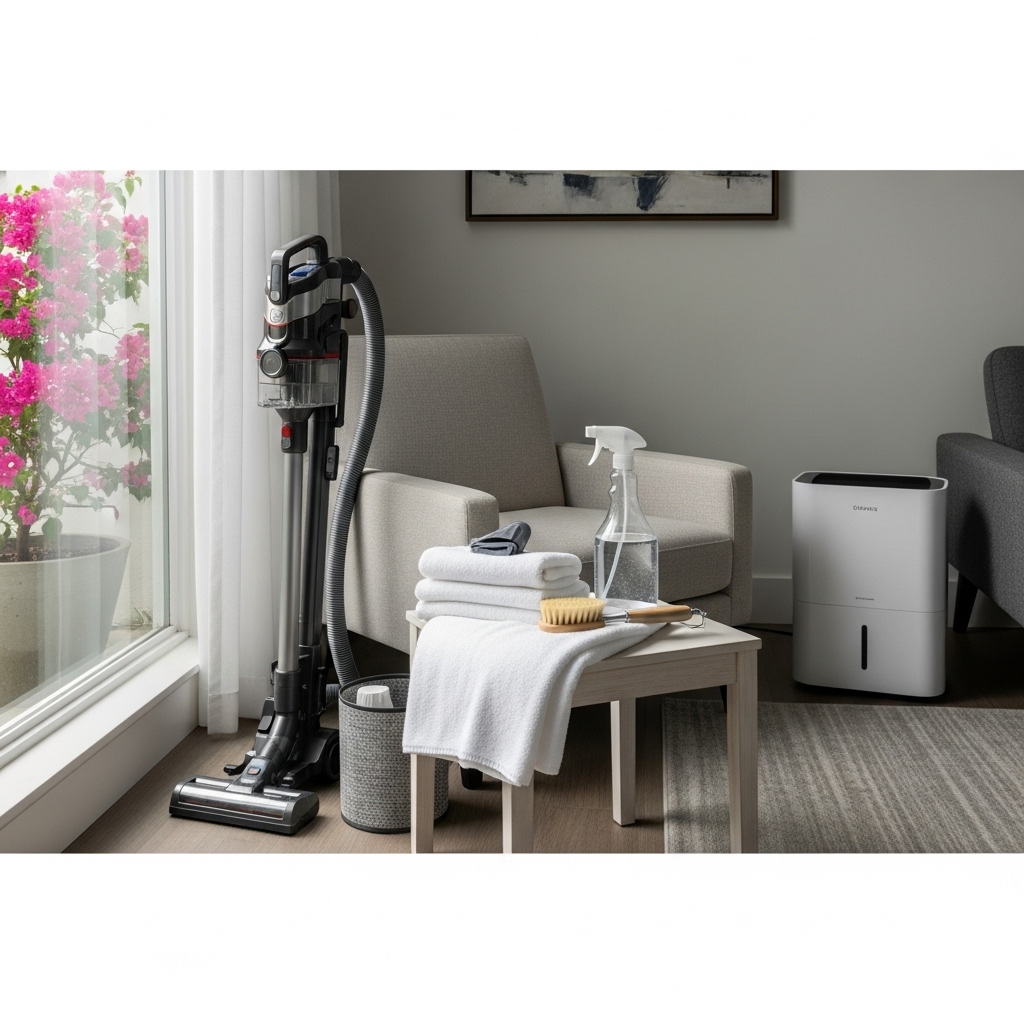
Equip yourself with a vacuum and upholstery tools, white microfiber cloths, a soft brush, a spray bottle, mild upholstery detergent, and targeted spotters (enzyme for protein, oxygen-based for colorfast brightening, and gentle solvents for “S” code fabrics). Optional gear like a low-moisture extractor and a box fan or two speeds drying and minimizes wicking. Gloves are helpful if you use solvents or enzyme products. Gathering everything up front helps you work in small, controlled sections and avoid over-wetting.
Pre-Cleaning: Dry Soil Removal and Inspection
Vacuum slowly using overlapping strokes. Address creases, seams, and tufts where grit collects. Tampa’s breezes and open-air living invite dust and pollen inside; removing these before any wet step is the single best way to improve final results. While you vacuum, inspect the fabric: note any sun fading, abrasions, or previous spill marks. Check for loose threads, delicate piping, or decorative trims that require gentle touch. Decide which cushions and panels need spot treatment vs. an overall clean.
Spotting Strategy: Match the Product to the Problem
Stains behave differently. Protein-based spills (food, milk, pet accidents) often respond to enzyme spotters with adequate dwell time. Tannins (tea, coffee, wine) usually prefer mild acidic spotters. Oil and grease (makeup, body oil, cooking splatters) respond to solvent-based spotters or degreasers approved for upholstery. Work from the outside inward using white cloths. Patience beats scrubbing; heavy agitation can distort pile and drive stains deeper. Blot, assess, and move methodically.
Overall Cleaning Methods: Water-Safe vs. Solvent-Safe
For “W” and many “WS” fabrics, lightly mist diluted detergent onto a small section, agitate gently with a soft brush, then remove residues with either light extraction or a damp cloth. Keep application even to avoid rings. For “S” fabrics, apply a solvent cleaner per label directions in a well-ventilated space. Use minimal product, allow dwell, then blot with clean, dry cloths. Always pre-test, then commit to the mildest path that achieves visible improvement.
Tampa Climate Tactics: Control the Drying Curve
High humidity slows evaporation and encourages musty odors. Plan your cleaning when indoor humidity is lower: run air conditioning, position fans to move air across cushions, and stand cushions on edge to increase surface area. If storms just rolled through, indoor air may stay damp longer. The faster you dry, the lower the chances of browning, color bleed, and wicking. Speed drying is not optional in Tampa—it is part of the cleaning method.
Dealing With Sunscreen, Salt, and Sand
Body oils and sunscreen accumulate on armrests and headrests, giving fabric a dark, slightly tacky feel. Use a mild alkaline cleaner to loosen these soils, followed by a clear-water wipe. In coastal neighborhoods, salt residue and windblown grit can dull colors; thorough pre-vacuuming and light, even cleaning restore vibrancy. If your household enjoys frequent beach trips, add a weekly vacuum pass to your routine so abrasive sand doesn’t grind into fibers and accelerate wear.
Odor and Allergen Reduction
Upholstery functions like a quiet air filter. Dust mites, pollen, and pet dander settle deep into cushions. Vacuuming reduces the load, and periodic deep cleaning removes embedded debris. For pet odors or organic spills, enzyme spotters with adequate dwell time break down odor-causing residues. If lingering smells persist, moisture may have carried contamination into cushion cores; a professional can address deeper layers without saturating the fabric. Mid-project, if you need a more advanced reset, professional upholstery cleaning can provide controlled extraction and fabric-safe deodorizers.
Preventing Wicking and Water Rings
Work in small sections, apply cleaner evenly, avoid drenching, and extract or blot thoroughly. Follow by fast airflow. If a ring develops, lightly re-wet the area edge to edge, then blot or extract evenly and dry quickly. Rings happen when the wet edge evaporates first, concentrating residues at the perimeter. Keeping moisture uniform and drying rapid minimizes this risk.
Grooming and Finishing
Once dry, brush or hand-groom to align the nap. On velvety synthetics and microfiber, this can double the apparent improvement. Replace cushions, check seams, and re-stage pillows. Small details like rotating cushions and intercepting oily contact points with washable covers maintain that just-cleaned look longer.
Maintenance Blueprint for Tampa Households
Adopt a simple schedule: vacuum weekly; spot clean spills immediately; perform a careful full clean every three to six months depending on use, pets, and seasonal pollen. During the summer rainy season, manage indoor humidity with AC and fans to keep fabrics dry and fresh. If windows stay open, increase vacuum frequency to capture airborne dust and pollen before they lodge deep in cushions.
DIY vs. Professional: Making the Call
DIY is effective for light to moderate soil, routine maintenance, and common spots. Call a pro for delicate fabrics, antiques, heavy staining, recurring odors, or previous DIY attempts that left rings or residue. Technicians can test dyes, measure moisture, and select specialized spotters for issues like dye transfer, browning, or wick-back. A periodic professional reset also simplifies your ongoing upkeep.
Frequently Asked Questions
Q: Are store-bought “steamers” safe for all upholstery? A: Not necessarily. Many devices apply hot water but limited extraction, which increases over-wetting risk. Start with low moisture and test. True low-moisture extraction or careful damp wiping is safer for many fabrics.
Q: How do I tackle pet urine? A: Blot immediately, apply an enzyme spotter with dwell time, then extract or blot again and dry fast. Repeat lightly if needed. If odor returns, contamination may be deeper than surface fabric.
Q: What’s the best way to avoid water rings? A: Keep application uniform, treat entire panels from seam to seam when possible, and dry rapidly with directed airflow so the edge does not dry first.
Q: Can I clean “S” code fabrics with water in a pinch? A: It’s risky. Use a manufacturer-approved solvent cleaner and minimal moisture. If in doubt, consult a professional for a safer method.
Q: How often should Tampa homes deep clean upholstery? A: Every three to six months for high-use areas, more often with pets or open-window living that increases dust and pollen indoors.
Q: Why does my furniture still look dull after I clean? A: Residue or matted fibers may be the culprit. Rinse or wipe away detergent thoroughly, then groom the nap once dry to restore uniform texture.
Bring Back the Comfort and Color
If you want a beautiful, fabric-safe result without the hassle, let a trusted local team handle the process from inspection to quick drying. Enjoy a fresh, allergen-reduced home with expert upholstery cleaning scheduled at your convenience.