
Introduction: Why Tampa Homes Need a Smart Step-by-Step Upholstery Cleaning Plan
Fresh, clean furniture makes every room more inviting, yet the coastal humidity, frequent rains, and everyday Florida living can make sofas, sectionals, dining chairs, and accent pieces collect soil faster than you expect. If you live in Tampa, you also contend with salt carried by breezes off the bay, tracked-in sand from beaches, and the occasional pet-related mess after a long day outdoors. This step-by-step guide walks you through a practical, beginner-friendly approach to cleaning and caring for your upholstery so it looks brighter, smells fresher, and lasts longer. If you decide you’d rather leave the heavy lifting to trained specialists at any point, consider professional upholstery cleaning for a deeper, fabric-safe result.
Below you’ll find a detailed method you can use on most common fabrics, along with Tampa-specific tips to handle humidity, allergens, and rapid drying. Always test in an inconspicuous area first and follow the manufacturer’s care label. With the right steps, you can safely remove stains, revive dulled fibers, and maintain a healthier home environment.
Know Your Fabric and Care Codes Before You Start
Most upholstered furniture includes a small tag with a care code that helps you decide how to clean it. “W” means water-based cleaning is suitable; “S” means solvent-based cleaning is recommended; “WS” or “SW” means either water-based or solvent-based cleaning may be used; and “X” means vacuuming or light brushing only. If your tag is missing, err on the side of caution. Tampa’s humidity can intensify risks of color bleeding or browning when too much water is used on sensitive fibers. That’s why pre-testing small areas and using controlled moisture are essential parts of your plan.
Fabrics like polyester and nylon blends are generally forgiving, while natural fibers like linen, cotton, and rayon blends require more finesse to avoid water rings and distortion. Microfiber can be sturdy but still needs gentle agitation, and leather requires specialty products and techniques. Understanding fiber behavior will guide your choice of cleaner, agitation, and drying strategy so you avoid surprises later.
Gather the Right Tools and Supplies
Assemble your kit so you’re not scrambling mid-clean. You’ll want a vacuum with upholstery and crevice tools; white microfiber cloths; a soft-bristle brush; a clean bucket; a measuring cup; a spray bottle; and a mild, fabric-safe detergent. For “S” code fabrics, a manufacturer-approved solvent cleaner is a safer option than water-based detergents. Enzyme spotters help with protein-based stains like food or pet accidents, while oxygen-based spotters can brighten dingy areas on colorfast fabrics. Remember: in Tampa’s moisture-prone climate, less is more with liquids. Use light, even applications and move methodically through sections of the furniture.
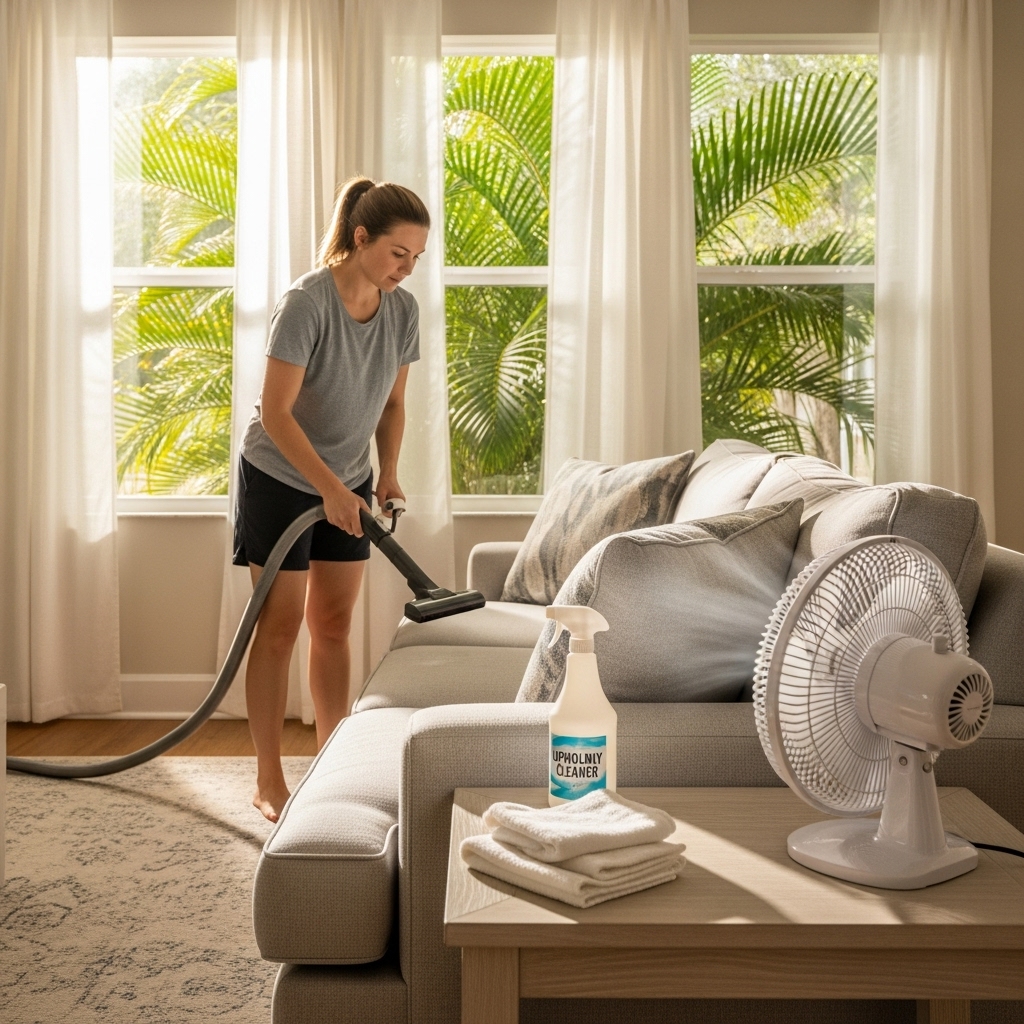
Optional but helpful: a small portable extractor with a low-moisture upholstery tool, a box fan to accelerate drying, and nitrile gloves to protect your hands if you’re using a solvent or enzyme cleaner. Having everything on hand helps you maintain an efficient workflow and avoid over-wetting as you pause to retrieve missing items.
Step 1: Dry Soil Removal (Vacuum Thoroughly)
Dry soil removal is often the most important step and the one most homeowners rush past. Use the upholstery tool to vacuum cushions, backs, arms, and underneath seat zippers if accessible. Run slow, overlapping strokes. Switch to the crevice tool along seams, tufting, and edges where grit and pet hair accumulate. In Tampa homes where open windows and patio doors are common, airborne dust and pollen collect quickly; removing them before you wet clean prevents muddying and redepositing soil. Spend extra time here and you’ll get a noticeably better result later.
Step 2: Pre-Test the Cleaner
Mix your chosen cleaner according to label instructions. Test a coin-sized area on the back or under a cushion. Lightly apply the cleaner, blot with a white cloth, and check for dye transfer, texture changes, or rings after drying. If the test shows bleeding or a ring, reduce moisture and switch to a gentler approach, possibly a solvent cleaner for “S” fabrics or an even lighter misting followed by rapid drying.
Step 3: Pre-Treat Spots and Stains
Identify common Tampa household stains: sunscreen on armrests, beverage spills, pet accidents after a humid afternoon walk, or food drips from family gatherings. Apply a targeted spotter. For protein-based stains (milk, egg, pet urine), an enzyme cleaner can digest residues that cause odor and yellowing. For tannin-based stains (tea, coffee, wine), a mild acidic spotter may help, but always verify colorfastness. Work gently with a white cloth from the outside inward to prevent spreading. Do not scrub; controlled blotting and light agitation preserve the pile and prevent distortion.
Step 4: Overall Pre-Conditioning
For water-safe fabrics, lightly mist a diluted upholstery detergent across one manageable section, such as a single cushion face. Use a soft-bristle brush to agitate gently in consistent, small circles. This loosens clingy soils and body oils along headrests or arm panels. Keep the fabric evenly damp, not wet. In a humid city like Tampa, controlling your moisture level is crucial—over-wetting slows drying and can lead to musty odors. If you’re using a solvent cleaner, follow the product’s dwell-time guidance carefully and maintain good ventilation.
Step 5: Rinse or Wipe Away Residue
Detergent residue attracts soil, so remove what you apply. If you have a low-moisture extractor, rinse with clear water and recover the solution with gentle, overlapping passes. Without an extractor, lightly dampen a clean cloth with water and wipe away residues, refreshing the cloth frequently. Keep each section uniform to avoid water lines. For solvent-only fabrics, use clean, dry cloths to absorb product and loosened soil, and then brush the nap to re-align fibers.
Step 6: Speed Drying for Tampa Humidity
Rapid drying is half the battle. Open windows if conditions are dry, or better yet, use ceiling fans or a box fan to keep air moving over the upholstery. Air conditioning can also reduce humidity indoors and accelerate evaporation. Stand cushions upright or on edge to expose more surface area. Avoid direct sunlight on sensitive fabrics that could fade; indirect airflow is ideal. If you’ve kept moisture low, most fabrics will dry within a few hours, minimizing the risk of odor or browning.
Step 7: Grooming and Final Touches
Once dry, lightly brush the fabric to reset the nap and restore a uniform appearance. Replace cushions, adjust seams, and re-stage the furniture. This finishing step can dramatically improve the look of microfiber, velvet-like synthetics, and any fabric where traffic patterns were visible. If minor shading remains, a second light pass on specific panels may help, but avoid repeated heavy cleaning on delicate fibers.
Dealing With Tough Tampa Stains and Odors
Salt spray, sweat, and sunscreen create a film that dulls fabric and holds odors. If a piece still smells stale after your initial cleaning, revisit affected zones with enzyme spotter on protein contamination, or a light alkaline cleaner followed by a clear-water wipe for body oils. Pet urine calls for prompt action: blot thoroughly, apply enzyme, allow dwell time, and then extract or wipe. If a stain wicks back after drying, it may be buried deeper in the cushion. Re-address it with minimal moisture and improved extraction or blotting, then dry faster with fans.
Mid-clean reassessment is wise. If you find you’re repeating steps without progress, consider pausing and seeking professional input. A trained technician can evaluate fiber content, backing, and previous cleaning residues to select a safer method. When you want a deeper reset or help with stubborn problems, professional upholstery cleaning can restore appearance and address odor at the source.
Special Considerations for Tampa’s Climate
Humidity is the headline concern. The longer moisture lingers inside cushions, the higher the chance of musty smells. Plan your cleaning for a day with lower relative humidity if possible, or run the AC to keep indoor air drier. After summer storms, homes may retain humidity even if it’s not raining; fans, AC, and dehumidifiers help. Also consider allergens: Tampa’s year-round pollen and pet dander collect in upholstery. Regular vacuuming and occasional deep cleaning help reduce sneeze triggers and improve indoor comfort.
Another Tampa twist is sandy grit from outings to Clearwater or St. Pete beaches. Sand acts like fine sandpaper, abrading fibers and making them look prematurely worn. That’s why dry soil removal is so critical. If your family often brings beach bags or towels into living areas, add a quick vacuum routine after beach days to prevent grinding sand into seats.
Maintenance Schedule for Busy Households
A simple plan goes a long way. Vacuum high-use seating weekly, spot clean as needed, and schedule a full, cautious cleaning every three to six months depending on usage and pets. Rotate and flip cushions to balance wear if your furniture allows it. Use washable throws on frequently used arms or headrests to intercept body oils and mineral-rich perspiration, which can darken fabric over time. Address spills immediately—quick blotting reduces the chance of wicking and staining.
Common Mistakes to Avoid
Don’t skip the pre-test, and don’t over-wet. Avoid colored cloths that can transfer dye during blotting. Never use hot water on unknown fabrics; warm or cool is safer. Say no to harsh scrubbing that distorts the pile. Resist the urge to mix chemicals—pairing the wrong products can set stains or damage fibers. Finally, don’t neglect drying; the cleaning isn’t complete until the upholstery is dry and groomed.
When to Call a Professional
If your furniture is antique, made with natural fibers, has heavy staining, or developed odor after a previous DIY attempt, a professional visit can save both fabric and time. Technicians have specialized spotters, controlled extraction tools, and meters to monitor moisture. They can also address color bleeding, browning, and recurring stains that keep resurfacing. Seniors, busy families, or allergy sufferers may find seasonal professional maintenance keeps the home fresher with less effort.
Frequently Asked Questions
Q: How do I know if my sofa can be cleaned with water? A: Check the care tag. “W” and “WS” codes usually tolerate water-based cleaning, while “S” prefers solvent-only methods. Always pre-test, especially in Tampa’s humidity, because over-wetting sensitive fibers can cause browning or water rings.
Q: Why does a stain return after it seemed gone? A: That’s wicking. Moisture carries deeper soil to the surface as the area dries. Reduce moisture, extract more thoroughly, and dry faster with fans. A repeat, lighter treatment typically solves it.
Q: Can I use vinegar or baking soda on upholstery? A: While popular online, indiscriminate use can leave residue, set certain stains, or cause odor interactions. Fabric-safe commercial products used sparingly and followed by proper drying are safer.
Q: How often should I clean in Tampa? A: Vacuum weekly and perform a full clean every three to six months for busy households. Homes with pets, open windows, or frequent entertaining may benefit from more frequent attention.
Q: Is steam the same as hot water extraction? A: Not exactly. Consumer “steamers” often apply hot water but limited extraction. True extraction pulls out soils and solution. For many delicate fabrics, lower moisture and careful wiping are preferable to heavy wetting.
Q: What if my tag says “X”? A: Vacuuming and light brushing only. For visible stains, consider a professional evaluation; DIY wet cleaning risks damage on “X” fabrics.
Q: How do I handle pet odors? A: Use an enzyme spotter with adequate dwell time, then extract or blot, and dry rapidly. If odor persists, it may have penetrated deeper cushion materials and require professional treatment.
Ready to Refresh Your Furniture in Tampa?
If you want a confident, fabric-safe result without the guesswork, partner with a local team that understands humidity, salt air, and busy family lifestyles. Schedule a convenient visit for expert upholstery cleaning and enjoy a brighter, fresher home the easy way.