
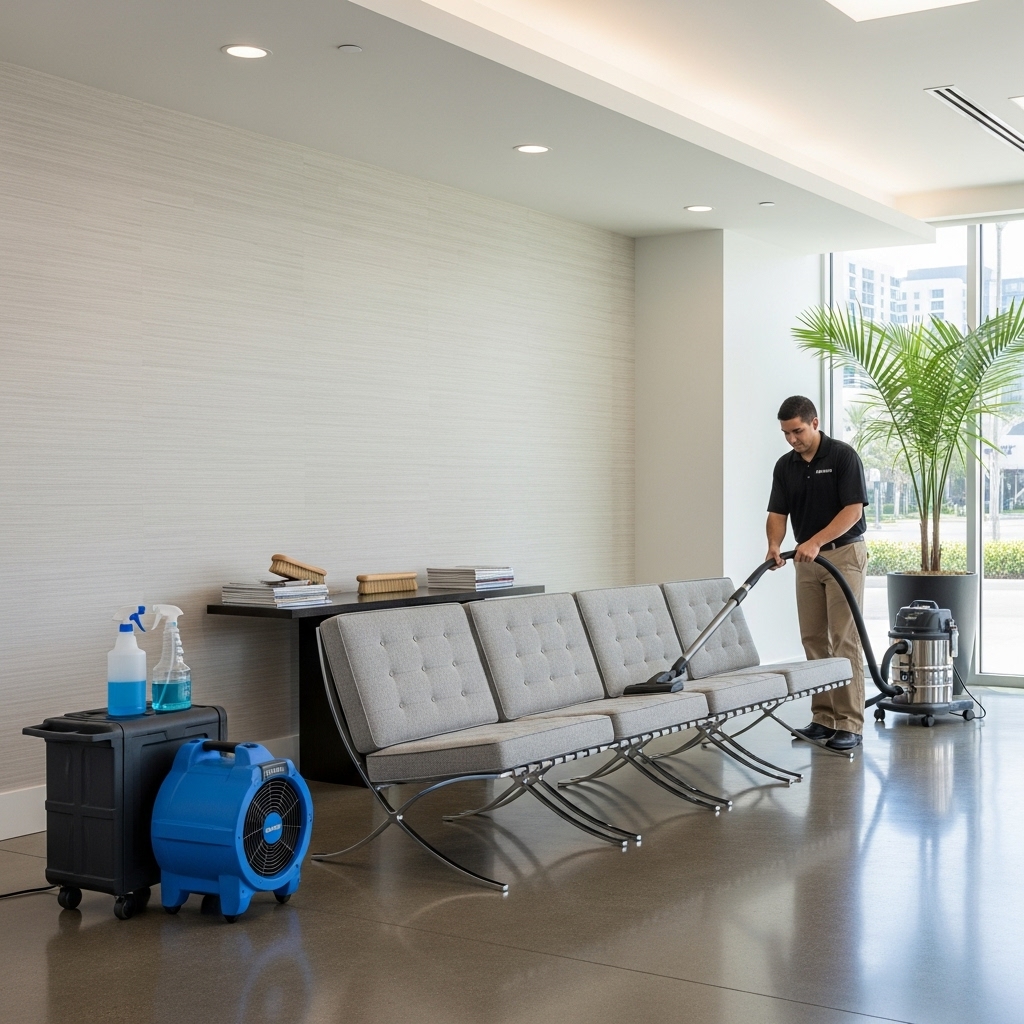
In Tampa, Florida, commercial seating does more than provide a place to sit—it shapes first impressions, influences customer comfort, and supports employee wellness. Whether you operate a medical practice, restaurant, retail showroom, coworking space, or hospitality venue, a clear upholstery cleaning checklist helps maintain appearance, extends asset life, and reduces downtime. This guide provides a practical, Tampa-focused framework your staff can follow, with options to scale based on foot traffic and fabric type. If your team needs outside help for periodic deep cleaning or specialty textiles, consider partnering with professional upholstery cleaning to round out your plan.
Commercial environments carry higher soil loads than homes. People cycle in from parking lots, sidewalks, and waterfronts, bringing sand, pollen, oils, and spills. Tampa’s humidity slows drying and can amplify odors if fabrics are overwet. A structured approach keeps your space looking sharp while controlling risks.
Upholstery Inventory and Risk Assessment
Begin with a complete inventory. Document each piece, location, fabric type, and condition. Identify high-risk items: light-colored fabrics in food-service areas, textured weaves that trap soil, and pieces in lobby zones with constant use. Note cleaning codes—W, S, W/S, or X—and record any manufacturer instructions.
- Photograph before and after major cleanings to track outcomes.
- Assign each area a soil level: low, moderate, or high.
- Flag delicate or premium textiles for technician-only handling.
- Note odor-prone areas, such as break rooms and waiting areas.
This foundational data guides scheduling, product selection, and training.
Daily and Weekly Tasks for Staff
Small, regular actions keep buildup at bay and reduce the need for aggressive methods later.
- Daily: Quick visual inspection for spills; blot immediately with white towels.
- Daily: Lint-roll and brush seats in high-visibility areas such as lobbies and reception.
- Weekly: Vacuum upholstery and crevices with appropriate attachments.
- Weekly: Sanitize contact points on arms and headrests using fabric-safe products.
- Weekly: Rotate or swap cushions on modular seating where possible.
These tasks should fit into opening or closing routines, ensuring minimal disruption to customers and staff.
Monthly and Quarterly Deep Cleaning
Set a cadence based on traffic. Restaurants, medical offices, and coworking spaces may require monthly attention, while lower-traffic professional suites can often wait for quarterly cleaning. Choose the lowest-moisture method compatible with your fabric to accelerate drying in Tampa’s climate.
- Pre-inspect and test: Confirm fabric codes, check for dye stability, and test spotters.
- Dry soil removal: Thoroughly vacuum to remove grit and hair before applying any solution.
- Prespray: Lightly mist high-contact zones and allow short dwell time.
- Agitate: Gently brush or towel to distribute cleaner.
- Rinse and extract: Use minimal water with an upholstery tool. For S-code fabrics, opt for solvent-safe methods and strong ventilation.
- Spot treat: Address remaining stains based on type—tannin, oil, protein, or dye.
- Groom: Align pile for a uniform appearance.
- Dry: Position fans and run HVAC circulation. Avoid putting furniture back into service until fully dry.
Document each session, including products used, dwell times, and dry times. This helps refine your process and supports consistent results across staff changes.
Tampa-Specific Considerations
Humidity and outdoor-to-indoor traffic are constants. Place mats near entrances, encourage quick brush-offs, and add signage to guide guests away from seating when wearing wet swimwear. Schedule deep cleaning during off-peak hours when you can control indoor climate and allow full drying. For waterfront locations, be mindful of salt residues that can attract moisture and tackiness; regular vacuuming and prompt rinsing keep these under control.
Spotting Protocol for Staff
Equip your team with a simple, safe spotting protocol to prevent permanent damage.
- Blot first, never rub, using white towels to monitor transfer.
- Identify likely stain type: food, tannin, oil, protein, dye, or unknown.
- Apply the mildest appropriate product and allow short dwell.
- Rinse or neutralize if required, then blot dry.
- Escalate cautiously or tag for technician handling if color transfer appears.
Keep products clearly labeled and store Material Safety Data information where staff can access it. Provide gloves and eye protection for safety.
Odor Control Without Over-Perfuming
In commercial spaces, authenticity matters. Customers notice heavy fragrances that try to cover odors. Focus on removing contaminants, not masking them. Clean spills promptly, rinse residues thoroughly, and dry fast with fans and HVAC circulation. For persistent odors, check cushion inserts and underlayment; replacing a compromised foam cushion is often faster and more effective than repeated surface treatments.
Fabric Categories and Handling Notes
Different textiles demand specific techniques to look their best under heavy use.
- Microfiber: Durable and popular in waiting areas. Brush the nap after cleaning to avoid streaks.
- Vinyl and coated textiles: Wipeable and resilient. Use fabric-safe cleaners to avoid brittleness.
- Cotton and linen blends: Attractive but moisture-sensitive; keep water low and dry quickly.
- Rayon/viscose: Elegant yet fragile; designate for professional-only care.
- Leather: Clean and condition with compatible products, avoiding oversaturation.
Train staff on these basics and post quick-reference charts in cleaning closets for convenience.
Quality Control and Presentation
Customers judge your business by how your space looks and feels. A short quality control checklist keeps standards high.
- Are seats visually uniform with no obvious rings or streaks?
- Are high-contact zones such as arms free of sticky residues?
- Do pieces smell clean and neutral, not perfumed?
- Are fans and HVAC used until items are fully dry?
- Are reports updated with issues for follow-up?
Encourage staff to report early signs of fabric failure, loose seams, or suspicious spots so you can schedule targeted intervention.
Training and Safety
Effective training protects your assets and your team. Provide short, focused sessions on fabric ID, spotting, tool use, and moisture control. Emphasize testing, moderation, and documentation. Equip staff with gloves, eye protection, and adequate ventilation. In Tampa’s climate, include a module on humidity management and fast-dry techniques.
When to Outsource
Outsourcing makes sense for periodic restorative cleaning, delicate textiles, persistent odors, and large seating inventories that must be turned around quickly. Professional technicians bring specialized tools that deliver low-moisture, residue-free results with rapid dry times—crucial when you cannot afford to close off areas for long. Schedule professional upholstery cleaning during off-hours to minimize disruption and maintain a consistent presentation standard.
Frequently Asked Questions
How often should commercial upholstery be deep cleaned? High-traffic venues like restaurants and clinics may need monthly light deep cleans and quarterly restorative services. Lower-traffic offices can often operate on a quarterly or semiannual schedule.
What can staff do about sudden spills? Blot immediately, identify the stain type, and use the mildest compatible spotter. Tag the item for technician review if color transfer occurs or if the fabric is delicate.
How do we avoid odors after cleaning? Control moisture, rinse residues, and dry thoroughly with fans and HVAC. Do not return seating to service until it is fully dry to the touch.
Are fabric protectors worthwhile in commercial settings? Yes, especially on light-colored or heavily used pieces. Test for compatibility and reapply after restorative cleaning as recommended.
What about liability for delicate textiles? Restrict handling to trained staff or professionals and document procedures, tests, and outcomes to protect your business.
Keep Your Business Looking Its Best
With a clear checklist, trained staff, and climate-aware habits, Tampa businesses can maintain clean, inviting seating without unnecessary downtime. For specialty textiles, fast turnarounds, or large projects, schedule professional upholstery cleaning and present your brand at its best every day.