
Introduction: A Tampa-Ready Upholstery Cleaning Checklist
From beach weekends to summer thunderstorms, life in Tampa, Florida brings unique challenges to upholstered furniture. Sand, salt residue, humidity, pollen, and playful pets can all take a toll on living room sofas, family recliners, and fabric dining seats. This comprehensive checklist organizes what to do daily, weekly, monthly, and seasonally so you can protect color, texture, and comfort without overwhelm. If you ever need a reliable reset, professional upholstery cleaning can slot into your schedule and support your home’s maintenance routine.
Use this checklist as a living document. Adjust steps for your household’s traffic, fabric types, and lifestyle. The key is consistency and complete drying after any wet cleaning, which is especially important in Tampa’s humid climate where moisture can linger inside cushions and lead to musty odors if airflow is insufficient.
Daily and As-Needed Actions
Blot spills immediately with a clean white towel. Press firmly but gently to absorb liquids without rubbing, which can distort fibers or spread the stain. For food drips or sticky spots on water-safe fabrics, use a towel slightly dampened with distilled water to lift residue, then blot dry.
Shake out throws and pillows that protect high-use areas. If you have pets, check favorite napping spots and give them a quick once-over with a lint roller or a slightly damp microfiber towel to grab hair before it embeds deeper in the weave.
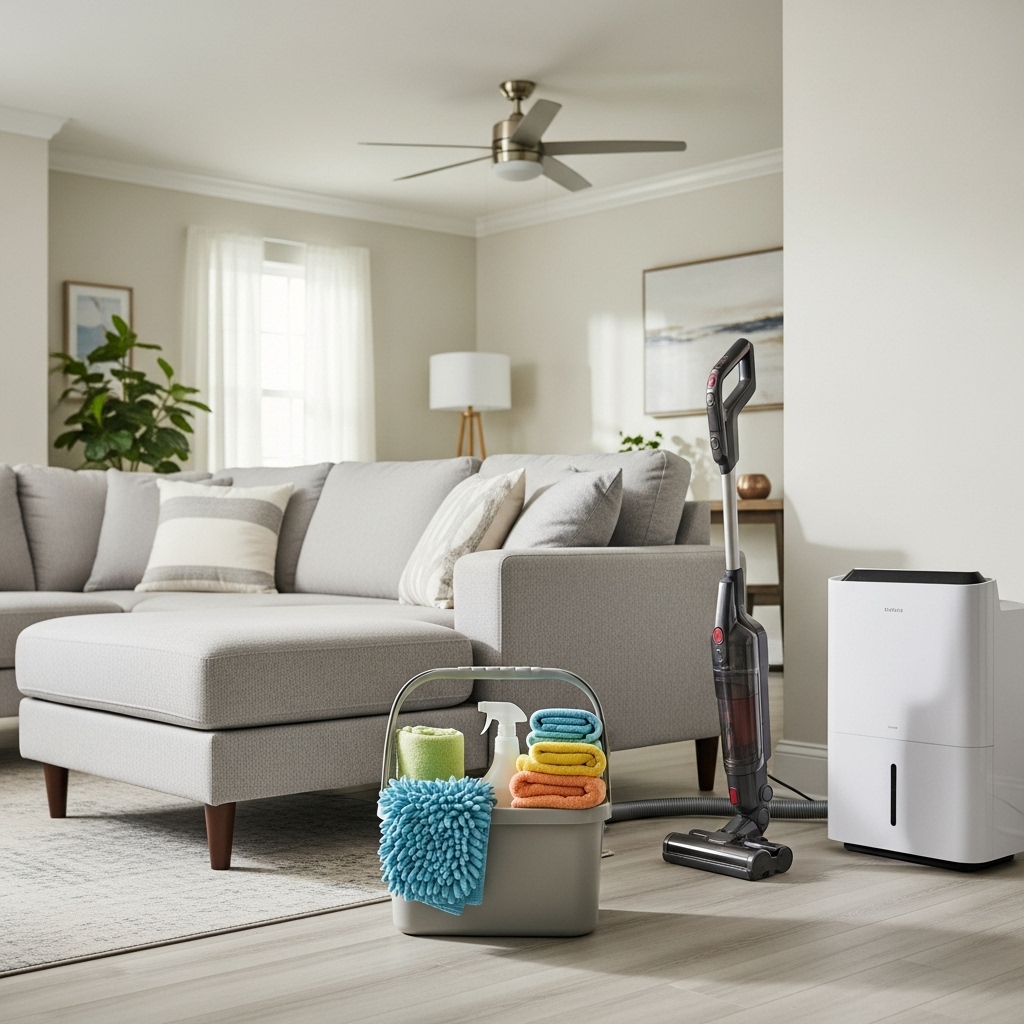
Do a quick visual scan of arms, headrests, and cushion fronts for new marks. Early attention often turns a difficult cleanup into a simple, two-minute fix. Keep a small caddy with towels and a gentle cleaner accessible so you do not postpone essential steps.
Weekly Routine
Vacuum high-traffic seats, backs, arms, and seams using a soft brush attachment. Work in short, overlapping strokes and approach the fabric from multiple angles to lift grit and allergens that settle between threads. For removable cushions, flip or rotate them to distribute wear evenly and prevent moisture buildup in the same areas week after week.
On water-safe textiles, wipe armrests and headrests with a barely damp microfiber towel, then follow immediately with a dry towel. This mini-refresh prevents sunscreen and body oils from forming dark patches that require more aggressive cleaning later.
Biweekly to Monthly Tasks
Lift cushions to vacuum the deck beneath, where crumbs and dust tend to hide. Inspect welt cords and buttons, which can catch sticky residue or pet hair. If odors are faint, apply an enzyme-based deodorizer to water-safe fabrics, allow the recommended dwell time, then blot and dry with steady airflow.
Spot clean visible marks on W or W/S fabrics with a mild, dye-free soap solution applied to a cloth, not sprayed directly on the upholstery. Dab from the outside of the stain inward, then “rinse” with a lightly damp towel and blot dry. For S-coded fabrics, use a dry solvent cleaner on a cloth and blot gently in a ventilated space.
Quarterly and Seasonal Deep Dives
After summer, plan a thorough refresh. For water-safe sofas and sectionals, consider a low-moisture extraction with a neutral pH upholstery solution, focusing on even coverage and thorough extraction rather than heavy saturation. Stand cushions on edge to speed drying, and run AC and a small fan to keep air moving. If you have a dehumidifier, run it for a few hours during and after the session.
Launder removable covers according to the label, and avoid high heat that can shrink or distort the fit. Inspect cushions for lumps or sagging, and fluff cores to restore loft. Take a moment to tighten any loose screws on legs or frames and to check glides that protect floors.
Pre-Cleaning Safety Checks
Confirm the fabric code (W, S, W/S, X). Always perform a spot test in a hidden area using a clean white cloth to check colorfastness. If dye transfers or the fabric darkens excessively, stop and reassess your approach. Plan the cleaning session with enough drying time to prevent moisture from lingering overnight.
Protect nearby wood or metal trim from accidental drips. Place clean, dry towels under areas you are treating to prevent moisture wicking into the deck fabric or cushion interiors. This small precaution helps avoid rings and tidemarks later.
Stain Response Guide
Red wine or coffee: Blot immediately, apply a mild soap solution to a cloth, dab gently from the edge inward, then follow with a distilled-water dampened towel. Repeat lightly if needed after full drying rather than scrubbing aggressively.
Grease from snacks: Use a tiny amount of clear dish soap in warm distilled water, dab with a cloth, then “rinse” with a damp towel and blot dry. If a faint shadow remains, place a clean dry towel under and over the spot and press to encourage oils to wick out as it dries.
Sunscreen and body oils: Pre-blot with a mild soap solution on water-safe textiles, then wipe with a damp towel to remove residue. For persistent darkening on arms and headrests, plan a more thorough, panel-wide cleaning so the finish looks even.
Salt and sand: Vacuum first to remove grit. Wipe with distilled water on a towel to remove salt residue, then dry immediately with airflow. Sand can act like sandpaper on fibers if not lifted before any wet cleaning.
Odor Management and Drying Strategy
In Tampa’s humidity, drying is as critical as stain removal. Open interior doors, run the AC, and position a small fan to move air across but not directly into the fabric. Stand cushions on edge for 360-degree airflow. If you own a dehumidifier, run it during and after cleaning to draw moisture from the air and speed results.
For persistent odors from spills or pets on water-safe fabrics, enzyme deodorizers are effective when allowed proper dwell time. Blot, then dry thoroughly. If odor returns after the surface seems dry, the cushion core may need deeper treatment or replacement. This is a good cue to seek help rather than repeating the same steps.
Leather and Faux Leather Notes
Dust weekly with a dry microfiber towel. For fresh spills, blot with a slightly damp cloth, then dry. Apply conditioner as recommended by the manufacturer to keep leather supple in air-conditioned interiors. Avoid harsh chemicals, abrasive pads, and excessive water. For dye transfer or stubborn marks, professional care is safer to protect the finish.
Allergy-Friendly Practices
Pollen and dander can settle deep in seams and crevices. Vacuum slowly, using multiple passes, and consider washing throws and removable covers more frequently during peak pollen seasons. Keep windows closed during high pollen days if you notice increased sneezing or itching, and rely on AC and fans for circulation during drying after cleaning.
Family and Pet Proofing
Set expectations with kids: spills get blotted immediately. Keep coasters and small snack trays handy to reduce drips. Use washable throws on favorite seats and launder weekly. If you host often, choose performance fabrics for the most-used pieces, and plan a quick reset the morning after gatherings.
When to Call in Reinforcements
Consider outside help for solvent-only fabrics with large spills, antique or heirloom pieces, recurring odors that return after drying, or large sectionals that exceed your time window. Bringing in trained technicians can be more efficient than repeating DIY attempts. For confidence and convenience, you can schedule experienced upholstery cleaning to complement your checklist.
Frequently Asked Questions
Q: How often should I follow this checklist? A: Use daily and weekly steps consistently, then choose monthly and seasonal items based on use, pets, and proximity to outdoor spaces. High-traffic family rooms may benefit from a deeper refresh two to three times per year.
Q: Can I skip vacuuming if the sofa looks clean? A: No. Vacuuming removes abrasive grit and allergens you cannot see. It also improves the results of any wet cleaning by preventing soil from smearing into the fibers.
Q: What is the safest first step on an unknown fabric? A: Vacuum thoroughly, then test a lightly damp microfiber towel with distilled water in a hidden area. If color does not transfer and the fabric dries evenly, you can proceed cautiously on W or W/S textiles.
Q: How do I prevent tide marks? A: Treat a full panel rather than a small dot, blend edges lightly, and dry with steady airflow. Rings typically appear when the center is cleaned but the edges are left untouched.
Q: Should I use steam on all fabrics? A: Not necessarily. High heat and moisture can damage or distort certain fibers. Always check the fabric code and spot test; for delicate or solvent-only textiles, avoid steam altogether.
Finish Strong: A Home That Feels Fresh
A thoughtful checklist turns upholstery care into a manageable routine, even in Tampa’s humid, beach-loving environment. If you want a clean slate before the holidays or after summer, book dependable upholstery cleaning with a knowledgeable local provider. Enjoy softer seating, brighter colors, and a welcoming home without the stress of tackling every task alone.