
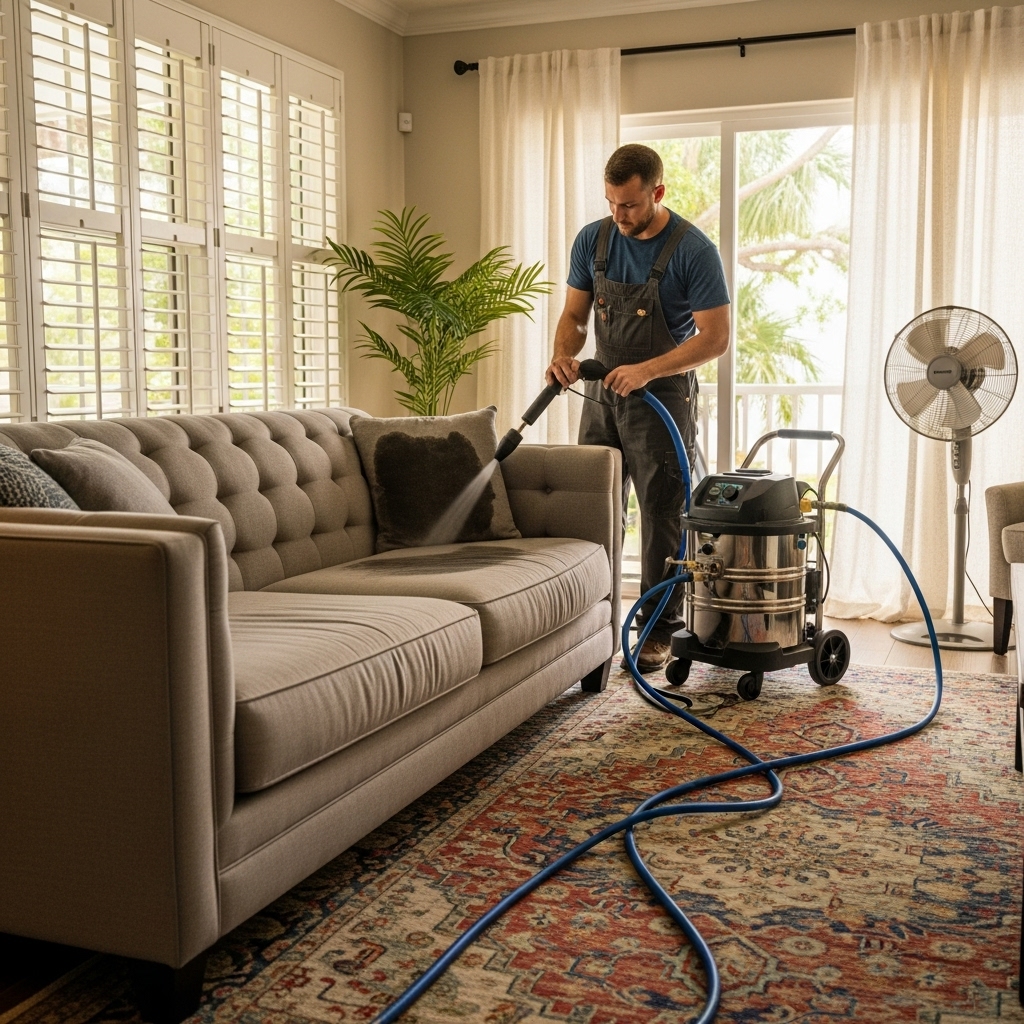
Many Tampa homeowners hear the term steam cleaning and assume it is the best choice for every fabric. In professional practice, what most people call steam is usually hot water extraction: heated water and cleaning solution are applied in a controlled way, then extracted to carry soil out of the fabric. It can be a powerful, fiber-safe method when matched correctly to the textile. This guide breaks down the advantages and limitations of hot water extraction for upholstery in our humid climate and explains when low-moisture or solvent-based alternatives make more sense. As you weigh your options, seek providers who can clearly explain their upholstery cleaning strategy for your specific pieces.
How hot water extraction works
The method relies on a balanced combination of temperature, solution, agitation, and vacuum. After pre-inspection and dye tests, a technician performs thorough dry soil removal. Targeted pre-treatment loosens oils and common residues along arms and headrests. Heated solution and water are applied in controlled passes, followed by immediate extraction that removes suspended soil. A neutralizing rinse helps prevent residues, and grooming aligns the nap. Finally, air movement is set up to shorten dry times and reduce the risk of shading or wicking.
Pros of steam-style cleaning for upholstery
When appropriately used, hot water extraction delivers deep, satisfying results. It excels at flushing out embedded particles that make fabrics feel dull and stiff. Balanced rinsing removes cleaning agents so the fabric does not feel sticky. Color clarity often improves, and textures look more uniform after grooming. For sturdy synthetics and many cotton blends, it offers an effective blend of soil removal and fiber safety. In homes with active families and pets, the method’s ability to carry away soils rather than spread them around is a major advantage.
Where the method can fall short
Not every fabric welcomes moisture, even in skilled hands. Certain cellulosic blends, delicate rayons, or sensitive dyes may brown, shrink, or bleed if overwet. Construction details like tufting or thick padding can hold moisture and slow drying. In Tampa’s humidity, uncontrolled drying can invite wicking or a faint musty smell. When the risk is higher, professionals opt for low-moisture or solvent-based techniques that minimize water exposure while still lifting soil safely.
Alternatives: low-moisture and solvent-based options
Low-moisture methods use very little water and rely on encapsulating chemistry and careful agitation to capture soil for removal. Solvent-based approaches dissolve oils without adding water, making them ideal for moisture-sensitive textiles. Both options prioritize gentle handling and quick drying. The trade-off is that they require precise chemistry and thorough grooming to avoid streaks or uneven appearance, especially on textured fabrics. A knowledgeable technician will explain why an alternative is more suitable for particular pieces.
Why Tampa’s climate matters so much
Our region’s humidity is the wildcard. Even a modest amount of moisture can linger without airflow. Professionals plan for cross-breeze or mechanical air movement to move moisture off the fabric and into the room air, where HVAC or dehumidification can handle it. This is not just about comfort; it is about protecting color and texture. Uniform, timely drying preserves the even look you want and helps the fabric feel soft rather than stiff.
Choosing the right method for your sofa
The right method is the one that balances soil removal with fabric safety for your specific piece. That decision starts with identification, dye testing, and an honest discussion of risks and goals. A microfiber sectional with family and pet use may be an ideal candidate for controlled hot water extraction and thorough rinsing. A delicate occasional chair with uncertain dyes might need a low-moisture or solvent strategy. The best providers tailor tools and chemistry, not just the headline method.
What a careful appointment looks like
Expect an orderly sequence: inspection, testing, dry vacuuming, targeted pre-treatment, main cleaning, balanced rinse or solvent removal, grooming, and a clear drying plan. The technician will explain why they are choosing a particular approach and what you can do to support success. In Tampa, that usually includes running your HVAC fan, opening interior doors, and giving the furniture space to breathe during drying.
How to prepare your home
Preparation is simple but meaningful. Clear access paths, share parking information, and identify any delicate floor finishes near the work area. Remove small items around the furniture, and tell the technician about any prior spotters or DIY attempts. Planning for pets during the visit helps the process go smoothly and keeps equipment undisturbed while airflow is set up for drying.
In the middle of your decision process, remember that method alone does not guarantee results. Expertise, testing, and airflow management are just as important. Ask prospective providers to describe how they will match tools and chemistry to your fabric and how they will plan drying for Tampa’s humidity. The ability to articulate a careful approach to upholstery cleaning is a strong predictor of consistent, satisfying outcomes.
Common misconceptions about steam cleaning
One misconception is that hotter is always better. Temperature helps, but control matters more; overheating can set certain stains or stress dyes. Another misconception is that more water equals deeper cleaning. In reality, excess moisture risks over-wetting and uneven drying. Finally, it is not true that every fabric benefits equally from the same passes and tools. Different fibers and constructions call for different techniques, and that customization is what safeguards your furniture.
Signs of a trustworthy provider
Look for clear explanations of testing, method selection, and drying strategy. Professionals take time to protect surrounding areas and to manage airflow during and after the main work. They invite questions, avoid one-size-fits-all promises, and set realistic expectations about what can improve and what may remain due to wear or past damage. This clarity sets the tone for a smooth experience from arrival to follow-up.
Frequently asked questions
Q: Is steam-style cleaning safe for all upholstery? A: No. It is safe and effective for many durable fabrics when used thoughtfully, but sensitive textiles may require low-moisture or solvent-based methods. Testing and inspection determine the right path.
Q: How long does furniture take to dry after hot water extraction? A: Dry time varies with fabric type, construction, and airflow. In Tampa, professionals plan for air movement to keep times reasonable and to prevent shading or wicking as moisture evaporates.
Q: Will steam remove all stains and odors? A: It removes a great deal of embedded soil and many common stains, but some issues are permanent due to dye loss or previous products. Odor improvement depends on source removal and may require targeted steps beyond the main cleaning.
Q: What if my furniture has tufting or thick padding? A: These features can hold moisture. A careful technician adjusts technique, uses lighter passes, and increases airflow to ensure even drying. In some cases, a low-moisture method is preferable.
Q: Can I sit on the furniture right away? A: Wait until the fabric is fully dry. Using cushions while damp can leave impressions or encourage uneven appearance. Your technician will provide simple aftercare steps to speed drying safely.
Q: How often should I schedule care? A: Frequency depends on usage, fabric type, and household factors like pets. Busy family rooms may need attention more often than formal seating. A maintenance rhythm keeps fabrics looking and feeling their best.
Q: Are strong fragrances a sign of cleanliness? A: No. A truly clean fabric is typically neutral-smelling because soils have been removed rather than masked. Heavy perfumes can fade quickly and may not indicate effective source removal.
Ready to choose the right method for your furniture?
Whether your pieces are best served by careful hot water extraction or by a low-moisture or solvent approach, the key is a provider who leads with testing, balanced chemistry, and drying expertise. Make your next appointment with a team that tailors solutions for Tampa homes and delivers proven upholstery cleaning that leaves your seating fresher, brighter, and more comfortable.